
Maruoka Castle
Researched and written by Hinato

Photo: shikabane taro / Wikimedia Commons (CC BY 3.0) · original
Fukui keeps its history in places like Maruoka Castle rather than in museums about it.
Maruoka Castle (丸岡城) possesses the oldest surviving castle keep (tenshu) in Japan, constructed in 1576 — a claim disputed with Inuyama Castle, but architectural analysis supports Maruoka's precedence. The two-story wooden keep is small, almost intimate compared to later castles like Himeji or Osaka, but its steep roof tiles (made from stone rather than ceramic), narrow arrow-slit windows, and absence of decorative elements embody the pure martial function of early castle design.
The interior is unrestored — visitors climb the original wooden ladder-stairs (60-degree angle) to the upper floor where castle defenders would have stationed. The view from the top overlooks the Fukui Plain and, on clear days, the Sea of Japan 15 kilometers north. The castle survived earthquakes, wars, and modernization simply because it was too small and remote to warrant destruction. Today, that obscurity preserves a rare example of 16th-century military architecture.
Plan your visit
Hours
8:30 AM – 5:00 PM. Cherry blossom illumination period (early April): 8:30 AM – 9:00 PM.
Closed: Open year-round
Time to allow
45 minutes for castle keep and museum. Allow 90 minutes during cherry blossom season to enjoy the grounds fully.
Admission
¥450 (includes castle and adjacent history museum). Night illumination during cherry blossom season: same ticket.
Best time to visit
Early April for 400 cherry trees in full bloom with night illumination 18:00–21:00. Winter for quiet visits and stark architectural views. Year-round for the historic keep.
How to reach it
Getting there in detail
Historical notes & tips
Nearby Spots
The closest hidden gems to Maruoka Castle, by straight-line distance.
Taniguchiya
Little knownFukui eats more fried tofu per household than any other prefecture in Japan, by a wide margin, and the reason is partly…
Awara Onsen
Little knownAwara Onsen (芦原温泉) is Fukui's premier hot spring resort, established in 1883 when a farmer accidentally discovered therm…
Fukui City Ruins Museum
Little knownThe Fukui City History Museum (福井市立郷土歴史博物館) features a unique exhibition format: the museum building was constructed dir…
 Douglaspperkins / CC BY-SA 4.0
Eiheiji Temple
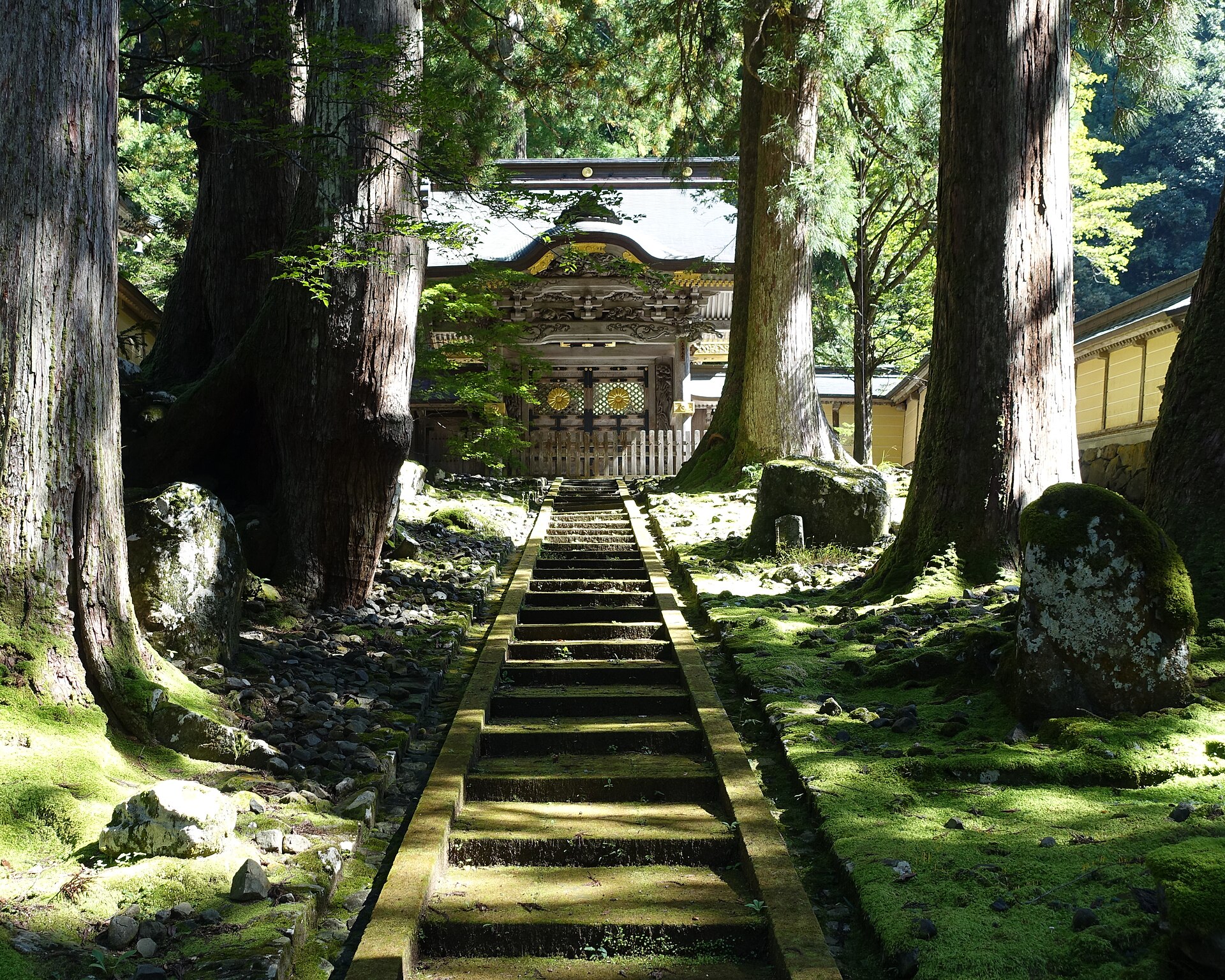
Little knownEiheiji is a working Zen monastery founded in 1244, where 150-200 monks follow a training schedule unchanged since the E…
 藤谷良秀(Yoshihide Fujitani) / CC BY-SA 4.0
Yokokan Garden
Little knownYokokan (養浩館庭園) is the former villa garden of the Matsudaira clan, feudal lords who ruled Fukui Domain for 270 years dur…
 ノボホショコロトソ / CC BY 4.0
Sauce Katsudon
Little knownSauce katsudon is Fukui's regional soul food and the polar opposite of the egg-bound katsudon known elsewhere in Japan.…
More in Fukui
 663highland / CC BY 2.5
Port of Humanity Tsuruga Museum
Little knownTsuruga was the Japanese end of a shipping route from Vladivostok, and twice in the twentieth century that made it a pla…
 663highland / CC BY 2.5
Kehi Jingu
Locally knownThe great torii at Kehi Jingu is 10.9 metres high, built of wood, and is counted with Kasuga Taisha in Nara and Itsukush…
 Opqr / CC BY-SA 4.0
Megane Museum
Little knownAround ninety-five per cent of the spectacle frames made in Japan come from Sabae, a city of sixty thousand people in in…