
Kajo Park
Researched and written by Hinato

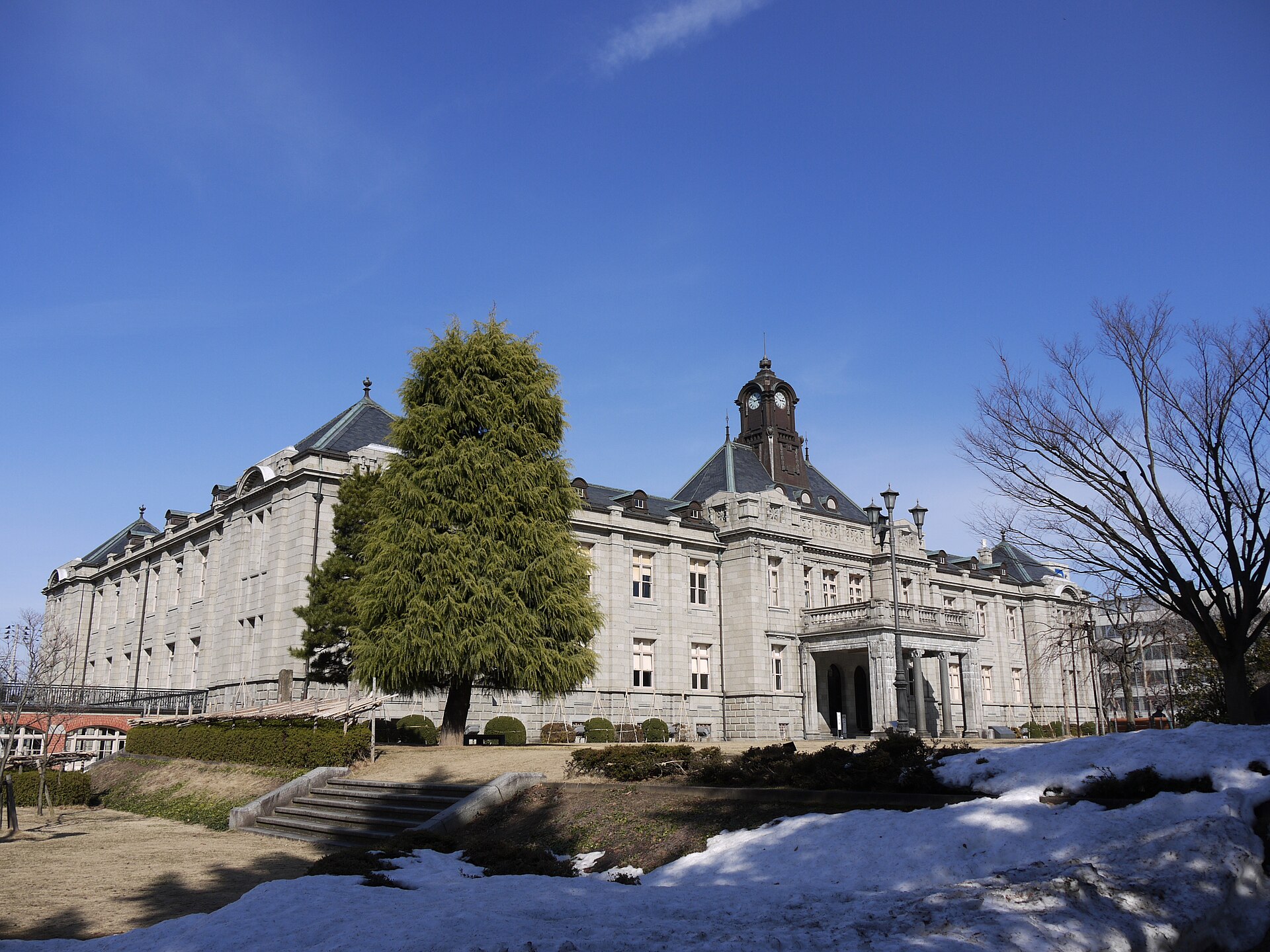
Photo: Raita Futo from Tokyo, Japan / Wikimedia Commons (CC BY 2.0) · original
Kajo Park has outlasted the version of Yamagata it was originally built for, and it shows.
Kajo Park occupies the site of Yamagata Castle, once one of the largest feudal castles in the Tohoku region. Built in the 14th century and expanded in the 16th century by the Mogami clan, the castle featured a massive five-layer network of moats and stone walls protecting the inner keep. The castle buildings were demolished during the Meiji Restoration, but the park preserves the moats, stone foundations, and earthwork fortifications. The main gate (Ote-mon) was reconstructed in 1991 using traditional Edo-period joinery techniques, providing a sense of the castle's original scale. The park is most famous for cherry blossoms — approximately 1,500 somei-yoshino cherry trees line the inner moat, creating a pink tunnel reflection in the water during peak bloom (mid-April). The park also hosts Yamagata's annual Hanagasa Festival staging area (early August), where thousands of dancers parade through the city wearing flower-decorated hats.
Visiting essentials
How long to allow
1–1.5 hours for casual visit; 2–3 hours during cherry blossom or autumn foliage season
Best season
Mid-April for cherry blossoms (peak typically April 13–18); late October for autumn foliage; January–February for snow on moat walls
Hours
Evening illumination during cherry blossom season: 6:00 PM – 10:00 PM
Closed: Park: gates close overnight per seasonal hours above | Ote-mon Gate: open daily | No regular closures
Admission
Park entry: free | Ote-mon Gate viewing: free | Evening illumination: free
Finding your way there
Getting there in detail
Beyond the guidebook
Nearby Spots
The closest hidden gems to Kajo Park, by straight-line distance.
 Ippukucho / CC BY 3.0
Bunshokan
Little knownThe Bunshokan (文翔館) is a Western-style brick building constructed in 1916 to serve as the Yamagata Prefectural Office an…
 Qwert1234 / CC BY-SA 4.0
Yamagata Cherries
Little knownYamagata Prefecture produces 70% of Japan's cherry crop, earning its designation as the nation's cherry capital. The sig…
 U-D.I.E. / CC BY-SA 4.0
Yamagata Imoni
Little knownImoni (芋煮) is Yamagata's signature autumn comfort food — a hot pot stew made with taro root (satoimo), beef, konjac, gre…
Yamagata Hina Dolls
Little knownThe Hina Matsuri (雛祭り, Girls' Day or Doll Festival) on March 3rd is celebrated throughout Japan, but Yamagata takes spec…
 Nesnad / CC BY 4.0
La France Pears
Little knownLa France pears (ラ・フランス) are a French pear variety that thrives in Yamagata's climate, producing fruit with exceptional…
Yamagata Beef
Little knownYamagata beef is one of Japan's elite wagyu brands, produced from Japanese Black cattle raised in Yamagata's clean mount…
More in Yamagata
 さかおり / CC BY-SA 4.0
Ginzan Onsen
FamousGinzan Onsen is 300 meters of Taisho-period (1912-1926) wooden ryokan squeezed into a mountain valley, three and four st…
 ブルーノ・プラス / CC BY 4.0
Mogami River Boat Ride
Little knownThe Mogami River is one of Japan's three most rapid rivers, flowing 224km from the mountains of southern Yamagata to the…
 掬茶 / CC BY-SA 4.0
Dewa Sanzan
Well knownDewa Sanzan (出羽三山, 'Three Mountains of Dewa') comprises Mt. Haguro, Mt. Gassan, and Mt. Yudono — three sacred peaks that…