
Itaibara Village
Researched and written by Hinato
Tottori · Chizu
35.2650°N, 134.2267°E
Itaibara Village is easy to reduce to a photo stop, but the history behind it is what makes the stop worth making.
Itaibara is a small settlement in a fold of the mountains three kilometres north-east of Chizu, reached through a tunnel, and it looks the way rural Japan looked in about 1955. That is not a restoration — the village simply stopped changing. There is a thatched farmhouse, a row of timber houses more than fifty years old, a village hall from the early Showa period, a shrine, a water mill and a charcoal hut, all still standing in a valley with no through road.
Its origins are said to go back to the Heian period and the tradition is that it began as a refuge for Taira clan survivors. The prefecture designated it a traditional buildings preservation district in 2004. A handful of the old houses now operate as a café and an occasional restaurant serving food cooked on a wood stove with rice milled by the water wheel; the rest is simply a village where a small number of people live.
The valley's isolation, which nearly emptied it out as younger residents left for cities in the postwar decades, is precisely what has preserved it — with no room for new construction and no through-traffic to attract development, the surviving houses simply kept being lived in or maintained rather than being replaced. That accident of geography is now treated as an asset: the prefectural preservation designation formalized something that had already happened by neglect, and the handful of residents who remain have leaned into small-scale tourism (the café, the Sunday restaurant) as a way to keep the settlement viable rather than turning it into a full open-air museum with paid admission and staged demonstrations. Visitors who make the trip tend to be drawn less by any single building than by the cumulative effect of walking a valley where nothing has been rebuilt to look old because none of it needed to be.
Before you go
Opening hours
Village open at all times | Café 11:00 AM until dusk | Sunday restaurant by reservation
Closed: Café closed Tuesdays with irregular Wednesday closures | Restaurant Sundays only
Admission
Free | Village car park
Best time to visit
Late April–May and October–November | Winter snow is heavy
Time to allow
60–90 minutes
Getting there
Getting there in detail
Beyond the guidebook
Book Your Stay Nearby
Find accommodation close to Itaibara Village on these trusted booking platforms:
Nearby Spots
The closest hidden gems to Itaibara Village, by straight-line distance.
 663highland / CC BY 2.5
Ishitani Residence
Locally knownChizu was a post town on the Chugoku highway, the route the Tottori lords took to Edo, and the Ishitani were its wealthi…
 Phronimoi / CC BY-SA 3.0
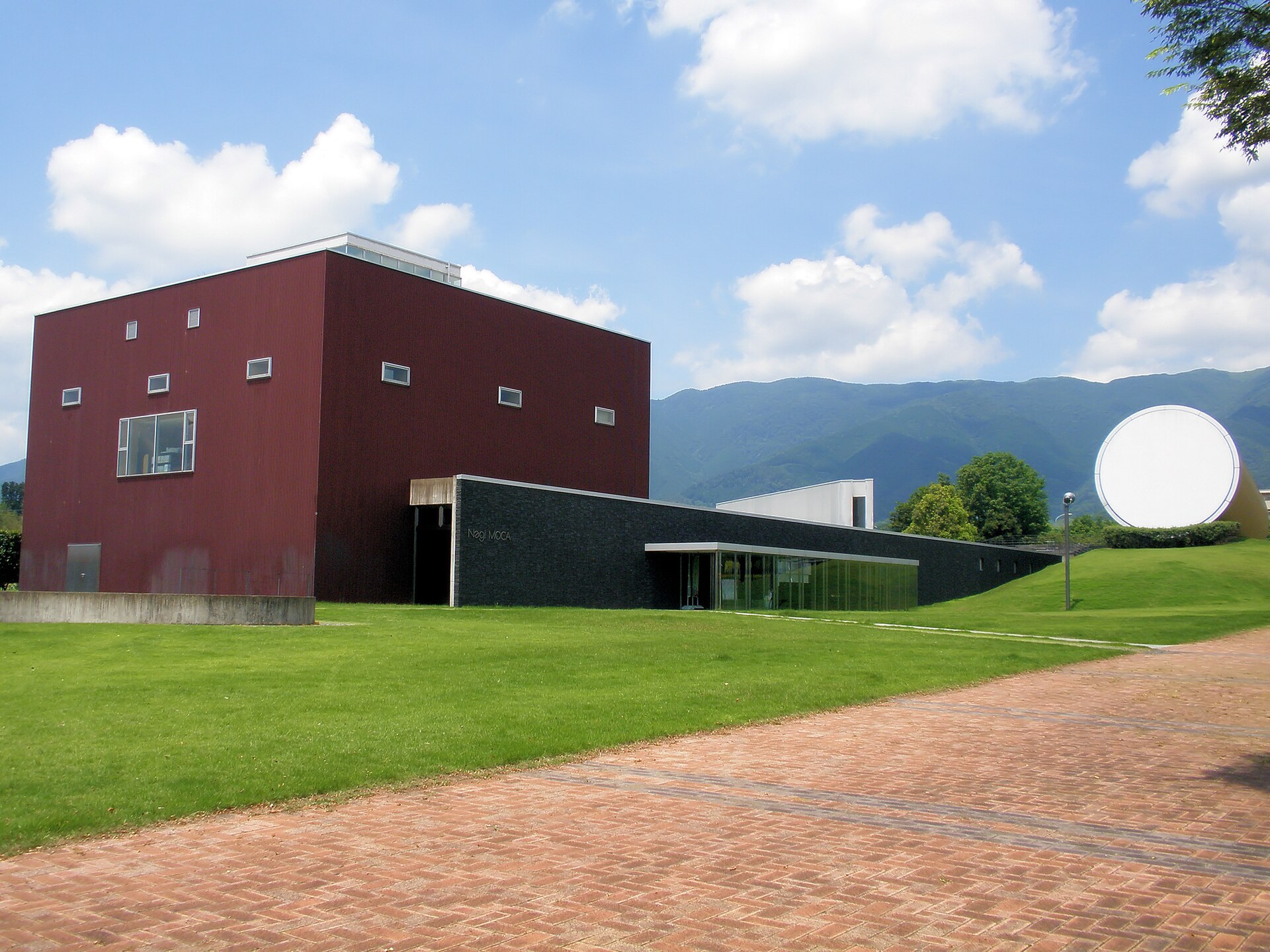
Nagi Museum of Contemporary Art
Little knownIsozaki Arata designed this museum in 1994 around three permanent works rather than around a collection, which is close…
Wakasa Station and Post Town
Little knownWakasa is the terminus of a nineteen-kilometre private railway that runs up a valley from Koge, and the whole station —…
 Reggaeman / CC BY-SA 3.0
Fudoin Iwayado
Locally knownA hall about thirteen metres high fitted into a natural rock cavern beside a mountain stream, its floor carried on long…
 Nishimuraya Kinosaki Onsen / CC BY 2.0
Matsuba Crab
Little knownMatsuba crab (snow crab) is Tottori's most prized delicacy, harvested from the deep waters of the Sea of Japan from Nove…
Shikano Castle Town
Little knownShikano was the seat of the Kamei family in the Sengoku period, and the street plan they laid out is still there — a gri…
More in Tottori
Tottori Sand Museum
Little knownThe Tottori Sand Museum is the world's only indoor exhibition dedicated exclusively to sand sculpture, where internation…
 掬茶 / CC BY-SA 4.0
Mt. Daisen
Little knownMt. Daisen (1,729m) rises in near-perfect symmetry above the western Tottori plains, earning the nickname 'Mount Fuji of…
 Hashi photo / CC BY 3.0
Uradome Coast
Little knownThe Uradome Coast stretches 15 kilometers of jagged volcanic cliffs, sea caves, and white-sand coves along the San'in Ka…