
Oroshi Soba
Researched and written by Hinato

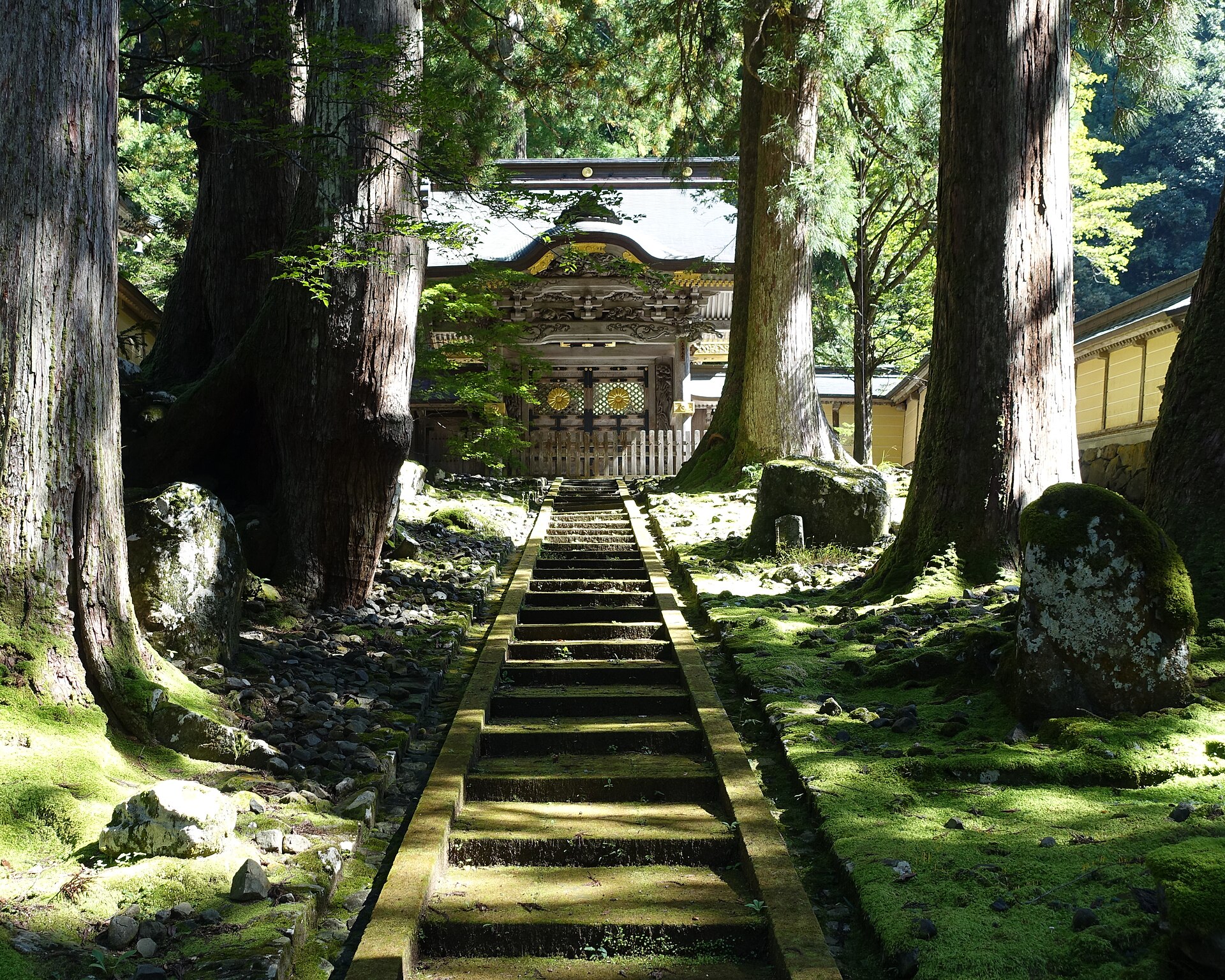
Photo: 藤谷良秀 / Wikimedia Commons (CC BY-SA 4.0) · original
The line outside Oroshi Soba, if there is one, is usually a better sign than a review score.
Echizen oroshi soba is Fukui's traditional buckwheat noodle dish, defined by the use of coarsely grated daikon radish mixed into the dipping sauce. The soba noodles are served cold on a lacquered tray, accompanied by a bowl of tsuyu (dashi-soy sauce) into which a mound of fresh-grated daikon, bonito flakes, and green onion are stirred. The grated radish adds a sharp, peppery bite and creates a cloudy, frothy texture — the antithesis of refined Tokyo-style soba but deeply satisfying in its rusticity.
The noodles themselves are made from locally grown Echizen soba buckwheat, stone-ground and hand-cut with a higher buckwheat-to-flour ratio (often 100% buckwheat) than standard soba. This produces a darker, more fragrant noodle with a firm, toothsome texture. Oroshi soba has been Fukui's staple food since the Edo period when buckwheat thrived in the prefecture's mountainous terrain unsuitable for rice cultivation.
Eating essentials
Price range
No entry fee. Oroshi soba bowl: ¥800–950. Soba-making workshop: ¥1,500 (60 minutes, includes eating your own soba).
Best season
Year-round. Hot 'wappa soba' version available November–March at many shops. Freshly harvested Echizen soba buckwheat peaks in autumn (October–November).
Hours
Oroshi soba shops: typically 11:00 AM – 2:30 PM (lunch only) or 11:00 AM – 8:00 PM at larger restaurants. Echizen Soba no Sato workshops: 10:00 AM, 12:00 PM, 2:00 PM, 4:00 PM sessions.
Closed: Varies by shop. Most close one day per week (varies). Soba-making workshops available daily at Echizen Soba no Sato — reserve in advance.
How long to allow
30–45 minutes for a soba meal. 90 minutes for soba-making workshop experience. Best combined with other Fukui City sightseeing.
How to reach it
Getting there in detail
What locals order
Nearby Spots
The closest hidden gems to Oroshi Soba, by straight-line distance.
 ノボホショコロトソ / CC BY 4.0
Sauce Katsudon
Little knownSauce katsudon is Fukui's regional soul food and the polar opposite of the egg-bound katsudon known elsewhere in Japan.…
 藤谷良秀(Yoshihide Fujitani) / CC BY-SA 4.0
Yokokan Garden
Little knownYokokan (養浩館庭園) is the former villa garden of the Matsudaira clan, feudal lords who ruled Fukui Domain for 270 years dur…
Fukui City Ruins Museum
Little knownThe Fukui City History Museum (福井市立郷土歴史博物館) features a unique exhibition format: the museum building was constructed dir…
 Douglaspperkins / CC BY-SA 4.0
Eiheiji Temple
Little knownEiheiji is a working Zen monastery founded in 1244, where 150-200 monks follow a training schedule unchanged since the E…
 掬茶 / CC BY-SA 4.0
Ichijodani Asakura Clan Ruins
Little knownIchijodani (一乗谷) was the castle town of the Asakura clan, who ruled Echizen Province (now Fukui) for 103 years (1471–157…
 漱石の猫 / CC BY-SA 4.0
Echizen Lacquerware
Little knownEchizen lacquerware (越前漆器) traces its origins to the 6th century when Emperor Keitai, during travels in Echizen, request…
More in Fukui
 Facial expression / CC BY-SA 4.0
Rainbow Line Summit Park
Little knownMikata Goko is five lakes lying side by side behind the Wakasa coast, and the reason they are famous is that they are fi…
Taniguchiya
Little knownFukui eats more fried tofu per household than any other prefecture in Japan, by a wide margin, and the reason is partly…
 663highland / CC BY 2.5
Port of Humanity Tsuruga Museum
Little knownTsuruga was the Japanese end of a shipping route from Vladivostok, and twice in the twentieth century that made it a pla…