
Ryoan-ji Rock Garden
Researched and written by Hinato

Photo: z tanuki / Wikimedia Commons (CC BY 3.0) · original
Step through the gate at Ryoan-ji Rock Garden and the first thing you notice isn't the architecture — it's the quiet.
Ryoan-ji Temple (龍安寺) houses Japan's most famous Zen rock garden (枯山水, karesansui 'dry landscape') — a rectangular plot of white gravel containing 15 rocks arranged in five groups. The garden measures just 25m x 10m, yet its simplicity has puzzled and inspired viewers for 500 years. No matter where you sit on the viewing platform, one rock is always hidden from view.
The garden's designer and meaning remain unknown. Interpretations range from islands in a sea, to a tiger carrying cubs across water, to pure abstraction. The raked gravel patterns suggest water ripples, while the rocks' placement creates subtle asymmetry embodying Zen principles.
Our angle on Ryoan-ji Rock Garden
Nobody else is going here
Everyone within a mile of Ryoan-ji Rock Garden is going to Ryoan-ji Rock Garden. Here are 4 places within walking or one bus ride of it that almost nobody writes about — straight-line distances from our own catalogue, not travel times.
- Nishijin Textile CenterLocally known~2.7 km away · Kyoto
Nishijin (西陣) is Kyoto's historic textile district where high-end kimono fabric has been woven for 1,200 years. The neig…
- Kyoto Zen MeditationLocally known~4.2 km away · Kyoto
You sit on a round cushion facing a white wall six inches from your nose. Legs folded, back straight, hands in a mudra y…
- Sento Imperial PalaceLocally known~4.2 km away · Kyoto
Sento Imperial Palace (仙洞御所) served as the residence for retired emperors from 1630 onward. The palace buildings no long…
- Kyoto International Manga MuseumLocally known~4.3 km away · Kyoto
The Kyoto International Manga Museum (京都国際マンガミュージアム) occupies a renovated elementary school building and houses 300,000…
Plan your visit
Time to allow
30–45 minutes
Hours
8:00 AM – 5:00 PM (December–February until 4:30 PM)
Closed: Open year-round
Admission
¥500 (adults)
Best season
Year-round | Spring (cherry blossoms at Kyoyochi Pond) | Autumn (November, maple foliage)
Getting there
Access notes
Beyond the guidebook
Nearby Spots
The closest hidden gems to Ryoan-ji Rock Garden, by straight-line distance.
 Pexels
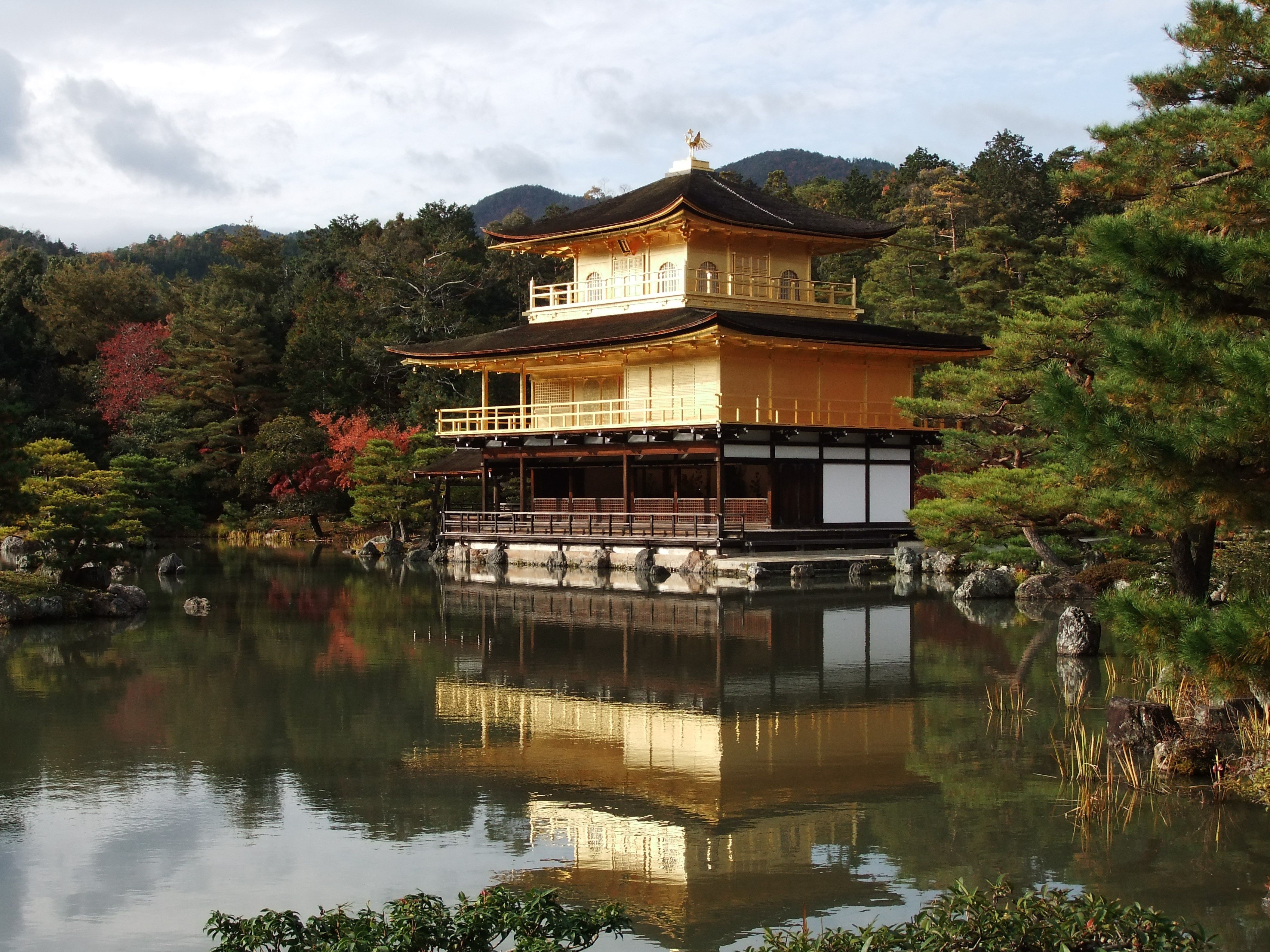
Kinkaku-ji Golden Pavilion
FamousKinkaku-ji (金閣寺, 'Temple of the Golden Pavilion') is a three-story Zen Buddhist temple covered in pure gold leaf, reflec…
 lienyuan lee / CC BY 3.0
Nishijin Textile Center
Locally knownNishijin (西陣) is Kyoto's historic textile district where high-end kimono fabric has been woven for 1,200 years. The neig…
 daidarabotti / CC BY 3.0
Daitoku-ji Temple Complex
Well knownDaitoku-ji (大徳寺) is a sprawling Zen temple complex containing 22 sub-temples, several with exceptional gardens open to t…
Kyoto Zen Meditation
Locally knownYou sit on a round cushion facing a white wall six inches from your nose. Legs folded, back straight, hands in a mudra y…
 Takuya Ichihara / CC BY-SA 3.0
Kyoto Imperial Palace
Well knownKyoto Imperial Palace (京都御所) served as the emperor's residence from 794 to 1869 when the capital moved to Tokyo. The pal…
 Illustration — not a photograph
Sento Imperial Palace
Locally knownSento Imperial Palace (仙洞御所) served as the residence for retired emperors from 1630 onward. The palace buildings no long…
More in Kyoto
 einalem from Kyoto / CC BY-SA 2.0
Kamo River Noryo-yuka
Well knownThe Kamo River (鴨川) flows through central Kyoto, and during summer (May–September) restaurants along its banks construct…
 kanesue / CC BY 3.0
Heian Shrine
Locally knownHeian Shrine (平安神宮) was built in 1895 to commemorate Kyoto's 1,100th anniversary, recreating the original Heian Imperial…
 pelican from Tokyo, Japan / CC BY-SA 2.0
Kyoto Ramen
Locally knownKyoto ramen (京都ラーメン) blends tonkotsu (pork bone) and shoyu (soy sauce) into a rich, dark broth that's less heavy than Ha…