
Top 10 Spots in Kyoto
Kyoto served as Japan's capital for 1,000 years (794-1868), and the city's 2,000+ temples and shrines preserve that imperial legacy. These 10 spots span Kyoto's greatest hits — golden pavilions, geisha districts, torii gate tunnels, and bamboo groves. Most require careful timing to avoid tour bus crowds: early mornings (before 8am) or late afternoons (after 5pm) make the difference between contemplation and frustration.
Kyoto is the one destination in Japan where the ranking question and the crowding question cannot be separated, and this list is organised around that fact rather than around it. The city's best-known sites are extraordinary and, in the hours when most visitors reach them, are experienced from within a moving queue. A list that ranked them on their merits alone would be technically defensible and would mislead almost everyone who used it.
So selection starts from significance — with roughly a thousand years of imperial capital behind it, Kyoto has more first-rank sites than a ten-entry list can hold — and then applies a second test: whether there is a realistic way to see the place properly. That usually means early. Several entries here are on the list specifically because they open early enough, or are open continuously, that a visitor willing to start at dawn gets something close to the experience the site was built to give. A comparable site that offers no such window ranks lower, however important it is.
The ordering also accounts for geography, which in Kyoto is unusually consequential. The major sites sit in clusters around the edges of a basin, and a day that zig-zags between them loses hours to buses. Entries that group naturally with others rank higher than isolated ones of similar quality, because the list is meant to be assembled into days rather than ticked off.
What this list deliberately does not do is substitute obscure temples for famous ones to look sophisticated. Kyoto's famous sites are famous because they are exceptional, and steering a reader with three days away from them would be a disservice. The quieter alternatives belong on the hidden-places list, where the promise matches the contents.
Two limitations. Autumn and cherry blossom seasons change every judgement here — sites that are manageable in June are not in late November — and the entries flag the worst of it rather than the ranking absorbing it. And a ten-entry list of a city with thousands of temples is a starting point; the omissions are not verdicts.
Last revised . No visitor numbers, review scores or user votes are used.
Why #1?
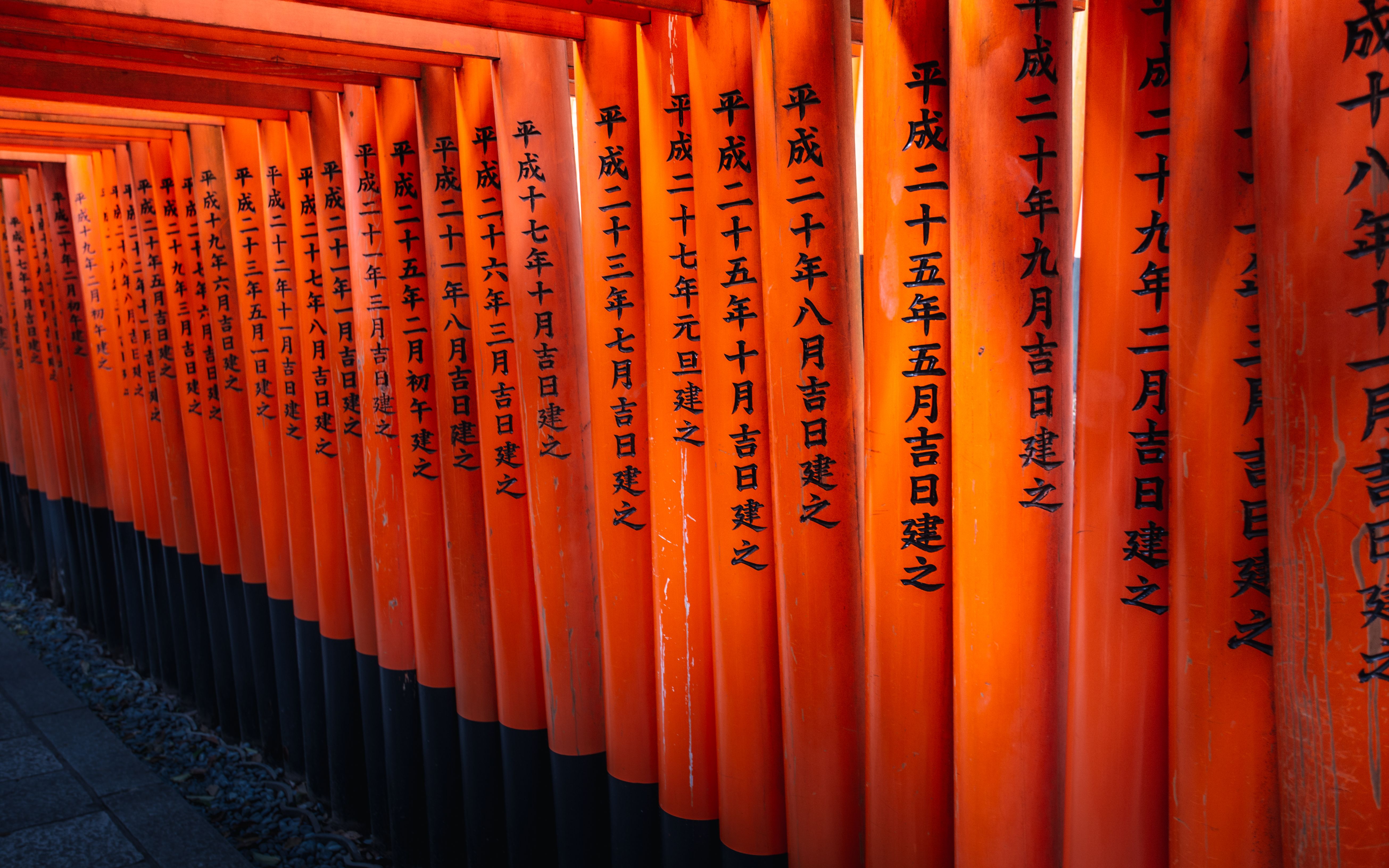
10,000 torii gates tunnel up Mt. Inari. Free, open 24/7, and Kyoto's most photographed sight.
 Pexels
Fushimi Inari Taisha
FamousFushimi Inari Taisha is Kyoto's most iconic shrine, famous for the Senbon Torii (千本鳥居, 'thousands of torii gates') — a t…
Why #2?
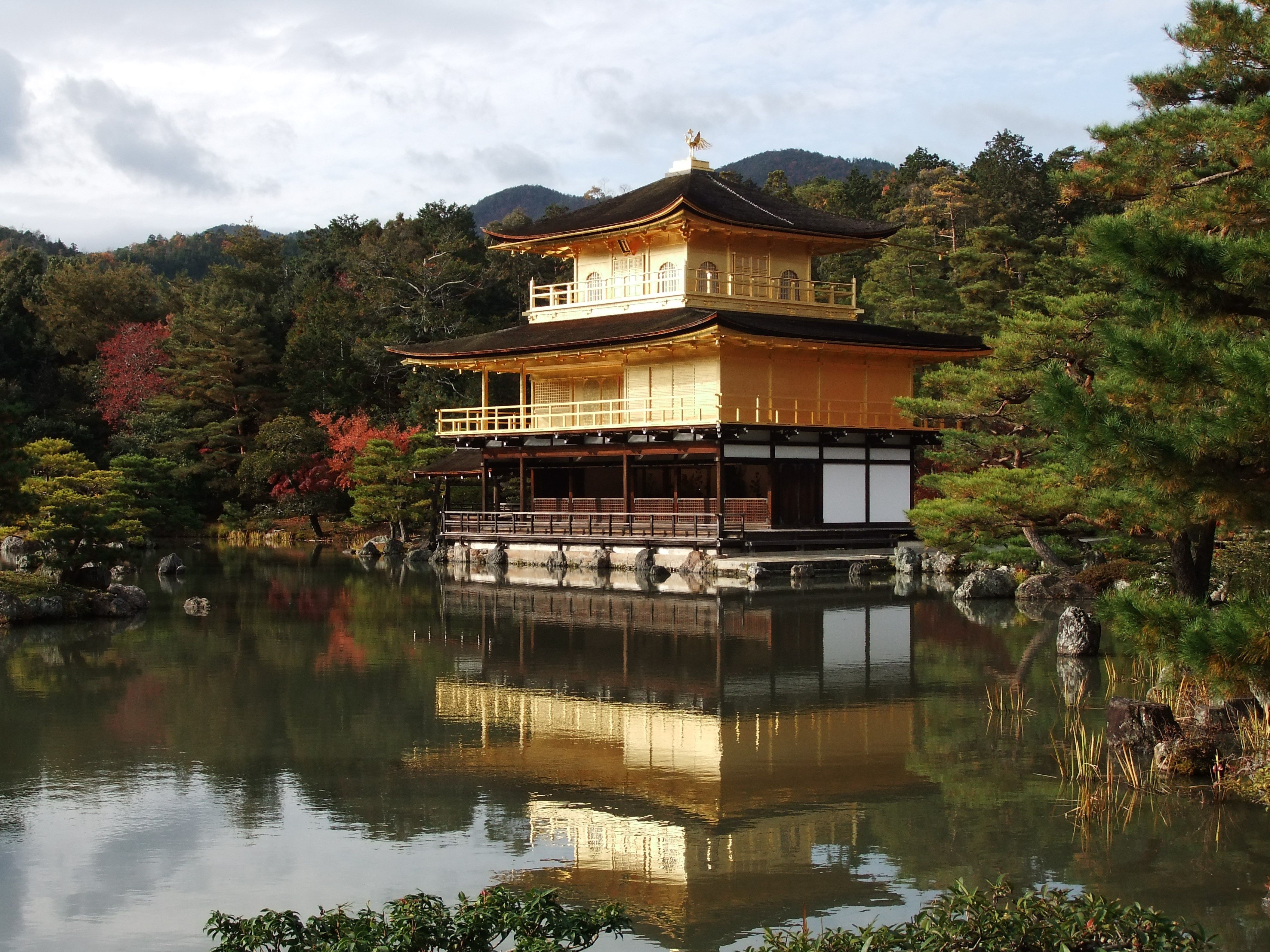
Gold-leaf Zen temple reflected in a mirror pond. Arrive at 9am opening for minimal crowds.
 Pexels
Kinkaku-ji Golden Pavilion
FamousKinkaku-ji (金閣寺, 'Temple of the Golden Pavilion') is a three-story Zen Buddhist temple covered in pure gold leaf, reflec…
Why #3?
Towering bamboo stalks create natural cathedral. Visit before 8am or after 6pm to avoid tour groups.
 Unsplash
Arashiyama Bamboo Grove
FamousThe Arashiyama Bamboo Grove (嵯峨野の竹林) is a path through thousands of towering bamboo stalks that create a natural cathedr…
Why #4?
Wooden stage 13m above a hillside with panoramic city views. Built without nails in 780 AD (current structure 1633).
 柳田亮 / CC BY-SA 3.0
Kiyomizu-dera
FamousKiyomizu-dera (清水寺, 'Pure Water Temple') is a UNESCO World Heritage temple famous for its wooden stage (清水の舞台, Kiyomizu…
Why #5?
Geisha district with wooden machiya houses and lantern-lit streets. Evening strolls offer occasional geiko sightings.
 alonfloc / CC BY 3.0
Gion District
FamousGion (祇園) is Kyoto's most famous geisha district (hanamachi, 花街 'flower town'), where traditional wooden machiya townhou…
Why #6?
400-year-old covered food market with pickles, yuba, matcha sweets, and free samples. Kyoto's culinary encyclopedia.
 Nesnad / CC BY 4.0
Nishiki Market
FamousNishiki Market (錦市場, Nishiki Ichiba) is a narrow covered arcade housing 100+ specialist food vendors selling Kyoto's sea…
Why #7?
2km canal-side walk with 400 cherry trees. Less crowded alternative to major temples for peaceful Kyoto experience.
 そらみみ / CC BY-SA 3.0
Philosopher's Path
FamousThe Philosopher's Path (哲学の道, Tetsugaku no Michi) is a 2-kilometer stone walkway following a canal lined with hundreds o…
Why #8?
Japan's most famous rock garden — 15 stones in raked gravel. The minimalist Zen aesthetic perfected.
 z tanuki / CC BY 3.0
Ryoan-ji Rock Garden
FamousRyoan-ji Temple (龍安寺) houses Japan's most famous Zen rock garden (枯山水, karesansui 'dry landscape') — a rectangular plot…
Why #9?
Multi-course haute cuisine experience. Reserve Kikunoi, Hyotei, or Gion Karyo 1-3 months in advance.
 Donatingpictures / CC BY-SA 4.0
Kyoto Kaiseki
FamousWalk into Kikunoi and the room falls silent except for water trickling in the courtyard garden. Your server places a lac…
Why #10?
Wooden bridge over maple valley. Autumn (November) draws massive crowds; visit spring or summer for solitude.
 くろふね / CC BY 3.0
Tofuku-ji Temple
FamousTofuku-ji Temple (東福寺) is Kyoto's premier autumn foliage destination, featuring 2,000 maple trees that create a 'sea of…
Explore More Rankings
Discover other curated lists to plan your perfect Japan itinerary
View All Rankings