Wakasa Obama Juku Food Culture Museum
Researched and written by Hinato
Wakasa Obama Juku Food Culture Museum is the kind of Fukui food stop that locals recommend before any restaurant with a sign in English.
The Obama Food Culture Museum (御食国若狭おばま食文化館) celebrates Obama's 1,500-year history as miketsukuni — an imperial food-supply province that provided seafood and salt to the ancient capitals of Nara and Kyoto. The museum's exhibits trace the Saba Kaido mackerel route, display traditional fishing methods, and explain wakasa-karei (flatfish) processing techniques that preserved seafood for the 72-kilometer journey to Kyoto.
The museum includes working demonstration kitchens where visitors observe traditional fish processing: mackerel salting, fish fermentation for heshiko, and wakasa-guji (tilefish) preparation. The highlight is the hands-on workshop area offering chopstick lacquering (¥1,200), fish-shaped kamaboko making (¥800), and heshiko pickling mini-courses (¥1,500) — all resulting in take-home products. The museum restaurant serves Obama's regional specialties: grilled mackerel sushi, heshiko rice bowl, and wakasa-guji miso soup.
What to know before you go
When to go
Year-round. Best combined with an early morning Obama Fish Market visit (7:00am) and museum opening at 9:00. Autumn and winter for peak mackerel and seafood quality.
Serving hours
Heshiko demonstrations: 11:00 AM and 2:00 PM daily.
Closed: Closed Wednesdays. Closed December 28–January 4.
Time to allow
90 minutes for museum and one workshop. 2.5 hours for museum, workshop, and restaurant lunch. Pair with morning fish market for a full-day Obama itinerary.
Cost
Museum: ¥300. Chopstick lacquering workshop: ¥1,200. Fish-shaped kamaboko workshop: ¥800. Heshiko mini-course: ¥1,500. Restaurant lunch set: ¥1,800.
How to reach it
Getting there in detail
Beyond the guidebook
Nearby Spots
The closest hidden gems to Wakasa Obama Juku Food Culture Museum, by straight-line distance.
Wakasa Bay
Little knownWakasa Bay (若狭湾) is a deeply indented coastal region facing the Sea of Japan, historically famous as the terminus of the…
 663highland / CC BY 2.5
Sanchomachi
Locally knownObama was the port where the mackerel and everything else from the Sea of Japan came ashore for Kyoto, and the money tha…
 663highland / CC BY 2.5
Jinguji Omizuokuri
Little knownEvery 12 March, water is drawn from a well at Todaiji in Nara in the ceremony called Omizutori. The belief is that the w…
 663highland / CC BY 2.5
Sotomo Crags
Little knownThe Sotomo coast (蘇洞門) on the Uchikoshi Peninsula in northern Wakasa Bay is a 6-kilometer stretch of sheer granite and a…
 663highland / CC BY 2.5
Myotsuji
Locally knownFukui has exactly two National Treasure buildings and both are here, in a wooded valley outside Obama. The main hall dat…
 Motokoka / CC BY-SA 4.0
Uriwari Falls
Little knownThe name means the melon splitter, from a story that the water was so cold that a melon left in it cracked. It comes out…
More in Fukui
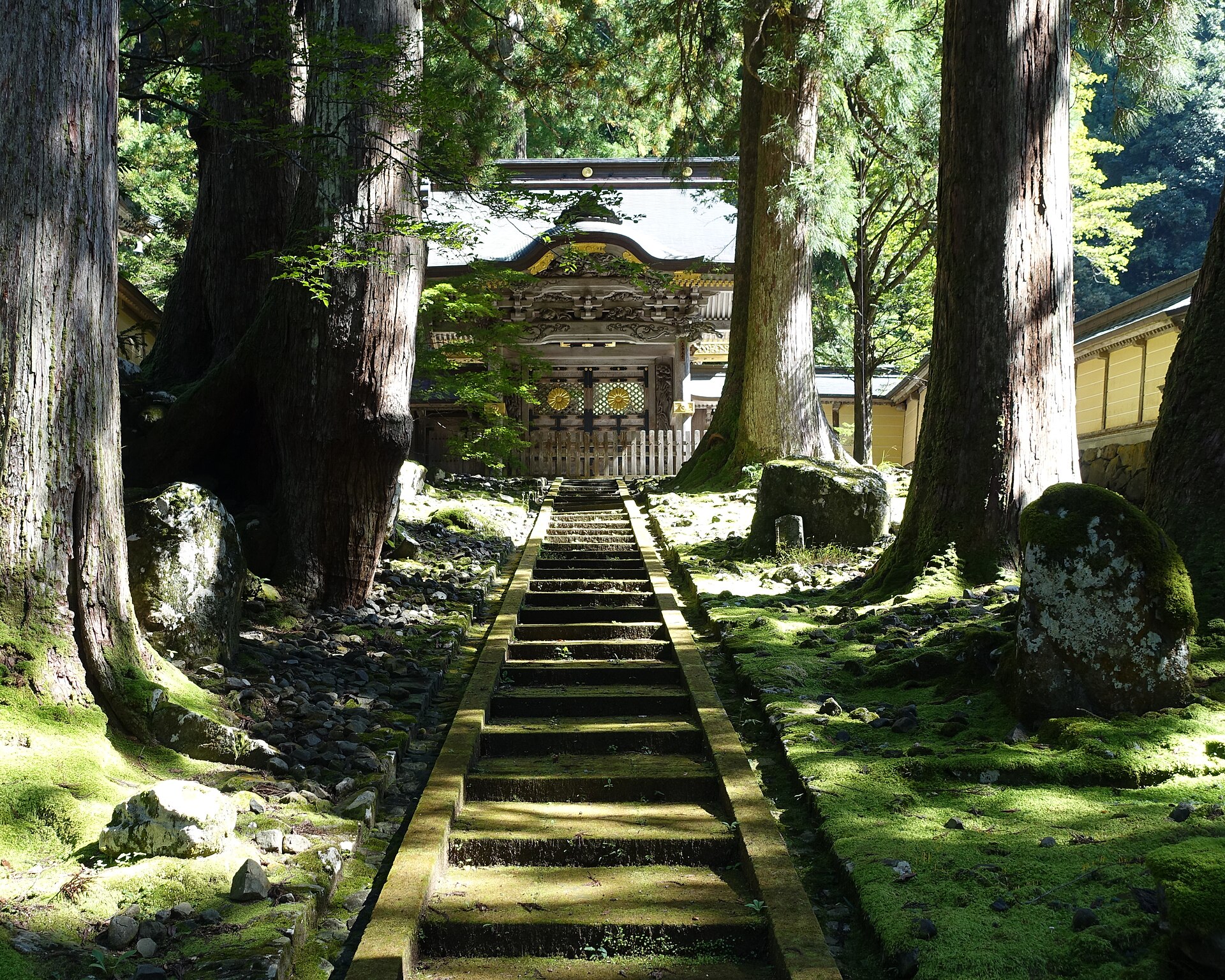 Douglaspperkins / CC BY-SA 4.0
Eiheiji Temple
Little knownEiheiji is a working Zen monastery founded in 1244, where 150-200 monks follow a training schedule unchanged since the E…
 Illustration — not a photograph
Fukui Prefectural Dinosaur Museum
Little knownThe Fukui Prefectural Dinosaur Museum ranks among the world's three premier dinosaur museums (alongside Beijing and Drum…
 雷太 / CC BY 2.0
Tojinbo Cliffs
Little knownTojinbo is a 1-kilometer stretch of vertical basalt columnar jointing cliffs rising 20–30 meters above the Sea of Japan…