
Lake Kawaguchiko
Researched and written by Hinato
Yamanashi · Fujikawaguchiko
35.5089°N, 138.7639°E
What sets Lake Kawaguchiko apart from other natural sites in Yamanashi is how much depends on conditions outside anyone's control.
Lake Kawaguchiko is the most accessible and developed of the Fuji Five Lakes, offering the clearest reflection views of Mt. Fuji when atmospheric conditions align. The lake sits at 833m elevation, directly north of Fuji's peak, creating the iconic 'upside-down Fuji' (sakasa Fuji) reflection that appears in calm morning conditions. The northern shore is lined with hotels, museums, and viewing platforms; the quieter eastern and western shores remain largely undeveloped.
The lake serves as the tourism hub for the Fuji Five Lakes region, with easy access to hiking trails, hot springs, and seasonal festivals. The most famous view is from the Oishi Park lavender fields (late June) where purple flowers frame the lake with Fuji rising beyond. Winter offers the clearest Fuji visibility and the possibility of photographing the mountain with its full snow cap reflected in the frozen lake edges.
Our angle on Lake Kawaguchiko
Nobody else is going here
Everyone within a mile of Lake Kawaguchiko is going to Lake Kawaguchiko. Here are 4 places within walking or one bus ride of it that almost nobody writes about — straight-line distances from our own catalogue, not travel times.
- Momiji Kairo Maple CorridorLittle known~1.3 km away · Yamanashi
The Momiji Kairo (紅葉回廊, 'Maple Corridor') is a 150-meter pathway along the northern shore of Lake Kawaguchiko lined with…
- Kawaguchiko Music Forest MuseumLittle known~1.9 km away · Yamanashi
The Kawaguchiko Music Forest Museum is a European-style garden and music box museum set against the backdrop of Mt. Fuji…
- Kitaguchi Hongu Fuji Sengen ShrineLittle known~3.3 km away · Yamanashi
Kitaguchi Hongu Fuji Sengen Shrine has served as the traditional starting point for Mt. Fuji pilgrimages via the Yoshida…
- Oshino HakkaiLittle known~8.9 km away · Yamanashi
Oshino Hakkai is a collection of eight crystal-clear ponds fed by snowmelt from Mt. Fuji that has filtered through under…
Plan your visit
Time to allow
Half day to full day
Hours
Open 24 hours (lake and shoreline areas) | Lake cruises: 9:30 AM – 5:00 PM
Closed: No regular closures (outdoor areas) | Lake cruises: weather-dependent cancellations
Best time to visit
Autumn (November) for maple corridor | Spring (April) for cherry blossoms | Winter (December–February) for Fuji reflections
Entry fee
Free (lake access and Oishi Park) | Lake cruise: ¥1,000 adults, ¥500 children
Finding your way there
Directions
Access in depth
Nearest Station
Kawaguchiko Station (Fujikyuko Line) — 5–15 min walk or Red Line sightseeing bus
Travel Time
From Tokyo Station: ~2 hours (JR Chuo Line to Otsuki + Fujikyuko Line to Kawaguchiko, ¥2,500) | From Narita Airport: ~3 hours
How to Get There
Train: JR Chuo Line from Shinjuku (special express) or Otsuki (regular), then Fujikyuko Line to Kawaguchiko Station (~90 min total from Shinjuku, ¥1,750). Bus: Keio Highway Bus from Shinjuku Busta to Kawaguchiko Station (~2 hrs, ¥2,000 one-way, reservation recommended). Car: Chuo Expressway to Kawaguchiko IC (~90 min from Tokyo). Parking available throughout the lake area (¥300–500/day).
Best Time to Visit
Early mornings 6:00–8:00 AM for reflections and Fuji views before crowds. Weekdays year-round.
Crowd Avoidance Tips
Oishi Park during cherry blossom (April) and autumn foliage (November) draws heavy crowds. Visit Nagahama Beach for identical views with far fewer visitors. The Momiji Kairo (maple corridor) fills by 11 AM on weekends in November — arrive at 9 AM or after 4 PM.
Parking Information
Multiple paid parking areas around the lake (¥300–500/day). Kawaguchiko Station area has a large public lot. Weekends and peak season fill early. Public transport recommended from Tokyo.
Local knowledge
Book Your Stay Nearby
Find accommodation close to Lake Kawaguchiko on these trusted booking platforms:
Nearby Spots
The closest hidden gems to Lake Kawaguchiko, by straight-line distance.
Momiji Kairo Maple Corridor
Little knownThe Momiji Kairo (紅葉回廊, 'Maple Corridor') is a 150-meter pathway along the northern shore of Lake Kawaguchiko lined with…
 江戸村のとくぞう / CC BY-SA 4.0
Kawaguchiko Music Forest Museum
Little knownThe Kawaguchiko Music Forest Museum is a European-style garden and music box museum set against the backdrop of Mt. Fuji…
 1i1ian / CC BY-SA 4.0
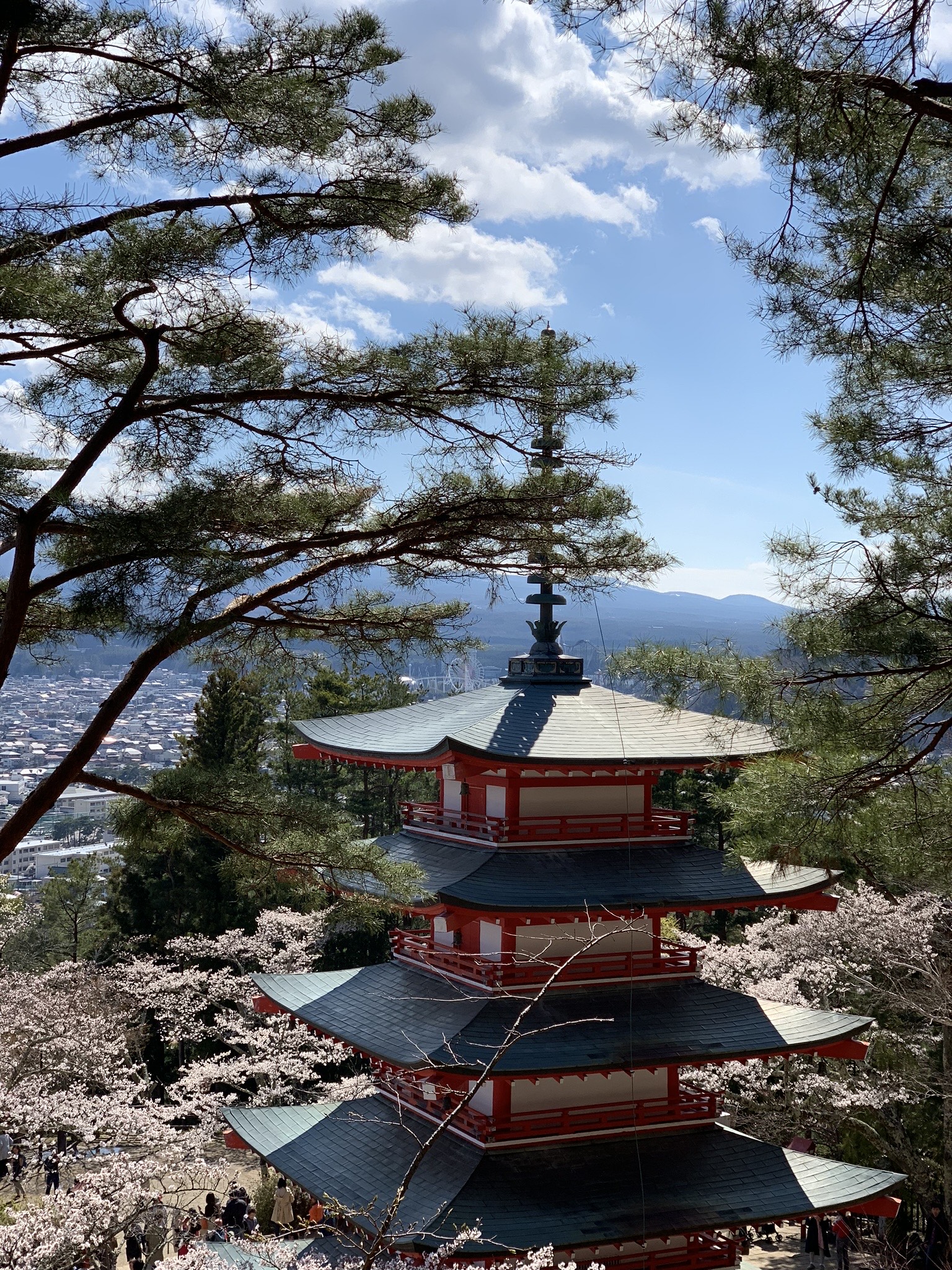
Chureito Pagoda
FamousThe Chureito Pagoda, a five-story vermillion structure perched on the hillside above Fujiyoshida City, offers the postca…
 江戸村のとくぞう / CC BY-SA 4.0
Kitaguchi Hongu Fuji Sengen Shrine
Little knownKitaguchi Hongu Fuji Sengen Shrine has served as the traditional starting point for Mt. Fuji pilgrimages via the Yoshida…
 663highland / CC BY-SA 4.0
Oshino Hakkai
Little knownOshino Hakkai is a collection of eight crystal-clear ponds fed by snowmelt from Mt. Fuji that has filtered through under…
 Sakaori ( talk ) / CC BY-SA 3.0
Lake Saiko Bat Cave and Forest
Little knownLake Saiko, the fourth-largest of the Fuji Five Lakes, remains the quietest and least developed — no lakeshore hotels, m…
More in Yamanashi
 Illustration — not a photograph
Hoto Noodles
Little knownHoto is Yamanashi's signature comfort dish — thick, flat wheat noodles simmered in a miso-based broth with kabocha squas…
 Totti / CC BY-SA 4.0
Isawa Onsen
Little knownIsawa Onsen, located in the Fuefuki Valley surrounded by peach and grape orchards, is Yamanashi's largest hot spring res…
 Illustration — not a photograph
Yamanashi Fruit Picking
Little knownYamanashi Prefecture is Japan's fruit basket — the nation's top producer of grapes and peaches, and second for cherries.…