
Kawaguchiko Music Forest Museum
Researched and written by Hinato

Photo: 江戸村のとくぞう / Wikimedia Commons (CC BY-SA 4.0) · original
What sets Kawaguchiko Music Forest Museum apart from other natural sites in Yamanashi is how much depends on conditions outside anyone's control.
The Kawaguchiko Music Forest Museum is a European-style garden and music box museum set against the backdrop of Mt. Fuji. The facility recreates a medieval European village with stone buildings, rose gardens, fountains, and an ornate concert hall housing the world's largest dance organ. The museum's collection includes antique music boxes, orchestrions, and automated musical instruments from the 18th–20th centuries, many of which still function and perform daily.
The real attraction is the garden setting — manicured flower beds bloom year-round (tulips in spring, roses in summer, cosmos in autumn) with Mt. Fuji rising beyond the European architecture. The juxtaposition of European garden aesthetics and Japan's most iconic mountain creates surreal photo compositions. The on-site restaurant serves high tea service with views of the rose garden and Fuji, and the gift shop sells music boxes and Swiss-made mechanical instruments.
Plan your visit
Time to allow
2–3 hours including garden, organ concert, and gift shop
Hours
9:00 AM – 5:30 PM (last entry 5:00 PM). Music performances hourly 10:00 AM – 4:00 PM.
Closed: Open year-round (check ahead during New Year period)
Best time to visit
June–July for rose garden peak bloom (700 bushes, 90 varieties); October–November for autumn foliage framing European architecture
Entry fee
¥1,800 adults. ¥1,100 children. High tea set ¥2,000–2,800 (separate).
Getting there
Getting there in detail
What to bring
Nearby Spots
The closest hidden gems to Kawaguchiko Music Forest Museum, by straight-line distance.
Momiji Kairo Maple Corridor
Little knownThe Momiji Kairo (紅葉回廊, 'Maple Corridor') is a 150-meter pathway along the northern shore of Lake Kawaguchiko lined with…
Lake Kawaguchiko
FamousLake Kawaguchiko is the most accessible and developed of the Fuji Five Lakes, offering the clearest reflection views of…
 1i1ian / CC BY-SA 4.0
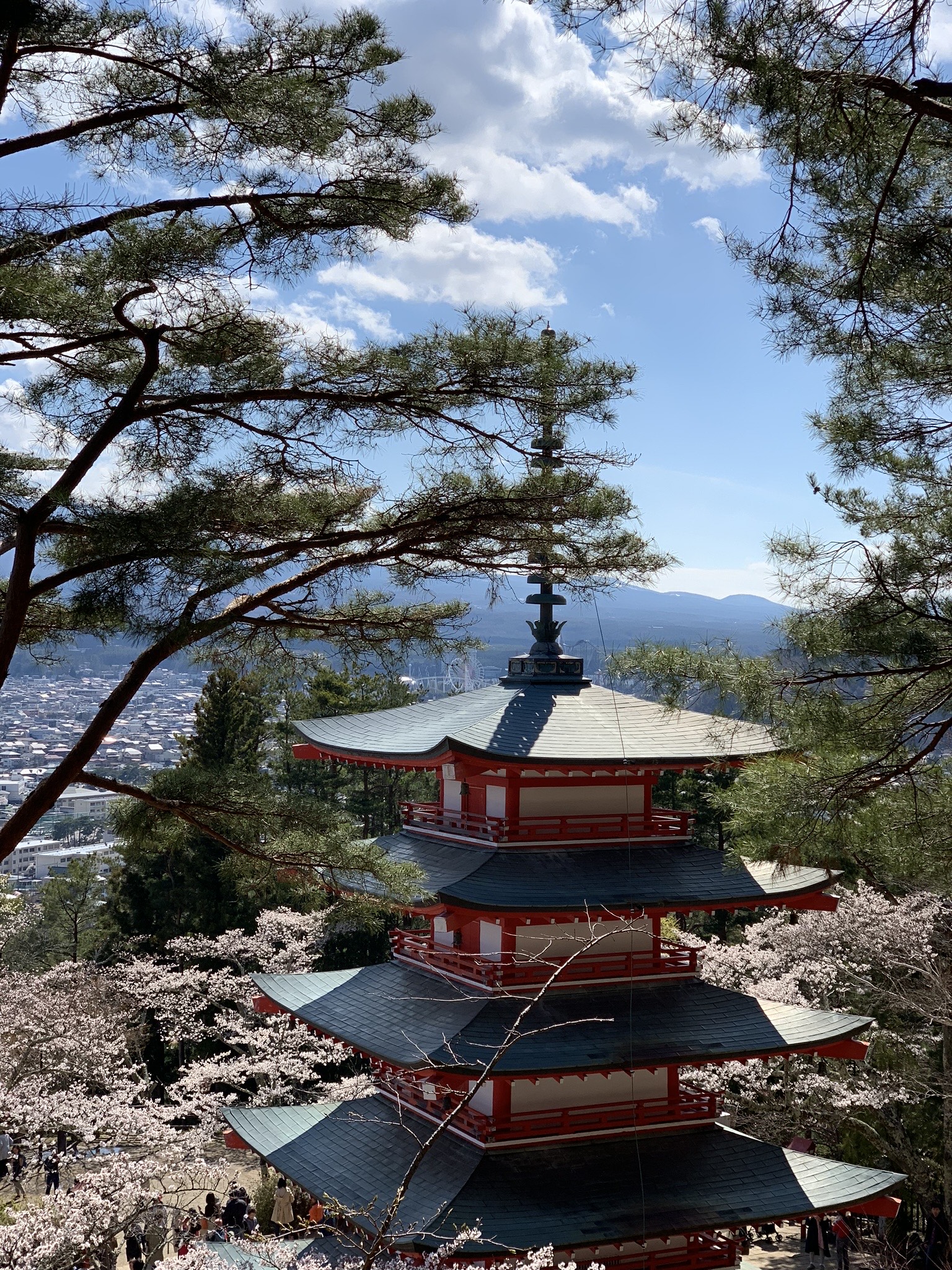
Chureito Pagoda
FamousThe Chureito Pagoda, a five-story vermillion structure perched on the hillside above Fujiyoshida City, offers the postca…
 江戸村のとくぞう / CC BY-SA 4.0
Kitaguchi Hongu Fuji Sengen Shrine
Little knownKitaguchi Hongu Fuji Sengen Shrine has served as the traditional starting point for Mt. Fuji pilgrimages via the Yoshida…
 Sakaori ( talk ) / CC BY-SA 3.0
Lake Saiko Bat Cave and Forest
Little knownLake Saiko, the fourth-largest of the Fuji Five Lakes, remains the quietest and least developed — no lakeshore hotels, m…
 663highland / CC BY-SA 4.0
Oshino Hakkai
Little knownOshino Hakkai is a collection of eight crystal-clear ponds fed by snowmelt from Mt. Fuji that has filtered through under…
More in Yamanashi
Kofu Wine Wineries
Little knownKofu Basin in central Yamanashi is Japan's premier wine-producing region, responsible for 40% of domestic wine productio…
Takeda Shingen Historical Sites
Little knownTakeda Shingen (1521–1573) was one of the most formidable daimyo of Japan's Warring States period, ruling Kai Province (…
 Illustration — not a photograph
Hoto Noodles
Little knownHoto is Yamanashi's signature comfort dish — thick, flat wheat noodles simmered in a miso-based broth with kabocha squas…