
Hoto Noodles
Facts verified: August 2026 · Sources: kosaku.co.jp, kofu-tourism.com, ja.wikipedia.org, tabelog.com
Researched and written by Hinato
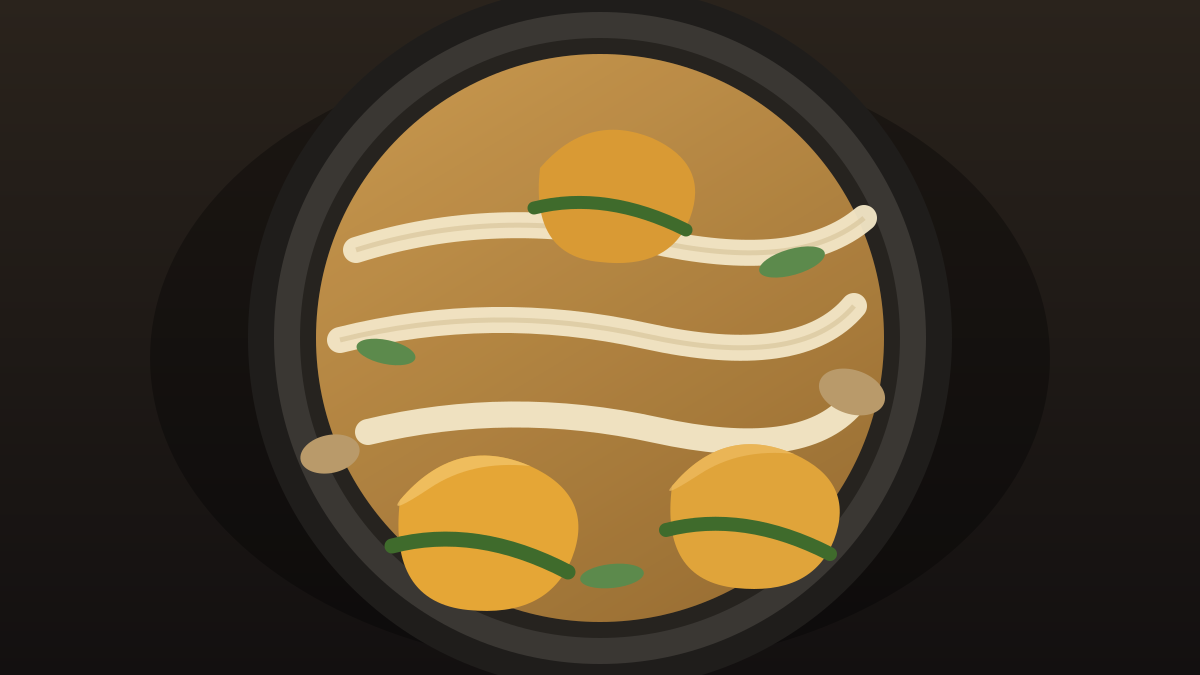
You don't need to speak the language to order well at Hoto Noodles — you need to know when to go and what to expect.
Hoto is Yamanashi's signature comfort dish — thick, flat wheat noodles simmered in a miso-based broth with kabocha squash, mushrooms, potatoes, carrots, and taro root. Unlike typical Japanese noodle dishes where noodles and broth are prepared separately, hoto noodles are cooked directly in the broth, causing the starches to thicken the soup into a hearty, almost stew-like consistency. The result is deeply warming and filling — a dish developed in Yamanashi's cold mountain winters.
The dish dates back centuries and is associated with Takeda Shingen, who allegedly served hoto to his troops due to its nutritional density and ease of preparation in field conditions. Modern hoto restaurants serve the dish in individual iron pots (nabe) that retain heat throughout the meal. The best-known name is Koshu Hoto Kosaku, a Yamanashi chain founded in May 1972 that now runs nine restaurants — eight across Yamanashi and one in Nagano — including two within a few minutes of Kofu Station.
Yamanashi's mountainous terrain and short growing season historically made rice farming difficult across much of the prefecture, which pushed the local diet toward wheat-based dishes like hoto and toward the pumpkin, potatoes, and root vegetables that grow more reliably at altitude — the same ingredients that fill the pot today. That practical origin is part of why hoto reads less as a delicacy than as genuinely hearty farmhouse cooking, closer in spirit to a stew than to the more refined broths associated with, say, Kyoto cuisine. The dish's association with Takeda Shingen has helped it become a point of local pride as much as a meal, showing up on plaques and restaurant signage throughout Kofu, the former Takeda stronghold, and giving visitors a small history lesson alongside dinner. Because the noodles are unglazed and uncut before going straight into the simmering pot, each restaurant's broth thickens slightly differently depending on how long the noodles cook and how starchy that particular batch of flour is — regulars in Yamanashi have opinions about which shops let the broth get properly thick and which serve it thinner.
Before you eat
Serving hours
Kosaku Kofu Ekimae: 11:00 AM – 10:00 PM Mon–Sat, 11:00 AM – 9:00 PM Sunday. Other restaurants vary — confirm before visiting.
Closed: Kosaku Kofu Ekimae has no regular closing day. Other restaurants vary — confirm before visiting.
What it costs
¥1,150 for kabocha hoto at Kosaku; most other varieties ¥1,400–2,100 — confirm current pricing
Best time to go
Autumn–winter (October–March) for peak kabocha squash sweetness; available year-round
Time to allow
45–60 minutes for a full nabe meal
Access route
Getting there in detail
Insider tips
Book Your Stay Nearby
Find accommodation close to Hoto Noodles on these trusted booking platforms:
Nearby Spots
The closest hidden gems to Hoto Noodles, by straight-line distance.
 くろふね / CC BY 3.0
Maizuru Castle Park
Little knownMaizuru Castle Park occupies the grounds of historic Kofu Castle (舞鶴城), built in 1583 by Toyotomi Hideyoshi's vassal and…
Takeda Shingen Historical Sites
Little knownTakeda Shingen (1521–1573) was one of the most formidable daimyo of Japan's Warring States period, ruling Kai Province (…
 Totti / CC BY-SA 4.0
Isawa Onsen
Little knownIsawa Onsen, located in the Fuefuki Valley surrounded by peach and grape orchards, is Yamanashi's largest hot spring res…
Shosenkyo Gorge
Little knownShosenkyo Gorge, carved by the Arakawa River through the granite mountains north of Kofu, stretches 5km through vertical…
 Illustration — not a photograph
Yamanashi Fruit Picking
Little knownYamanashi Prefecture is Japan's fruit basket — the nation's top producer of grapes and peaches, and second for cherries.…
Lake Shojiko and Lake Motosuko
Little knownLake Shojiko (西湖) and Lake Motosuko (本栖湖) are the westernmost of the Fuji Five Lakes, connected by a 2km walking path th…
More in Yamanashi
Daizenji Taisekiji Temple
Little knownDaizenji Taisekiji Temple, nestled in the Katsunuma wine valley, has an unusual claim: it houses a 1,200-year-old wooden…
 江戸村のとくぞう / CC BY-SA 4.0
Kitaguchi Hongu Fuji Sengen Shrine
Little knownKitaguchi Hongu Fuji Sengen Shrine has served as the traditional starting point for Mt. Fuji pilgrimages via the Yoshida…
 1i1ian / CC BY-SA 4.0
Chureito Pagoda
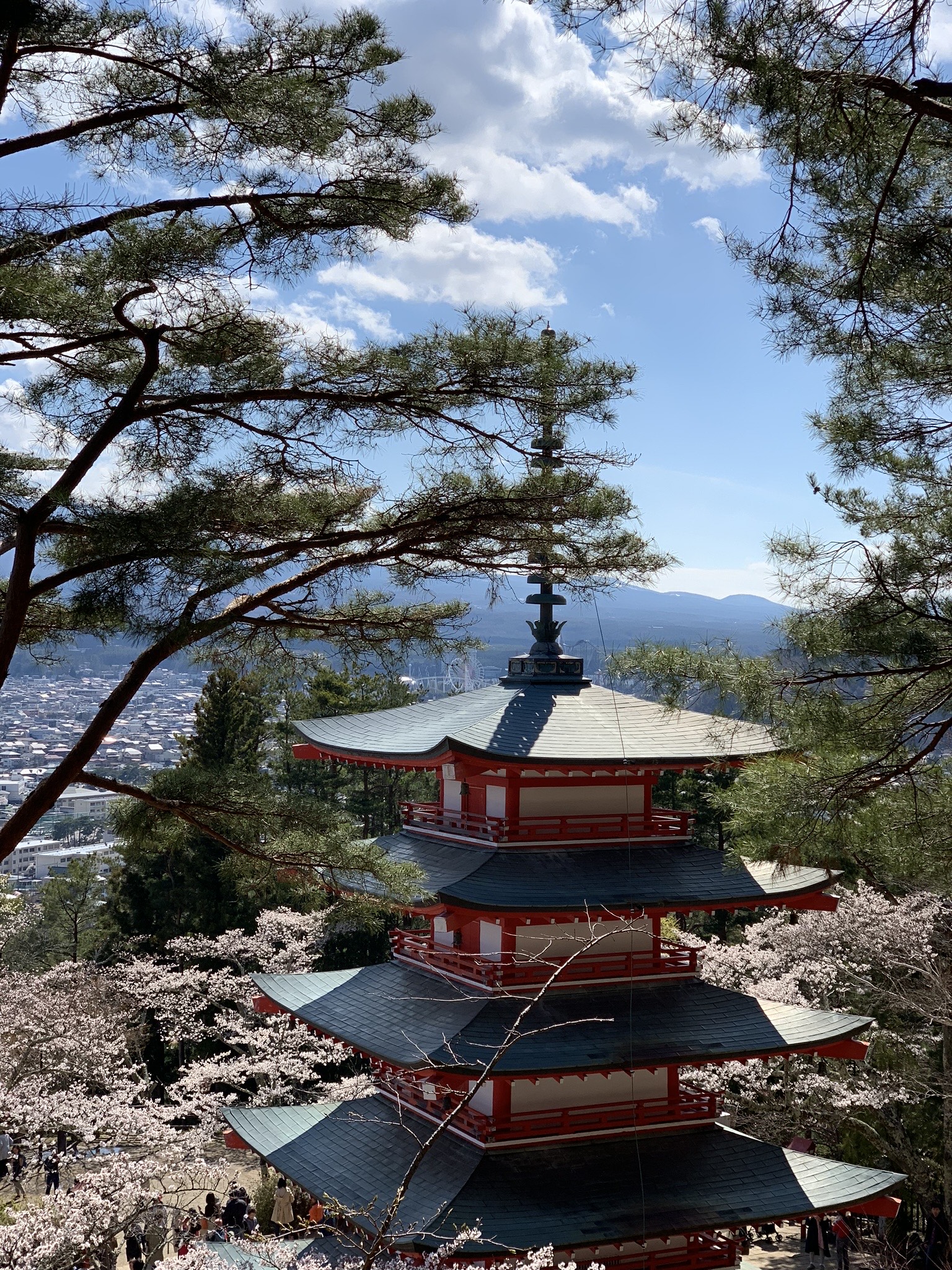
FamousThe Chureito Pagoda, a five-story vermillion structure perched on the hillside above Fujiyoshida City, offers the postca…