
Dejima
Researched and written by Hinato

Photo: 663highland / Wikimedia Commons (CC BY 2.5) · original
A quick walk through Dejima tells you less than a slow one — the details are where the history actually lives.
Dejima was an artificial fan-shaped island built in 1636 to confine Portuguese traders, and later (1641–1859) served as the only point of contact between Japan and the Western world during the sakoku isolation period. The Dutch East India Company maintained a trading post here with 15–20 Dutch residents who were forbidden to leave the island. All Western knowledge entering Japan for 200 years — medicine, astronomy, military technology, art — passed through Dejima's warehouses.
The original island was absorbed into land reclamation in 1904, but modern reconstruction has restored 5 of the original 25 buildings based on archaeological excavation and Dutch East India Company archives. The rebuilt warehouses, residences, and offices recreate the spatial experience of the trading post.
What to know before you go
When to go
Year-round | Live interpretation performances daily at 11:00 AM and 2:00 PM | Combine with Chinatown and Oura Church for a half-day Minamiyamate circuit
Opening hours
8:00 AM – 6:00 PM
Closed: Open year-round | Occasional closures for special exhibitions
Time to allow
60–90 minutes
Fee
¥520 adults
Access route
Access notes
Beyond the guidebook
Nearby Spots
The closest hidden gems to Dejima, by straight-line distance.
 663highland / CC BY 2.5
Nagasaki Chinatown
Locally knownNagasaki Shinchi Chinatown is Japan's oldest Chinatown, established in the 1690s when the Tokugawa shogunate designated…
 katorisi / CC BY-SA 3.0
Nagasaki Castella Cake
Locally knownCastella (カステラ) is a sponge cake introduced to Nagasaki by Portuguese merchants in the 16th century. The Japanese versio…
 Masoud Akbari / CC BY-SA 3.0
Megane-bashi (Spectacles Bridge)
Locally knownMegane-bashi ('Spectacles Bridge') is a double-arched stone bridge built in 1634 by the Chinese monk Mokusunyoujo — the…
 Masoud Akbari / CC BY-SA 3.0
Glover Garden
Well knownGlover Garden preserves nine Western-style mansions from Nagasaki's treaty port era (1859–1899), clustered on a terraced…
 663highland / CC BY 2.5
Nagasaki Champon at Shikairo
Well knownChampon — thick wheat noodles in a milky pork-bone and chicken broth loaded with seafood and vegetables — was invented i…
 さかおり / CC BY-SA 4.0
Sofukuji Temple
Locally knownSofukuji is a Chinese-style Zen temple established in 1629 by Chinese residents of Nagasaki, built in the Ming Dynasty a…
More in Nagasaki
Nagasaki Ropeway Night View to Mt. Inasa
Locally knownThe Nagasaki Ropeway, rebuilt in 2020 with new larger cabins, is the definitive way to experience the Mt. Inasa night vi…
Oura Catholic Church
Well knownBuilt in 1864 by French missionary Father Petitjean, Oura Church is the oldest surviving Christian church in Japan and a…
 Jordy Meow / CC BY-SA 3.0
Gunkanjima (Battleship Island)
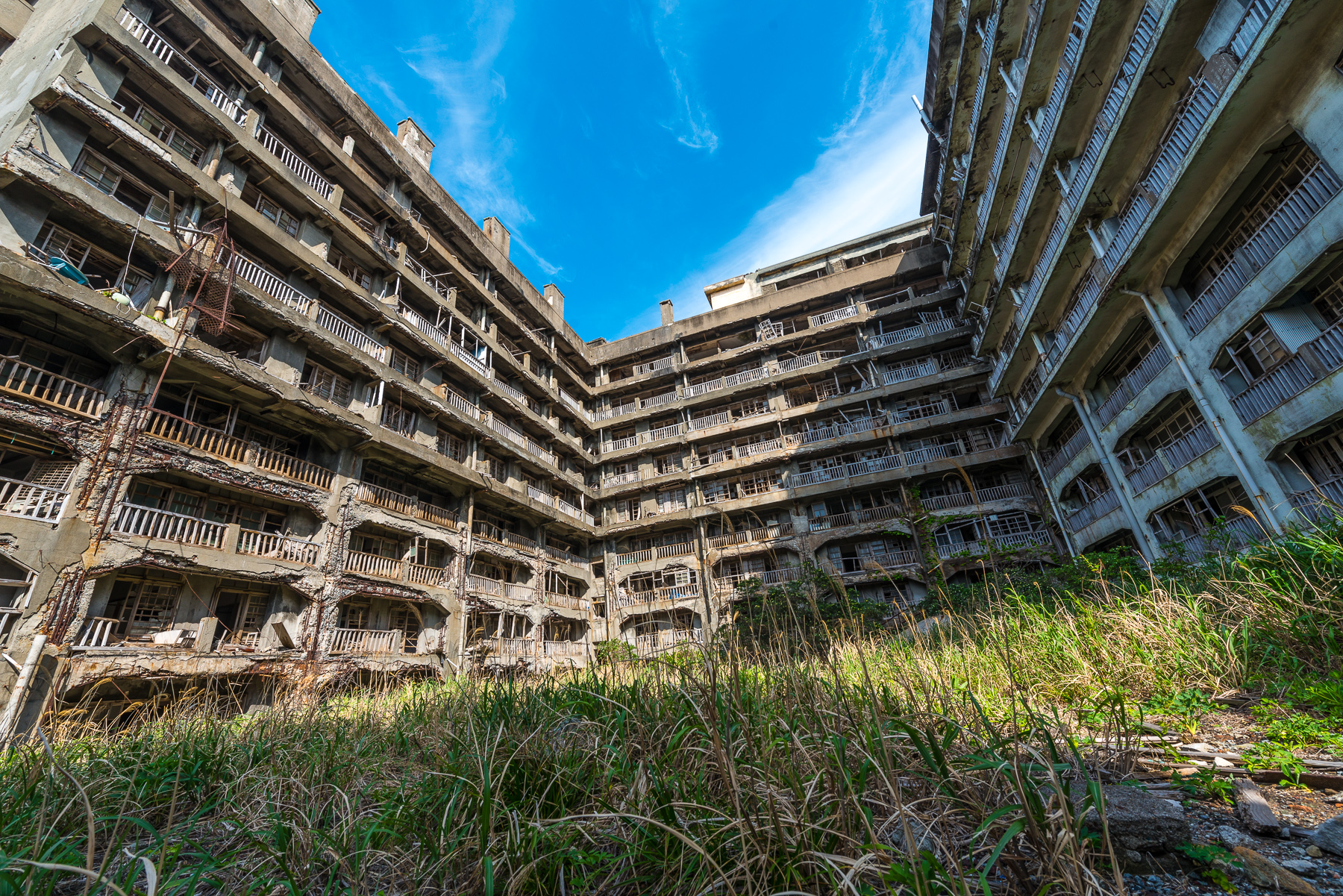
Well knownHashima Island, universally known as Gunkanjima (Battleship Island) for its silhouette resembling a warship, is a 6.3-he…