
Goto Islands
Researched and written by Hinato

Ask where to send a first-time visitor for a temple or shrine in Nagasaki, and Goto Islands comes up more than once.
Take the a boat from Hisaka port to Kashiragashima Island (population: 26) and walk the concrete path uphill past three houses, a closed school, and a cemetery where every gravestone bears a cross. The church seats forty. Sunday mass at 9:00 draws eight people — six over age seventy, one middle-aged woman, one visiting pilgrim. The priest arrives by boat from the main island, says mass in Japanese and Latin, and departs. The church stands empty the other six days. This is what remains of the Goto Islands' Christian villages.
Between 1614 and 1873, Christianity was punishable by death in Japan. Believers in Nagasaki fled to the Goto Islands — a 100km-long archipelago so remote and poor that Tokugawa authorities barely monitored it. Fishing villages on Fukue, Naru, and Hisaka islands sheltered families who practiced in secret for 250 years, developing a hybrid faith that blended Catholic prayers with Buddhist funeral rites, disguised the Virgin Mary as the Kannon bodhisattva, and passed down baptismal formulas in whispered Portuguese nobody could translate anymore.
When the prohibition ended in 1873, these hidden believers emerged and built churches — fifty-two of them across the islands between 1880 and 1931. The churches occupy the most improbable locations imaginable: Egami Church (1918) sits in a thatched-roof fishing village accessible by a single-lane road that dead-ends at the harbor. Dozaki Church (1908) crowns a hilltop facing the East China Sea, red brick against blue water, reached by climbing 120 stone steps. Kashiragashima Church requires a boat to an island with no cars, no shops, and no young people — everyone under fifty moved to the mainland for work.
Twelve churches are UNESCO World Heritage Sites. What UNESCO designates doesn't mention: these are dying parishes. Villages that had 400 residents in 1950 now have forty. The youngest parishioner at most churches is sixty-two. Priests travel by boat to say mass at three or four islands in a single Sunday. In another generation, these buildings will be museums. Right now, they're living churches where the last believers maintain 150 years of continuous liturgy in villages emptying out one funeral at a time.
Visiting essentials
Best time to visit
Year-round | Spring (April–May) and Autumn (October–November) for comfortable weather and clear skies | Summer (July–August) hot but ferries run more frequently
Hours
Sunday mass: 8:30–10:30 AM (avoid visiting during mass) | Dozaki Church museum: 9:00 AM – 5:00 PM
Closed: Churches: no regular closing days | Sunday mornings during mass: observe or attend respectfully | Ferries to smaller islands: check seasonal schedules
Admission
Church entry: free (donation ¥300–500 appropriate) | Dozaki Church museum: ¥300 | Island ferry: ¥1,000–3,000 depending on destination
Time to allow
Fukue Island main churches: 1 full day | All 3 key churches including Naru + Kashiragashima: 2 full days | 3-day walking pilgrimage for serious visitors
Finding your way there
Directions
Full directions & timing
Nearest Station
Nagasaki Station (JR Nagasaki Line) — ferry from Nagasaki Port to Fukue Island (3 hrs, ¥5,000) or flight from Nagasaki Airport (30 min, ¥15,000)
Travel Time
From Nagasaki Port: 3-hr ferry to Fukue (¥5,000) or 30-min flight (¥15,000) | From Osaka/Tokyo: flight to Nagasaki then connection | Ferry runs daily
How to Get There
Ferry: Kyushu Shosen ferry from Nagasaki Port to Fukue Island (3 hrs, ¥5,000, departs morning and afternoon). Book ahead for weekends. Flight: JAC/ORC from Nagasaki Airport to Fukue Airport (30 min, ¥15,000). Faster but more expensive. On island: Rental car essential (¥6,000–8,000/day at Fukue Airport or Port). Churches are 10–40 km apart with no bus service. No public transport to most church locations.
Best Time to Visit
Weekday visits avoid the rare tourist groups. Sunday 10:30–11:30 AM (after mass) allows peaceful church visits when elderly parishioners may still be present — rare opportunity for organic interaction.
Crowd Avoidance Tips
The Goto Islands see very few foreign tourists — crowding is never an issue. The main challenge is ferry schedules and rental car availability (book cars in advance for summer). The churches are peaceful and unhurried regardless of season.
Parking Information
Free parking at all churches. Dozaki Church: small lot at base of stairs (walk 10 min up). Rural island setting — no parking fees anywhere on the Goto Islands.
Beyond the guidebook
Book Your Stay Nearby
Find accommodation close to Goto Islands on these trusted booking platforms:
Nearby Spots
The closest hidden gems to Goto Islands, by straight-line distance.
Fukue Island Beaches
Little knownFukue Island, the largest of the Goto Islands, has 20+ named beaches with water clarity and sand quality that rival Okin…
 Jordy Meow / CC BY-SA 3.0
Gunkanjima (Battleship Island)
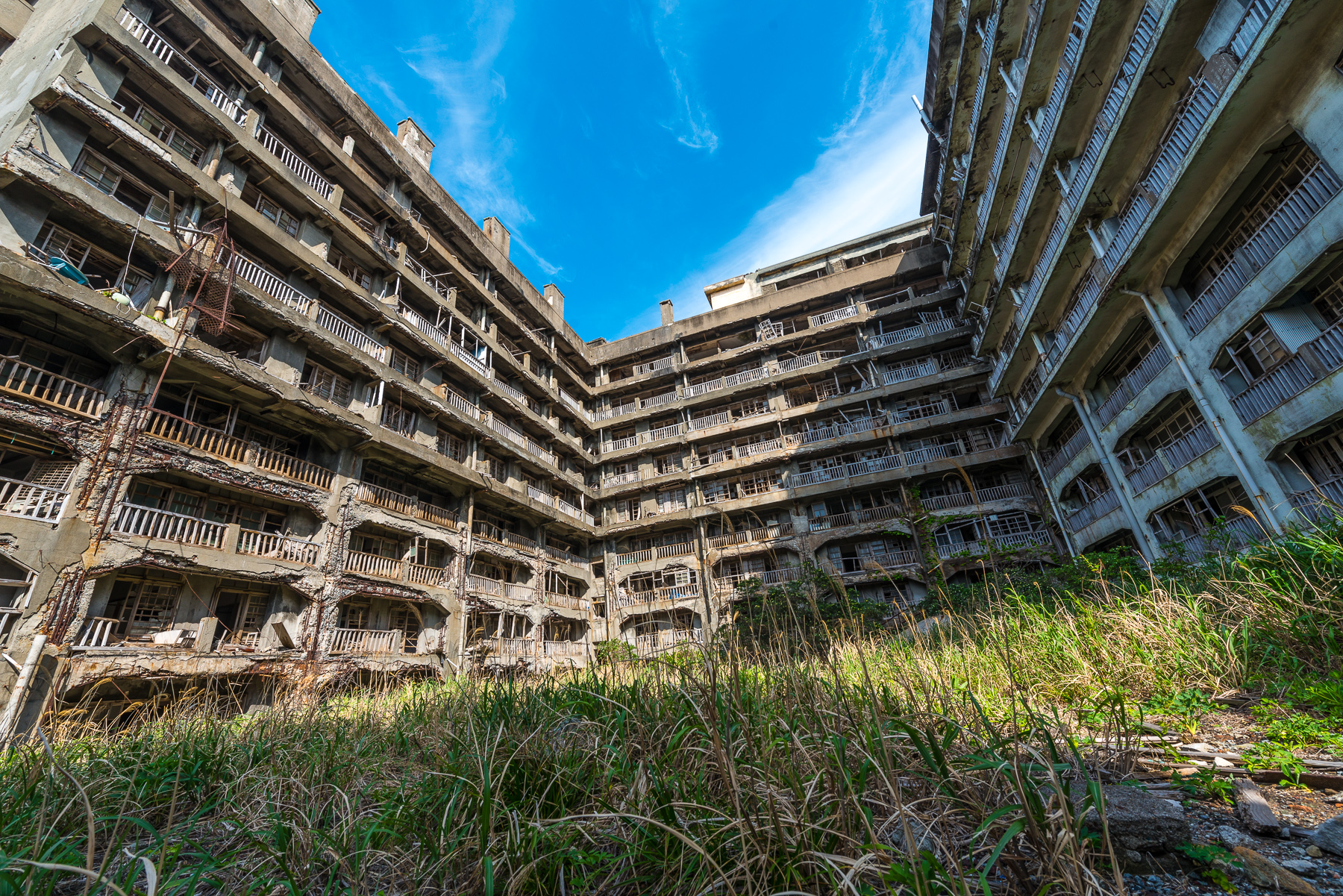
Well knownHashima Island, universally known as Gunkanjima (Battleship Island) for its silhouette resembling a warship, is a 6.3-he…
 STA3816 / CC BY-SA 3.0
Kujukushima (99 Islands)
Little knownKujukushima ('99 islands,' though actually 208) is a scattering of forested islets across Omura Bay north of Sasebo — a…
Nagasaki Ropeway Night View to Mt. Inasa
Locally knownThe Nagasaki Ropeway, rebuilt in 2020 with new larger cabins, is the definitive way to experience the Mt. Inasa night vi…
 Konstantin Leonov | GONE. RIP FLICKR. | http://oldstable.org/ | htt… / CC BY 2.0
Mount Inasa Night View
Well knownMount Inasa (333m) overlooks Nagasaki from the west, providing a 360-degree panorama that includes the harbor, city cent…
Nagasaki Peace Park & Atomic Bomb Museum
Well knownAt 11:02 on August 9, 1945, a plutonium bomb detonated 500 meters above the Urakami Valley, instantly killing an estimat…
More in Nagasaki
 さかおり / CC BY-SA 4.0
Hirado Castle
Little knownHirado Castle occupies a forested peninsula surrounded on three sides by the Hirado Strait, commanding views of both the…
Shimabara Castle & Christian Rebellion Site
Well knownShimabara Castle (1625) stands on the site of the Shimabara Rebellion (1637–1638) — the largest armed uprising in Edo-pe…
 Barry Silver / CC BY 2.0
Unzen Jigoku (Unzen Hell)
Well knownUnzen Jigoku is a 500-meter-wide field of active volcanic vents on the slopes of Mt. Unzen, emitting sulfurous steam at…