
Nagasaki Peace Park & Atomic Bomb Museum
Researched and written by Hinato
Nagasaki · Nagasaki City
32.7756°N, 129.8636°E
What Nagasaki Peace Park & Atomic Bomb Museum looked like originally and what it looks like now are two different stories — both worth knowing before you arrive.
At 11:02 on August 9, 1945, a plutonium bomb detonated 500 meters above the Urakami Valley, instantly killing an estimated 40,000 people and destroying everything within a 1km radius. The Nagasaki Atomic Bomb Museum documents the event with artifacts, survivor testimonies, and contextual history of the Pacific War. The adjacent Peace Park contains the Peace Statue — a 9.7-meter bronze figure with right hand pointing to the sky (the threat of nuclear weapons) and left hand extended horizontally (eternal peace).
What distinguishes Nagasaki's atomic legacy from Hiroshima is the specific targeting: the bomb was originally intended for Kokura (now Kitakyushu) but was diverted to Nagasaki due to cloud cover. The hypocenter was the Urakami Cathedral — the largest Catholic church in Asia — making Nagasaki's Christian community the unintended victim of the second atomic attack.
What to know before you go
When to go
Year-round | August 9 for the annual peace ceremony (moment of silence at 11:02 AM, attend from 8:30 AM)
Opening hours
Peace Park: open 24 hours
Closed: Open year-round | Museum closed December 29–31
Time to allow
90 minutes (museum + hypocenter monument walk + Peace Park)
Fee
Museum: ¥200 adults | Peace Park: free
How to reach it
Access notes
Beyond the guidebook
Nearby Spots
The closest hidden gems to Nagasaki Peace Park & Atomic Bomb Museum, by straight-line distance.
Nagasaki Ropeway Night View to Mt. Inasa
Locally knownThe Nagasaki Ropeway, rebuilt in 2020 with new larger cabins, is the definitive way to experience the Mt. Inasa night vi…
 Konstantin Leonov | GONE. RIP FLICKR. | http://oldstable.org/ | htt… / CC BY 2.0
Mount Inasa Night View
Well knownMount Inasa (333m) overlooks Nagasaki from the west, providing a 360-degree panorama that includes the harbor, city cent…
 さかおり / CC BY-SA 4.0
Sofukuji Temple
Locally knownSofukuji is a Chinese-style Zen temple established in 1629 by Chinese residents of Nagasaki, built in the Ming Dynasty a…
 katorisi / CC BY-SA 3.0
Nagasaki Castella Cake
Locally knownCastella (カステラ) is a sponge cake introduced to Nagasaki by Portuguese merchants in the 16th century. The Japanese versio…
 Masoud Akbari / CC BY-SA 3.0
Megane-bashi (Spectacles Bridge)
Locally knownMegane-bashi ('Spectacles Bridge') is a double-arched stone bridge built in 1634 by the Chinese monk Mokusunyoujo — the…
 663highland / CC BY 2.5
Nagasaki Chinatown
Locally knownNagasaki Shinchi Chinatown is Japan's oldest Chinatown, established in the 1690s when the Tokugawa shogunate designated…
More in Nagasaki
 663highland / CC BY 2.5
Nagasaki Champon at Shikairo
Well knownChampon — thick wheat noodles in a milky pork-bone and chicken broth loaded with seafood and vegetables — was invented i…
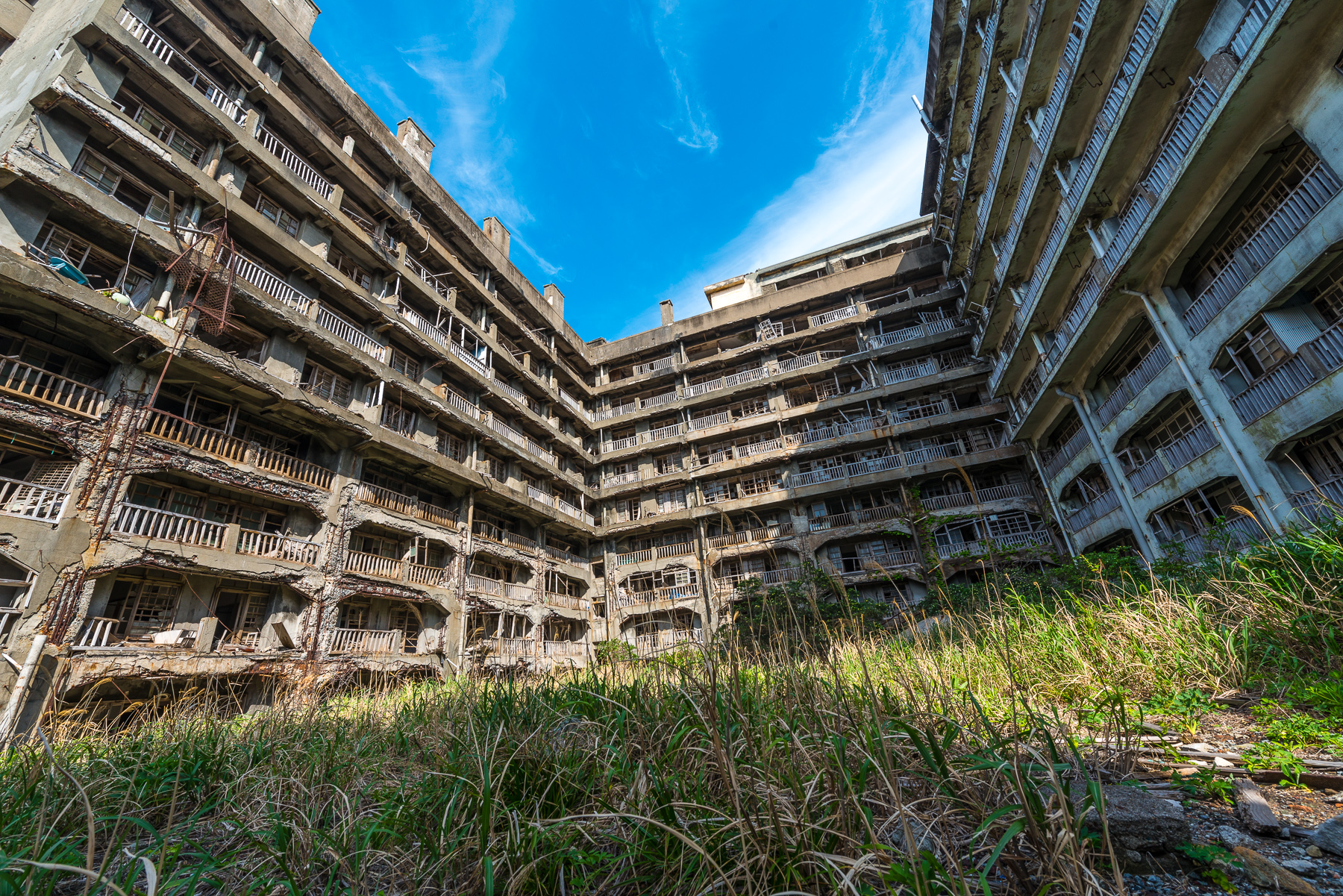 Jordy Meow / CC BY-SA 3.0
Gunkanjima (Battleship Island)
Well knownHashima Island, universally known as Gunkanjima (Battleship Island) for its silhouette resembling a warship, is a 6.3-he…
 STA3816 / CC BY-SA 3.0
Kujukushima (99 Islands)
Little knownKujukushima ('99 islands,' though actually 208) is a scattering of forested islets across Omura Bay north of Sasebo — a…