
Yawatahama Champon
Researched and written by Hinato

Photo: J o / Wikimedia Commons (CC BY-SA 4.0) · original
Ehime's food culture rewards showing up hungry and unhurried — Yawatahama Champon is built for exactly that.
Champon travelled from Nagasaki through Kurume to Hita in Oita, and then across the Bungo channel by ferry to Yawatahama, which has been the ferry port for Kyushu since the Meiji period. What arrived was adapted. The Yawatahama version has a clear golden broth made from chicken bone, bonito and kelp rather than the white pork-bone soup of Nagasaki, thick Chinese noodles, a great deal of vegetable, and — the local marker — kamaboko and jakoten, the fish cakes this fishing town makes.
It is a genuinely everyday food here. The result is lighter than any other regional champon in Japan and tastes distinctly of the sea rather than of pork.
Eating essentials
Price range
Priced individually — confirm at each shop
Best season
Year-round
Hours
Varies by establishment — confirm before travelling
Closed: Varies by establishment
How long to allow
45–60 minutes
How to reach it
Directions
What locals order
Nearby Spots
The closest hidden gems to Yawatahama Champon, by straight-line distance.
Ozu Castle Town
Little knownOzu is a well-preserved castle town along the Hijikawa River, featuring Edo-period merchant houses, samurai residences,…
 yano@mama.akari.ne.j… / CC BY-SA 3.0
Ohanahan Street
Little knownOzu was a castle town on the Hiji river and kept its Edo street plan, and Ohanahan-dori is the best-preserved lane in it…
 yano@mama.akari.ne.j… / CC BY-SA 3.0
Garyu Sanso Villa
Locally knownGaryu Sanso is a refined villa and tea house built in 1907 by a wealthy merchant, perched on a cliff overlooking the Hij…
 Asturio Cantabrio / CC BY-SA 4.0
Uchiko Town
Little knownUchiko's merchants made fortunes in the 18th and 19th centuries by harvesting waxy berries from haze trees, crushing the…
 Reggaeman / CC BY-SA 3.0
Uchikoza
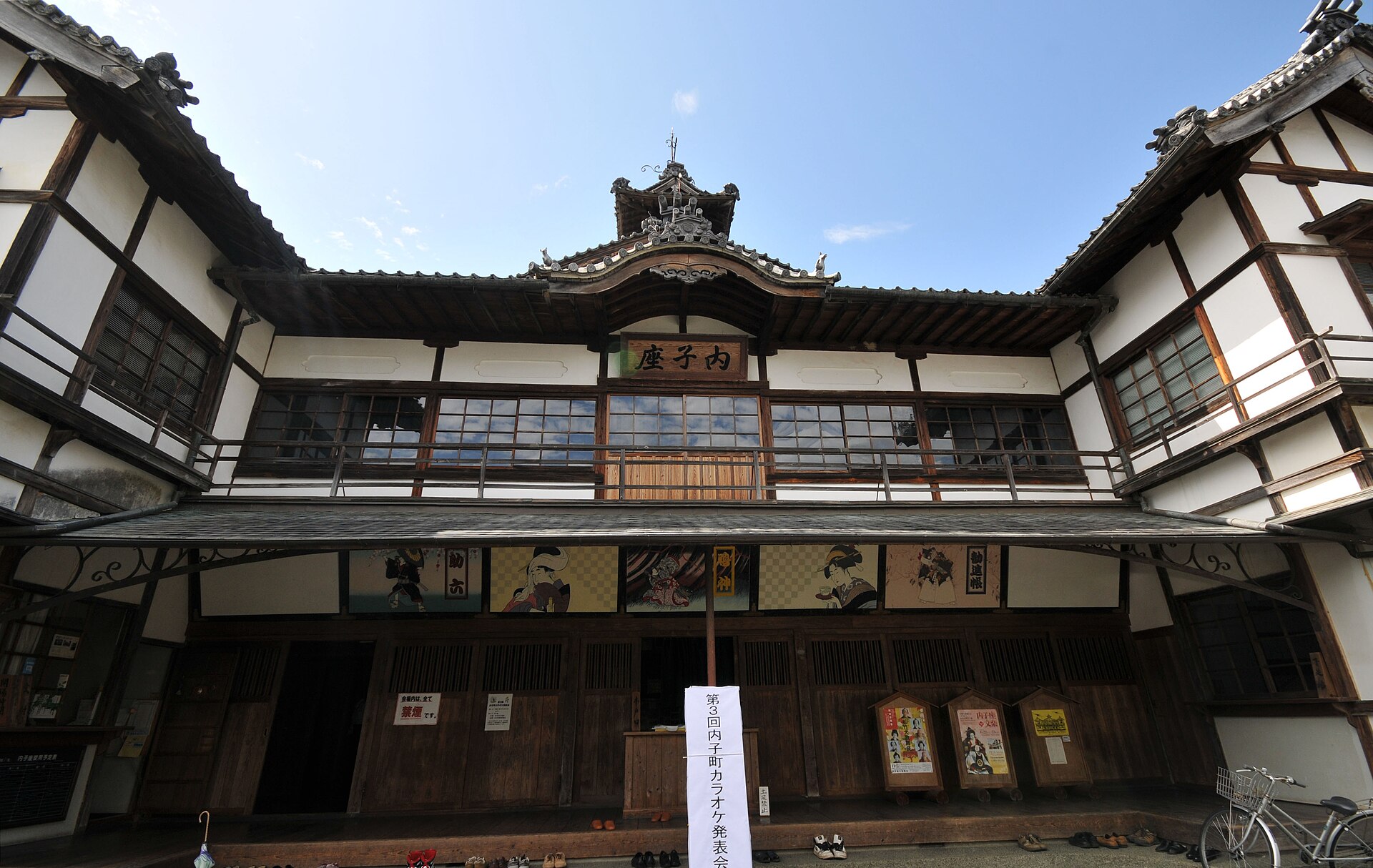
Little knownUchikoza was built in 1916 by eighteen local businessmen who had made money from wax and wanted somewhere to watch kabuk…
 Suikotei / CC BY-SA 4.0
Kamihaga Residence
Locally knownUchiko's money came from mokuro — Japan wax, pressed from the berries of the haze tree and used for candles, hair oil, p…
More in Ehime
Shimanami Kaido (Imabari side)
Little knownThe Shimanami Kaido runs 70 kilometers from Honshu to Shikoku, crossing the Seto Inland Sea by hopping six islands conne…
 Maarten Heerlien from Voorschoten, The Netherlands / CC BY 2.0
Ishite-ji Temple
Locally knownIshite-ji is Temple #51 of the 88-temple Shikoku Pilgrimage, a large Buddhist complex featuring a towering three-story p…
 Illustration — not a photograph
Tobe Pottery
Locally knownTobe-yaki is Ehime's signature ceramic style, characterized by thick white porcelain hand-painted with indigo-blue botan…