
Uchiko Town
Researched and written by Hinato

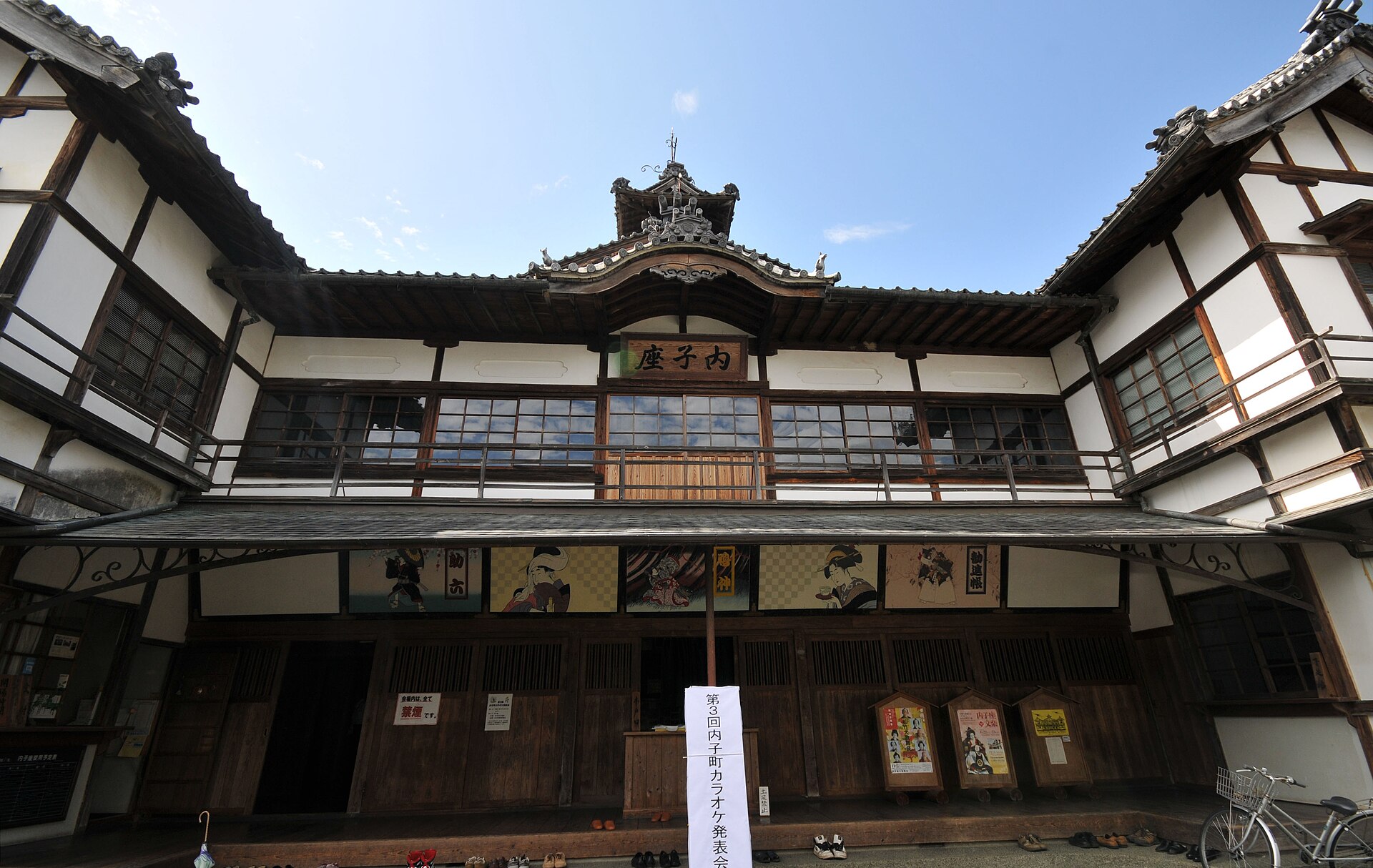
Photo: Asturio Cantabrio / Wikimedia Commons (CC BY-SA 4.0) · original
Uchiko Town is easy to reduce to a photo stop, but the history behind it is what makes the stop worth making.
Uchiko's merchants made fortunes in the 18th and 19th centuries by harvesting waxy berries from haze trees, crushing them, heating the pulp, and pressing out mokuro (木蝋, vegetable wax). This wax burned cleaner and brighter than animal tallow, selling to candle makers, cosmetics producers, and waterproofers across Japan. The profits built Yokaichi Old Town — a street of two-story plastered merchant houses with lattice fronts, interior courtyards, and wax-pressing workshops preserved exactly as operations ceased.
You can walk through three merchant house museums showing the complete wax production process: harvest vats, wooden presses, drying racks, account books recording sales. The living quarters upstairs demonstrate how wealthy these traders became — lacquered furniture, silk screens, gardens with imported stones.
Before you go
Opening hours
Yokaichi Old Town walking area: free access all day. Merchant house museums: 9:00 AM – 4:30 PM. Uchiko-za kabuki theater: 9:00 AM – 4:30 PM. Shops: roughly 10:00 AM – 5:00 PM.
Closed: Most museums closed Mondays (Tuesday if Monday is a public holiday). Kabuki theater open daily for tours outside performance days.
Admission
Street walking free. Merchant house museums ¥500 each, ¥900 combination ticket (3 houses). Uchiko-za theater ¥400. Kamihaga Residence guesthouse ¥8,000–12,000/night with breakfast.
Best time to visit
Spring (April–May) for calm weather and cherry blossoms near the town approach. Autumn (October–November) for harvest atmosphere and October festival. Summer is hot but the Paper Lantern Festival (August 14–16) is exceptional.
Time to allow
Walking the historic street and entering 1–2 merchant houses: 2 hours. Full experience including theater, all museums, and wax history: 3–4 hours. Overnight guests have the town to themselves after 17:00.
Finding your way there
Directions
Access in depth
Nearest Station
Uchiko Station (JR Yosan Line), 10-minute walk to Yokaichi Old Town.
Travel Time
From Matsuyama: JR Yosan Line 25 min (¥470). From Ozu: JR 15 min. From Tokyo: fly to Matsuyama (75 min) then train 25 min. From Osaka: Shinkansen to Okayama then limited express Shiokaze to Matsuyama (2.5 hrs) then JR to Uchiko.
How to Get There
JR Yosan Line direct from Matsuyama (25 min, several trains per hour). Rental car from Matsuyama (40 min via Route 56). No highway bus direct to Uchiko — use Matsuyama as base.
Best Time to Visit
9:00–10:00 AM when the street is empty and early light illuminates the white plaster facades. Weekday mornings are quietest; weekend afternoons bring day-trip crowds from Matsuyama.
Crowd Avoidance Tips
The town is compact and can feel crowded during Golden Week and autumn. Even on busy days, side streets and the residential area behind Yokaichi are peaceful. Overnight guests have the town entirely to themselves.
Parking Information
Uchiko Town parking near the station (free, 30 spaces) or paid lot near Yokaichi entrance (¥300/day). Driving is convenient since Uchiko is a JR stop and parking is plentiful by city standards.
What locals know
Book Your Stay Nearby
Find accommodation close to Uchiko Town on these trusted booking platforms:
Nearby Spots
The closest hidden gems to Uchiko Town, by straight-line distance.
 Reggaeman / CC BY-SA 3.0
Uchikoza
Little knownUchikoza was built in 1916 by eighteen local businessmen who had made money from wax and wanted somewhere to watch kabuk…
 Suikotei / CC BY-SA 4.0
Kamihaga Residence
Locally knownUchiko's money came from mokuro — Japan wax, pressed from the berries of the haze tree and used for candles, hair oil, p…
 yano@mama.akari.ne.j… / CC BY-SA 3.0
Garyu Sanso Villa
Locally knownGaryu Sanso is a refined villa and tea house built in 1907 by a wealthy merchant, perched on a cliff overlooking the Hij…
 yano@mama.akari.ne.j… / CC BY-SA 3.0
Ohanahan Street
Little knownOzu was a castle town on the Hiji river and kept its Edo street plan, and Ohanahan-dori is the best-preserved lane in it…
Ozu Castle Town
Little knownOzu is a well-preserved castle town along the Hijikawa River, featuring Edo-period merchant houses, samurai residences,…
 abu_9495 / CC BY 3.0
Shimonada Station
Little knownA single unstaffed platform on the Yosan Line with a wooden bench, a corrugated shelter, and the Iyo-nada sea directly b…
More in Ehime
 円周率3パーセント / CC BY-SA 4.0
Jakoten
Locally knownJakoten (じゃこ天) is Ehime's signature fish cake made from small fish (jako — tiny sardines or anchovies) ground whole with…
Bessho Onsen (Ehime)
Little knownBessho Onsen is a secluded hot spring resort nestled in the mountains near Mt. Ishizuchi, known for its milky-white sulf…
Tonaru
Little knownBesshi was worked for copper from 1691 to 1973, for two hundred and eighty-two years, and it built the Sumitomo group. T…