
Kamihaga Residence
Researched and written by Hinato

Photo: Suikotei / Wikimedia Commons (CC BY-SA 4.0) · original
What Kamihaga Residence looked like originally and what it looks like now are two different stories — both worth knowing before you arrive.
Uchiko's money came from mokuro — Japan wax, pressed from the berries of the haze tree and used for candles, hair oil, polish and later for export. The Haga family were the largest producers and by the Meiji period Uchiko wax was being shipped to Europe and won prizes at international expositions. Electric light ended the trade.
The Kamihaga house is the branch family's compound of 1894, kept complete: the main house, the wax-pressing shed with its presses and cauldrons, the drying yard, the storehouses. It is an Important Cultural Property and it is the only place in Japan where the whole process — berry to bleached wax — can be followed through the buildings it happened in. The yellow-tinged plaster of the Uchiko streets outside was made with local clay, and the money for it came from here.
What to know before you go
When to go
Year-round
Opening hours
9:00 AM – 4:30 PM
Closed: Closed 29 December – 2 January
Time to allow
60–90 minutes
Fee
¥500 adults | ¥250 children | Group rates for 20 or more
Reaching the site
Access notes
Beyond the guidebook
Nearby Spots
The closest hidden gems to Kamihaga Residence, by straight-line distance.
 Reggaeman / CC BY-SA 3.0
Uchikoza
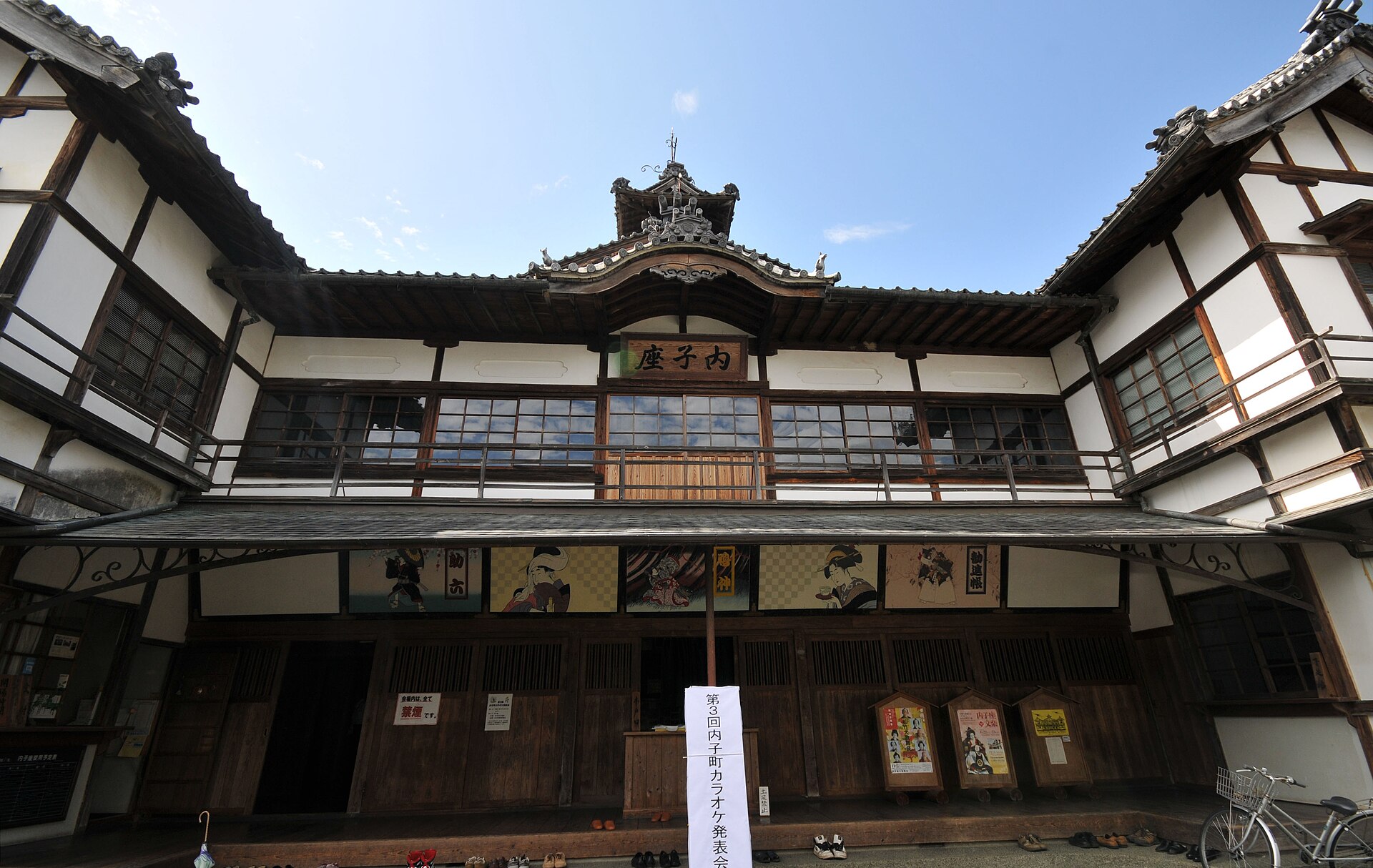
Little knownUchikoza was built in 1916 by eighteen local businessmen who had made money from wax and wanted somewhere to watch kabuk…
 Asturio Cantabrio / CC BY-SA 4.0
Uchiko Town
Little knownUchiko's merchants made fortunes in the 18th and 19th centuries by harvesting waxy berries from haze trees, crushing the…
 yano@mama.akari.ne.j… / CC BY-SA 3.0
Garyu Sanso Villa
Locally knownGaryu Sanso is a refined villa and tea house built in 1907 by a wealthy merchant, perched on a cliff overlooking the Hij…
 yano@mama.akari.ne.j… / CC BY-SA 3.0
Ohanahan Street
Little knownOzu was a castle town on the Hiji river and kept its Edo street plan, and Ohanahan-dori is the best-preserved lane in it…
Ozu Castle Town
Little knownOzu is a well-preserved castle town along the Hijikawa River, featuring Edo-period merchant houses, samurai residences,…
 abu_9495 / CC BY 3.0
Shimonada Station
Little knownA single unstaffed platform on the Yosan Line with a wooden bench, a corrugated shelter, and the Iyo-nada sea directly b…
More in Ehime
 osamu tanaka / CC BY-SA 3.0
Futami Seaside Park
Little knownThe Futami coast faces due west across the Iyo-nada, and the town built a park around that single fact. There is a 380-m…
 Illustration — not a photograph
Omogo Gorge
Little knownOmogo is the gorge at the foot of Mt. Ishizuchi, the highest mountain in western Japan, cut into granite so that the riv…
Iwayaji
Little knownIwayaji is the forty-fifth station of the Shikoku pilgrimage and one of the hardest — the walk up from the road is twent…