
Tadewara Marsh
Researched and written by Hinato

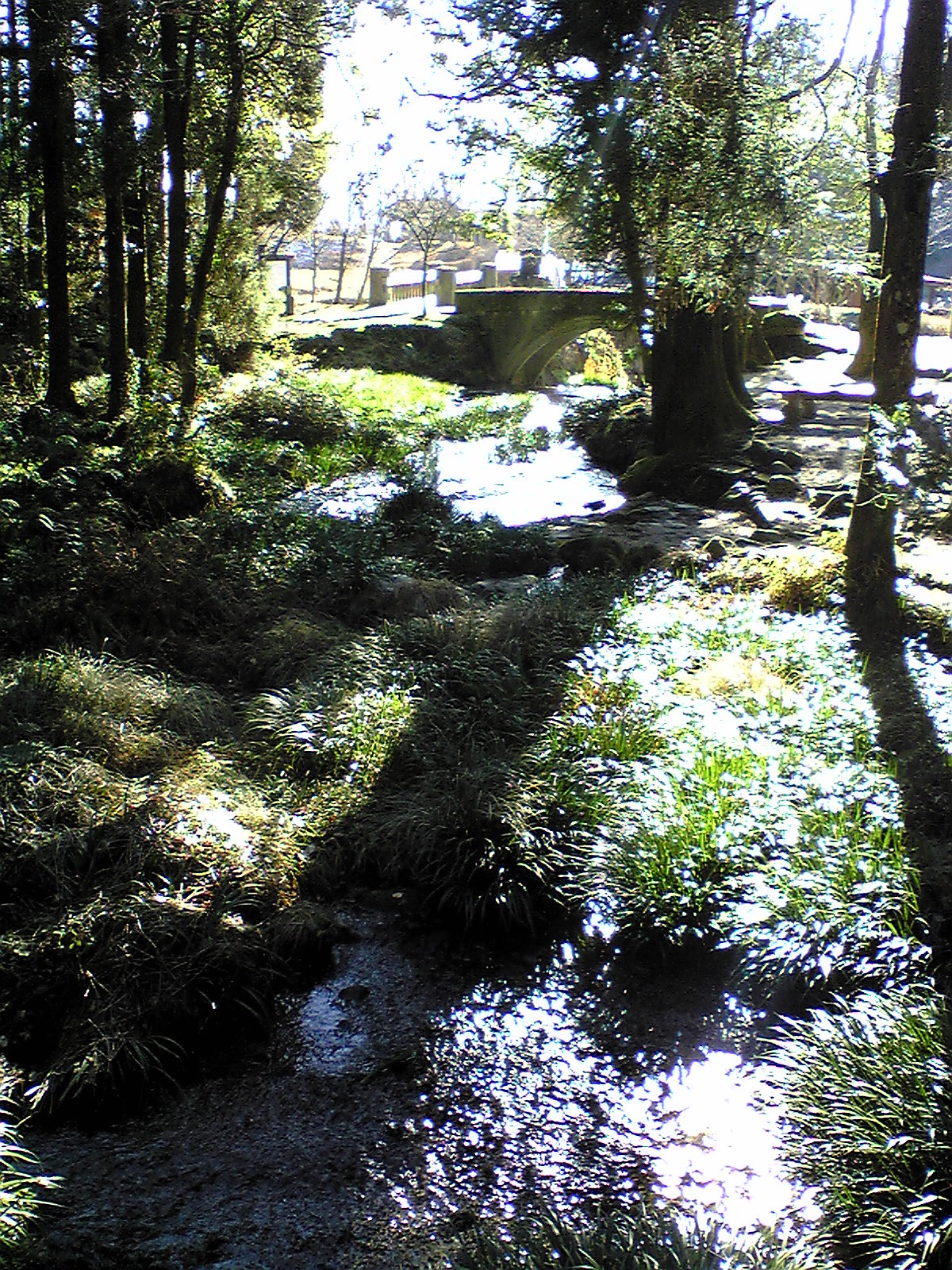
Photo: Raita Futo from Tokyo, Japan / Wikimedia Commons (CC BY 2.0) · original
Tadewara Marsh is one of the reasons Oita keeps coming up whenever the conversation turns to Japan's landscapes.
Tadewara is one of the largest intermediate marshes in Japan, sitting at about 1,000 metres on the Handa highland at the foot of the Kuju range, and it was listed under the Ramsar Convention in 2005 together with the Bogatsuru marsh higher up. What makes it unusual is that it is not natural in the sense of being left alone: the grassland and marsh have been maintained for centuries by controlled burning every spring, and without that annual fire the whole basin would revert to forest within a few decades.
Boardwalks cross the marsh in three loops of increasing length, the shortest of them fully step-free. The plant list runs to hundreds of species with a strong showing of grassland specialists that have disappeared from most of Japan, and the Kuju peaks stand directly behind, which makes the flat easy walking disproportionately rewarding.
Plan your visit
Time to allow
1–1.5 hours
Hours
Open at all hours | Chojabaru Visitor Centre hours vary — confirm before travelling
Closed: Open year-round; boardwalks can be icy in winter
Best time to visit
Late September–November for autumn grassland | June–August for marsh flowers | March–April for the controlled burning
Entry fee
Free | Free parking at Chojabaru
Finding your way there
Access notes
Beyond the guidebook
Nearby Spots
The closest hidden gems to Tadewara Marsh, by straight-line distance.
 Raita Futo / CC BY 2.0
Kokonoe Yume Suspension Bridge
Little knownThe bridge is 390 metres long and hangs 173 metres above the Naruko river gorge, which makes it the highest pedestrian s…
 松岡博文 / CC BY 3.0
Ikeyama Spring
Little knownIkeyama is a spring in the far north-east corner of Kumamoto, in the village of Ubuyama on the outer rim of the Aso cald…
 Belle Equipe / CC BY-SA 3.0
Nagayu Onsen
Little knownNagayu Onsen (長湯温泉) in Taketa City is one of Japan's few naturally carbonated hot springs (炭酸泉, tansan-sen). The water c…
Mt. Yufu Hiking
Little knownMt. Yufu (1,584m) dominates Yufuin's skyline with its distinctive twin peaks (東峰 East Peak 1,583m and 西峰 West Peak 1,584…
Daikanbo
Little knownDaikanbo is a promontory on the northern rim of the Aso caldera at 936 metres, and from it the whole basin is visible at…
Oshitoishi Hill
Little knownOn a grassland hill at 845 metres on the outer rim of Aso stand several hundred stones, some of them very large, arrange…
More in Oita
Saganoseki Seki-aji and Seki-saba
Little knownThe Hayasui strait between Kyushu and Shikoku runs a tidal current strong enough that horse mackerel and mackerel living…
 Suicasmo / CC BY-SA 4.0
Oita Prefectural Art Museum
Little knownBan Shigeru designed this building around a single idea: that a museum should not be a sealed box. The whole ground floo…
 Setsukolo / CC BY-SA 4.0
Beppu Reimen
Locally knownBeppu's cold noodles came back from Manchuria. A returnee opened a grilled meat shop in the town after the war and tried…