
Toshogu Shrine
Researched and written by Hinato

A quick walk through Toshogu Shrine tells you less than a slow one — the details are where the history actually lives.
Toshogu Shrine is the mausoleum of Tokugawa Ieyasu, the founder of the Tokugawa Shogunate, and represents the absolute zenith of Edo-period decorative art. Every surface — walls, beams, gates, eaves — is carved, gilded, lacquered, or painted. Over 5,000 decorative elements include dragons, phoenixes, tigers, elephants (carved by artists who had never seen a real elephant), and the famous Three Wise Monkeys.
The most iconic structure, the Yomeimon Gate, contains over 500 sculptures and is entirely covered in gold leaf, vermilion lacquer, and polychrome pigments. Walking through Toshogu is visually exhausting — your eyes cannot rest anywhere without encountering detail. The shrine is a UNESCO World Heritage Site and Japan's most ornate religious structure, a complete rejection of Shinto's usual aesthetic restraint in favor of baroque excess meant to display the Tokugawa's absolute power and wealth.
Our angle on Toshogu Shrine
Nobody else is going here
Everyone within a mile of Toshogu Shrine is going to Toshogu Shrine. Here are 4 places within walking or one bus ride of it that almost nobody writes about — straight-line distances from our own catalogue, not travel times.
- Shinkyo BridgeLocally known~0.6 km away · Tochigi
Shinkyo is a vermilion-lacquered wooden bridge that arcs over the Daiya River at the entrance to Nikko's shrine district…
- Nikko Tamozawa Imperial VillaLocally known~0.9 km away · Tochigi
Tamozawa Imperial Villa was built in 1899 as a summer retreat for the Taisho Emperor (then Crown Prince Yoshihito) and h…
- Ebiya ChozoLocally known~1.2 km away · Tochigi
Nikko and Kyoto both make the skin that forms on heated soy milk, and they write it differently on purpose. Kyoto writes…
- Kanmangafuchi AbyssLocally known~1.4 km away · Tochigi
A twenty-minute walk from the Toshogu crowds, on the far bank of the Daiya River, a lava gorge runs between the trees an…
What to know before you go
When to go
Spring (late April–early May) for fresh green cedar forest | Autumn (late October–early November) for foliage | Winter for minimal crowds
Opening hours
8:00 AM – 5:00 PM (April–October) | 8:00 AM – 4:00 PM (November–March) | Last entry 30 min before closing
Closed: No regular closures | Special closures possible during major ceremonies (check Toshogu website)
Time to allow
2–3 hours
Fee
¥1,600 adults (shrine entry only) | ¥2,400 combo ticket with museum | Discounted child rates available — confirm current pricing on official site | Ieyasu's tomb path (Okumiya): included in main entry
Reaching the site
Getting there in detail
Detailed access & timing
Nearest Station
Nikko Station (Tobu Nikko Line) — 30 min walk or 5 min bus | Tobu Nikko Station — adjacent to JR Nikko Station
Travel Time
From Tokyo (Asakusa Station): ~2 hours by Tobu Limited Express Spacia to Tobu Nikko (~¥2,720) | From Tokyo Station: ~2 hours via JR Tohoku Shinkansen to Utsunomiya + JR Nikko Line to Nikko (¥5,000+) | From Narita Airport: ~3 hours
How to Get There
Train (Tobu, recommended): Tobu Spacia Limited Express from Asakusa Station direct to Tobu Nikko (1 hr 50 min, ¥2,720 with reserved seat). Most convenient and scenic route. Train (JR + Tobu pass): JR Tohoku Shinkansen from Tokyo to Utsunomiya (~50 min, ¥4,810), then JR Nikko Line to Nikko (~45 min, ¥740). Bus from Nikko Station: Tobu Bus to Shinkyo/Nishisando stop (5 min, ¥190) or 30-min uphill walk along the cedar avenue. Nikko Pass: World Heritage Pass or All Nikko Pass includes round-trip from Asakusa + unlimited Nikko area buses (2-day ¥4,780 or 4-day ¥5,500) — best value.
Best Time to Visit
Arrive at 8:00 AM opening on weekdays. Autumn foliage season (late October): weekday mornings only — weekend afternoons see extreme crowds. Winter (January–February) offers near-solitude.
Crowd Avoidance Tips
Tour buses arrive from 10:00 AM onward. Weekends and Japanese holidays (Golden Week, Silver Week, November foliage) are extremely crowded — avoid if possible. The Yomeimon Gate area reaches capacity by 11 AM on peak days. Arriving at opening (8 AM) allows 2 hours before crowds peak. Winter weekdays are the most peaceful.
Parking Information
Multiple paid lots near Toshogu (¥500–1,000/day). Fills during autumn foliage and holidays. Bus from Nikko Station is strongly recommended on busy days to avoid traffic jams on the single mountain road.
What locals know
Book Your Stay Nearby
Find accommodation close to Toshogu Shrine on these trusted booking platforms:
Nearby Spots
The closest hidden gems to Toshogu Shrine, by straight-line distance.
Shinkyo Bridge
Locally knownShinkyo is a vermilion-lacquered wooden bridge that arcs over the Daiya River at the entrance to Nikko's shrine district…
 Illustration — not a photograph
Nikko Tamozawa Imperial Villa
Locally knownTamozawa Imperial Villa was built in 1899 as a summer retreat for the Taisho Emperor (then Crown Prince Yoshihito) and h…
Ebiya Chozo
Locally knownNikko and Kyoto both make the skin that forms on heated soy milk, and they write it differently on purpose. Kyoto writes…
 663highland / CC BY-SA 4.0
Kanmangafuchi Abyss
Locally knownA twenty-minute walk from the Toshogu crowds, on the far bank of the Daiya River, a lava gorge runs between the trees an…
 taro gen / CC BY 3.0
Kirifuri Falls
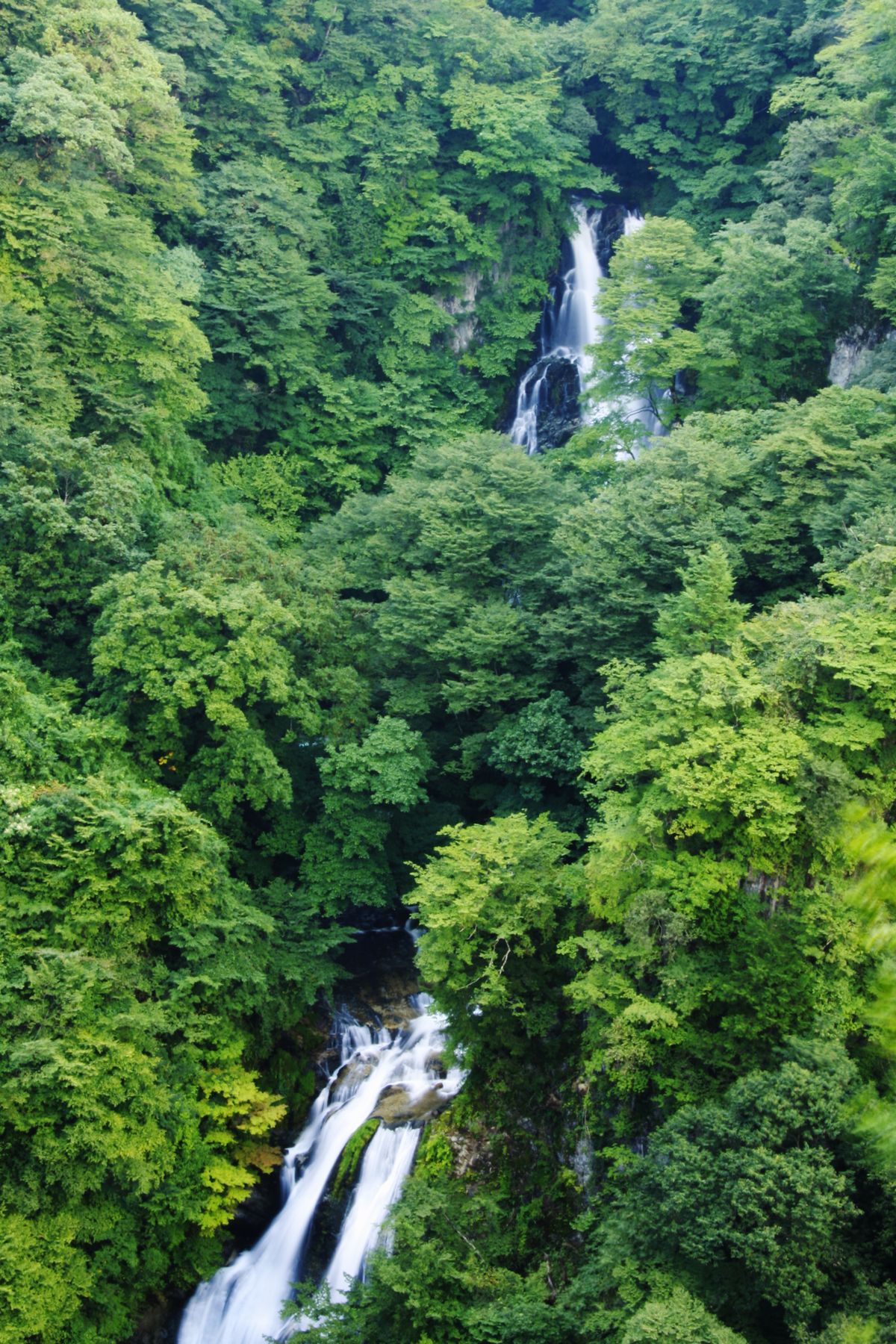
Locally knownKirifuri means falling mist, and the name is descriptive: the water drops in two stages, 25 metres and then 26, breaking…
 Joli Rumi / CC BY-SA 4.0
Lake Chuzenji & Kegon Falls
FamousLake Chuzenji sits at 1,269 meters in a volcanic caldera formed 20,000 years ago when Mount Nantai erupted and lava damm…
More in Tochigi
Oguraya
Little knownSano ramen is defined by how the noodles are made. A length of green bamboo is anchored at one end and the maker sits on…
 韋駄天狗 / CC BY 3.0
Karasawayama Shrine
Little knownKarasawayama was a Fujiwara mountain castle held by the Sano family for centuries, and it is one of the few castles in t…
 663highland / CC BY-SA 4.0
Ryuokyo Gorge
Locally knownAround twenty-two million years ago this was seabed, and undersea volcanism laid down the rock that the Kinugawa has sin…