
Shinkyo Bridge
Researched and written by Hinato
Tochigi · Nikko
36.7525°N, 139.5974°E
What Shinkyo Bridge looked like originally and what it looks like now are two different stories — both worth knowing before you arrive.
Shinkyo is a vermilion-lacquered wooden bridge that arcs over the Daiya River at the entrance to Nikko's shrine district. The current structure was rebuilt in 1907 after a flood, using traditional methods — no nails, only interlocking wooden joints and iron bands.
The bridge served as the sacred entrance to Toshogu Shrine, reserved exclusively for the shogun and imperial messengers; commoners used a separate crossing downstream. Today, visitors can walk across the bridge (¥300) or simply photograph it from the riverbank. The combination of red lacquer, green forest, and clear rushing water creates one of Japan's most iconic compositions, particularly in autumn when maple trees add crimson and gold, and in spring when fresh green leaves frame the bridge against blue sky.
What to know before you go
When to go
Late October–early November (autumn foliage) | May (fresh green) | April (cherry blossoms)
Opening hours
Riverbank viewing: open 24 hrs | Bridge crossing: 8:00 AM – 5:00 PM (winter until 4:00 PM)
Closed: Open year-round
Time to allow
20–30 minutes for viewing and crossing; combine naturally with walk to Toshogu Shrine (5 min uphill)
Fee
Riverbank viewing: free | Bridge crossing: ¥300
Getting there
Directions
Beyond the guidebook
Nearby Spots
The closest hidden gems to Shinkyo Bridge, by straight-line distance.
 Illustration — not a photograph
Toshogu Shrine
FamousToshogu Shrine is the mausoleum of Tokugawa Ieyasu, the founder of the Tokugawa Shogunate, and represents the absolute z…
 663highland / CC BY-SA 4.0
Kanmangafuchi Abyss
Locally knownA twenty-minute walk from the Toshogu crowds, on the far bank of the Daiya River, a lava gorge runs between the trees an…
 Illustration — not a photograph
Nikko Tamozawa Imperial Villa
Locally knownTamozawa Imperial Villa was built in 1899 as a summer retreat for the Taisho Emperor (then Crown Prince Yoshihito) and h…
Ebiya Chozo
Locally knownNikko and Kyoto both make the skin that forms on heated soy milk, and they write it differently on purpose. Kyoto writes…
 taro gen / CC BY 3.0
Kirifuri Falls
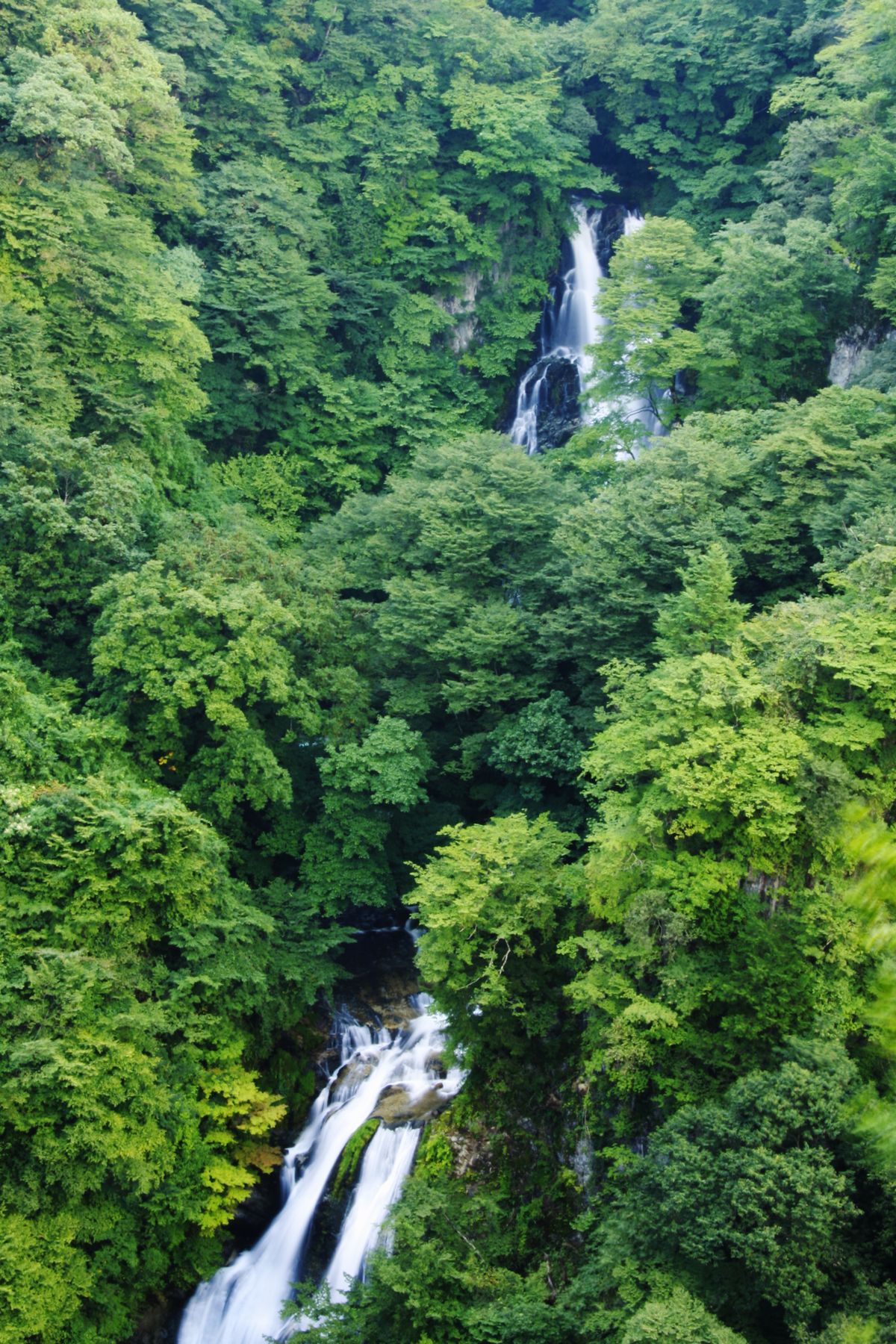
Locally knownKirifuri means falling mist, and the name is descriptive: the water drops in two stages, 25 metres and then 26, breaking…
 Joli Rumi / CC BY-SA 4.0
Lake Chuzenji & Kegon Falls
FamousLake Chuzenji sits at 1,269 meters in a volcanic caldera formed 20,000 years ago when Mount Nantai erupted and lava damm…
More in Tochigi
 韋駄天狗 / CC BY 3.0
Karasawayama Shrine
Little knownKarasawayama was a Fujiwara mountain castle held by the Sano family for centuries, and it is one of the few castles in t…
 663highland / CC BY-SA 4.0
Ryuokyo Gorge
Locally knownAround twenty-two million years ago this was seabed, and undersea volcanism laid down the rock that the Kinugawa has sin…
Hacchonoyu
Locally knownThere are four inns in the Okukinu hot spring group, at the head of the Kinugawa valley inside Nikko National Park, and…