
National Museum of Japanese History
Researched and written by Hinato

What National Museum of Japanese History looked like originally and what it looks like now are two different stories — both worth knowing before you arrive.
This is the national museum for the history of Japan, and it is not in Tokyo — it is on the grounds of the old Sakura castle, forty minutes out on the Keisei line, which is why almost no foreign visitor ends up in it. The scale is a surprise: six permanent galleries running from prehistory to the post-war period across a very large building, built around full-size reconstructions rather than cases of objects.
What it does better than anywhere else is ordinary life. There is a reconstructed medieval street, a section of Edo-period Nihonbashi, a mid-twentieth-century apartment interior, and a gallery on folk belief. Rekihaku, as everyone calls it, is a research institute as much as a display, and the labelling assumes you are interested rather than in a hurry. There is also a separate botanical garden of plants used in daily life, a hundred yen, up the road.
What to know before you go
When to go
Year-round | Indoor museum
Opening hours
9:30 AM – 5:00 PM (March–September) | 9:30 AM – 4:30 PM (October–February) | Last entry 30 minutes before closing
Closed: Closed Mondays, or the following weekday when the Monday is a holiday | 27 December – 4 January
Time to allow
3–4 hours
Fee
¥900 general | ¥500 university students | Free for high school age and under | Botanical garden ¥100
How to reach it
Access notes
What locals know
Nearby Spots
The closest hidden gems to National Museum of Japanese History, by straight-line distance.
 Illustration — not a photograph
Sakura Samurai Houses
Little knownSakura was a castle town of the Hotta clan, close enough to Edo that its domain school and its samurai mattered, and thr…
 Illustration — not a photograph
Narita Dream Farm
Little knownNarita Dream Farm is a 30-hectare agricultural park offering year-round fruit and vegetable picking — strawberries in wi…
 Miyuki Meinaka / CC BY-SA 4.0
Narita Eel Restaurants
Little knownNarita's association with eel (unagi) dates to the Edo period when pilgrims visiting Naritasan Temple required high-prot…
 Illustration — not a photograph
Chiba Peanuts
Little knownChiba Prefecture produces 80% of Japan's domestic peanuts, a dominance that began in the Meiji era when sandy coastal so…
 Manish Prabhune / CC BY 2.0
Naritasan Shinshoji Temple
Well knownNaritasan Shinshoji Temple, founded in 940 AD, is one of Japan's most important Shingon Buddhist temples and a major pil…
 Nesnad / CC BY 4.0
Hoki Museum
Little knownHoki is the first museum in Japan devoted entirely to realist painting — work so precisely rendered that at a distance i…
More in Chiba
 t.kunikuni / CC BY-SA 2.0
Katori Shrine
Little knownKatori Shrine, founded over 2,600 years ago according to shrine records, is one of Japan's three great martial shrines (…
 Illustration — not a photograph
Kamogawa Sea World
Little knownKamogawa Sea World, opened in 1970, is one of Japan's most advanced marine parks, known for its orca (killer whale) bree…
 certified / CC BY 3.0
Nokogiriyama
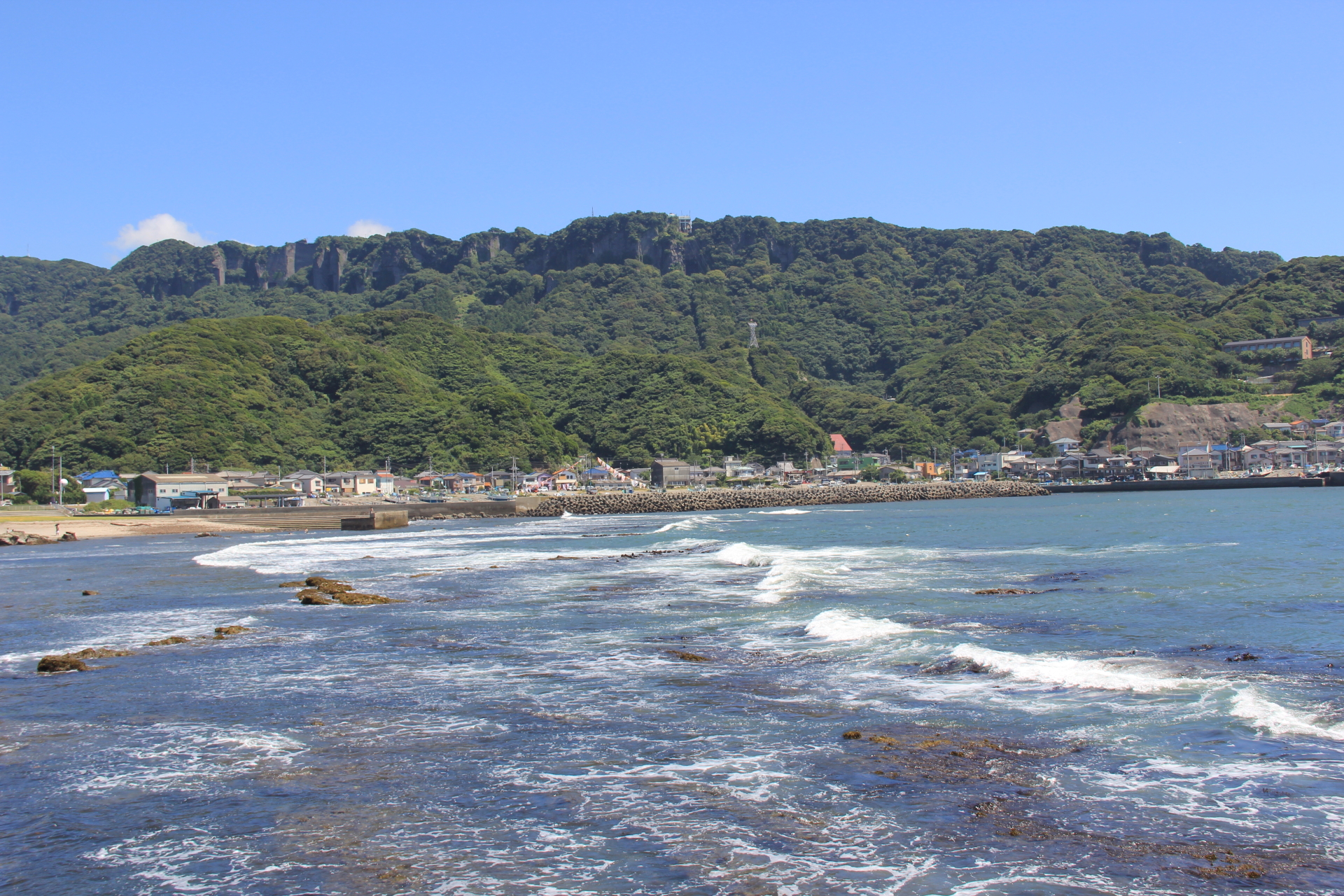
Little knownNokogiriyama (鋸山, 'Saw Mountain,' 329m) earned its name from the jagged cliff face created by 300 years of stone quarryi…