
Katsura Imperial Villa
Researched and written by Hinato
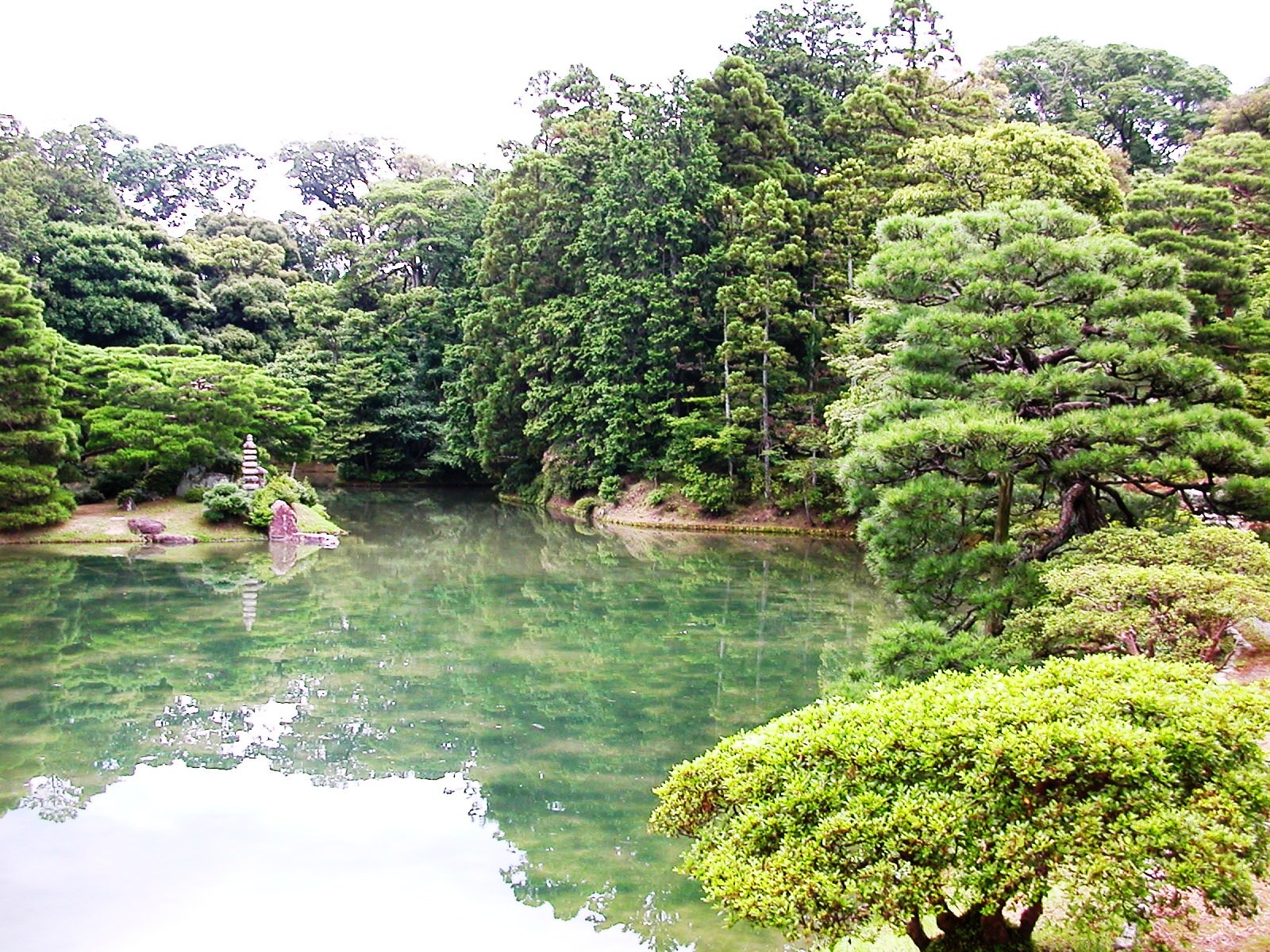
Photo: ☆Tomoaki Ueda☆ / Wikimedia Commons (CC BY 3.0) · original
Katsura Imperial Villa looks different depending on the season, the weather, and the time of day — none of which a single photo can tell you.
In 1933, German architect Bruno Taut visited Katsura and wept. "The greatest work of Japanese architectural genius," he wrote. Four hundred years later, people still apply for tickets three months in advance to walk the same gravel path.
You can't visit Katsura alone. The Imperial Household Agency runs guided tours—60 minutes, English available, photography allowed but restricted. The guide will stop you at precise viewpoints and explain what you're seeing: how the Shokin-tei tea house's checkered window frames the pond like a painting, how the stepping stones force you to slow down and look left at exactly the moment the garden reveals the Shoka-tei pavilion reflected in water. Every sightline is calculated. Every rock was placed by someone who thought about it for weeks.
The villa itself—three connected buildings with sliding paper screens and moon-viewing platforms—uses wood that's never been painted or varnished. The grain is bare. After 400 years, the cypress beams have turned silver-grey. There are no nails. The roof is thatch, replaced every 40 years by craftsmen using techniques from the Edo period. The entire place whispers "refinement" so loudly it's almost aggressive. You'll either find it transcendent or exhausting. There's no middle ground.
Before you go
Access hours
Guided tours: 9:20 AM, 11:20 AM, 1:20 PM, 3:20 PM, 4:20 PM (60 minutes each) | Imperial Household Agency office: 9:00 AM – 5:00 PM
Closed: Closed Sundays, Mondays, national holidays, New Year period (Dec 25-Jan 5), and during Imperial family use
Entry fee
¥1,000 per person (advance reservation required through Imperial Household Agency website or same-day standby at office)
Best time to visit
Spring (April cherry blossoms) | Autumn (November maple foliage against moss garden) | Avoid rainy days (garden views flatten without mountain backdrop)
Time to allow
60 minutes (fixed guided tour duration, no independent visiting allowed)
Getting there
Getting there in detail
Full directions & timing
Nearest Station
Katsura Station (Hankyu Kyoto Line) - 15 min walk | Kyoto Station - no direct access (taxi or bike recommended)
Travel Time
From Kyoto Station: 20 min via taxi (¥2,500-3,000) or 30 min via Hankyu to Katsura + walk | From Osaka: 50 min via Hankyu Kyoto Line to Katsura Station | From Tokyo: 2 hours 30 min via Shinkansen to Kyoto + taxi
How to Get There
Taxi: Most convenient option from Kyoto Station (20 min, ¥2,500-3,000). Taxi direct to villa entrance. Train + Walk: Hankyu Kyoto Line to Katsura Station (from Kawaramachi, 10 min), then 15-minute walk to villa entrance. Bicycle: 30-minute pleasant ride from central Kyoto through residential areas (rental bikes available near Kyoto Station).
Best Time to Visit
Morning tours (10:00 AM) offer best garden light before midday glare. November autumn tours feature maple and moss color contrasts (book by early October - sells out fast). Clear days essential for borrowed scenery (Arashiyama mountains visible from garden). Avoid overcast or rainy days.
Crowd Avoidance Tips
Reservations open 1st of each month for 2 months ahead. April cherry blossom and November foliage tours book out in 30-90 minutes. Same-day standby at Imperial Household Agency office (arrive 8:30 AM) usually yields 1-2 spots per tour on weekdays. Friday and any November date: no standby chance. Maximum 20 visitors per tour ensures uncrowded experience.
Parking Information
No public parking at Katsura Villa. Nearby street parking extremely limited (residential area). Taxi drop-off and return taxi call is standard approach. Bicycle parking available at villa entrance.
Local knowledge
Book Your Stay Nearby
Find accommodation close to Katsura Imperial Villa on these trusted booking platforms:
Nearby Spots
The closest hidden gems to Katsura Imperial Villa, by straight-line distance.
 くろふね / CC BY 3.0
Kyoto Station Building
Locally knownKyoto Station (京都駅) is a controversial modern architectural landmark designed by Hiroshi Hara (completed 1997). The 15-s…
Kyoto Gyoza
Locally knownWhile gyoza (餃子, Chinese-style dumplings) originated in China, Kyoto has developed its own regional style emphasizing ve…
 Unsplash
Arashiyama Bamboo Grove
FamousThe Arashiyama Bamboo Grove (嵯峨野の竹林) is a path through thousands of towering bamboo stalks that create a natural cathedr…
 Yoshio Kohara / CC BY 3.0
Shosei-en Garden
Locally knownShosei-en Garden (渉成園), also called Kikoku-tei, is a tranquil 10-acre stroll garden just east of Kyoto Station — remarka…
 Nesnad / CC BY 4.0
Nishiki Market
FamousNishiki Market (錦市場, Nishiki Ichiba) is a narrow covered arcade housing 100+ specialist food vendors selling Kyoto's sea…
 Kento Ikeda / CC BY 2.0
Kyoto International Manga Museum
Locally knownThe Kyoto International Manga Museum (京都国際マンガミュージアム) occupies a renovated elementary school building and houses 300,000…
More in Kyoto
 shikabane taro / CC BY 3.0
Fushimi Sake District
Little knownFushimi (伏見) is one of Japan's three premier sake-brewing regions, blessed with underground springs of exceptionally sof…
 kanesue / CC BY 3.0
Ginkaku-ji Silver Pavilion
FamousGinkaku-ji (銀閣寺, 'Temple of the Silver Pavilion') was built in 1482 by Shogun Ashikaga Yoshimasa as a retirement villa,…
 z tanuki / CC BY 3.0
Ryoan-ji Rock Garden
FamousRyoan-ji Temple (龍安寺) houses Japan's most famous Zen rock garden (枯山水, karesansui 'dry landscape') — a rectangular plot…