
Kanazawa Kaiseki
Researched and written by Hinato
Ishikawa · Kanazawa
36.5629°N, 136.6623°E
The line outside Kanazawa Kaiseki, if there is one, is usually a better sign than a review score.
Kanazawa's kaiseki cuisine (Kaga Ryori, 加賀料理) is considered equal to Kyoto's, developed over centuries by the Maeda clan's patronage of culinary arts. The Kaga Domain's wealth (producing 1 million koku of rice, the largest outside the Tokugawa shogunate) enabled the clan to attract master chefs from Kyoto and develop a distinctive cuisine emphasizing Ishikawa's ingredients: Kano crab (winter), nodoguro (blackthroat seaperch), Noto oysters, local vegetables like Kaga lotus root and sweet potatoes, and traditional preserved foods like fu (wheat gluten) and kabura-zushi (turnip sushi).
Kanazawa kaiseki is characterized by jibuni (治部煮, Kanazawa's signature dish — duck or chicken simmered with wheat gluten, mushrooms, and vegetables in a thick sauce), gold leaf garnishes, and elaborate presentation on kutani-yaki ceramics. Lunch kaiseki offers 70–80% of the experience at 60% of dinner prices. The cuisine's refinement reflects Kanazawa's position as a cultural rival to Kyoto during the Edo Period — the castle town that preserved traditional arts while maintaining independence from Tokugawa interference.
A Kanazawa kaiseki meal is structured as a sequence rather than a single dish — clear soup, sashimi, a grilled course, a simmered course like jibuni, a rice dish, and a seasonal dessert typically appear in careful order, each meant to be finished before the next arrives so that temperature and texture are experienced as the chef intended. The presentation is treated as inseparable from the cooking itself: dishes are plated on kutani-yaki or wajima-nuri lacquer chosen to complement the season, with garnishes arranged to evoke a landscape, a poem, or a passing moment in nature. This attention extends to the tableware's weight and glaze as much as to the food, reflecting a Kaga aesthetic that prizes restraint alongside visible craftsmanship. Because the cuisine developed under a domain that prized cultural competition with Kyoto, chefs historically trained across multiple disciplines — knife work, sauce-making, ceramics appreciation, and even garden design — producing a style of cooking meant to be read as much as tasted. Diners unfamiliar with kaiseki's pacing are often surprised by how unhurried the meal feels; the format rewards patience and close attention to each course's individual character rather than rushing toward the next.
Before you eat
Serving hours
Kinjohro: lunch 11:30 AM – 2:00 PM, dinner 5:00 PM – 9:30 PM | Takayama/Zeniya: dinner 5:30–10:00 PM | Miyoshian lunch: 11:00 AM – 3:00 PM
Closed: Kinjohro: no regular closing | Miyoshian: Thursdays | Top kaiseki restaurants: occasional irregular closures — confirm when booking
What it costs
Kinjohro lunch kaiseki: ¥5,500–11,000 | Kinjohro dinner kaiseki: ¥15,000–25,000 | Takayama/Zeniya: ¥20,000–40,000 | Miyoshian casual lunch: ¥3,500–5,500
Best time to go
Winter (November–March) for peak crab kaiseki | Autumn (October–November) for matsutake mushroom courses | Year-round excellence
Time to allow
2–3 hours (full kaiseki meal) | 1.5 hours (casual kaiseki lunch)
Access route
Directions
Full directions & timing
Nearest Station
Kanazawa Station (JR Hokuriku Shinkansen) — Kinjohro 15-min bus (Korinbo stop) | Miyoshian 10-min walk from Higashi Chaya
Travel Time
From Tokyo: 2.5 hrs JR Hokuriku Shinkansen | From Osaka: 2.5 hrs JR Thunderbird limited express | From Nagoya: 3 hrs by car or train
How to Get There
Kanazawa Station is the hub — Kanazawa Loop Bus circles major restaurant and cultural site areas (¥200/ride, day pass ¥600). Taxis available from station (¥800–1,200 to central districts). Train: JR Hokuriku Shinkansen from Tokyo (Kagayaki limited express, 2 hr 28 min, ¥14,120 reserved). From Osaka/Kyoto: JR Thunderbird limited express (2.5 hrs, ¥7,000).
Best Time to Visit
Weekday lunch (12:00–1:00 PM) for relaxed atmosphere and lower prices (lunch is 60% of dinner rates). Winter crab kaiseki season requires booking 2–3 months ahead. Hotel concierge assistance for phone reservations is highly recommended.
Crowd Avoidance Tips
Top kaiseki restaurants fill weekends year-round. Kinjohro accepts walk-ins on weekdays for lunch if you arrive at opening (11:30 AM). Casual options like Miyoshian and depachika (department store food halls) near Kanazawa Station offer excellent Kaga cuisine without reservation stress.
Parking Information
Kanazawa city center: paid parking ¥300–400/hour. Kanazawa Station west exit area has multiple lots. Many restaurants have no dedicated parking — use central paid lots and walk or take bus.
Beyond the guidebook
Book Your Stay Nearby
Find accommodation close to Kanazawa Kaiseki on these trusted booking platforms:
Nearby Spots
The closest hidden gems to Kanazawa Kaiseki, by straight-line distance.
 Ludger Heide / CC BY-SA 2.0
Kenrokuen Garden
FamousKenrokuen (兼六園, 'Garden of Six Sublimities') is one of Japan's Three Great Gardens alongside Kairakuen in Mitsukura and…
 Illustration — not a photograph
Kanazawa Phonograph Museum
Locally knownThe Kanazawa Phonograph Museum (金沢蓄音器館) houses over 600 antique phonographs, music boxes, and early sound recording devi…
Kanazawa Noh Theater
Locally knownThe Ishikawa Prefectural Noh Theater (石川県立能楽堂) is one of Japan's premier noh venues, hosting regular performances of thi…
 Matthias Wiesmann / CC BY-SA 3.0
Kanazawa Castle Park
Well knownKanazawa Castle (金沢城) was the seat of the powerful Maeda clan from 1583 to 1868, ruling the Kaga Domain — the wealthiest…
 ajari from Japan / CC BY 2.0
21st Century Museum of Contemporary Art
Well knownThe 21st Century Museum of Contemporary Art (金沢21世紀美術館) is a revolutionary circular museum building designed by architec…
 Raita Futo from Tokyo, Japan / CC BY 2.0
Omicho Market
Well knownOmicho Market (近江町市場, Omicho Ichiba) is Kanazawa's central food market, operating for 290+ years as the city's primary s…
More in Ishikawa
 photo: Qurren ( talk ) Taken with Canon IXY 430F (Digital IXUS 245 HS) / CC BY-SA 3.0
Mitsukejima Rock
Little knownMitsukejima (見付島, 'Found Island') is a rock island rising from the shallow waters off Suzu's eastern coast, connected to…
 Yuichi Itoda / CC BY-SA 4.0
Natadera Temple
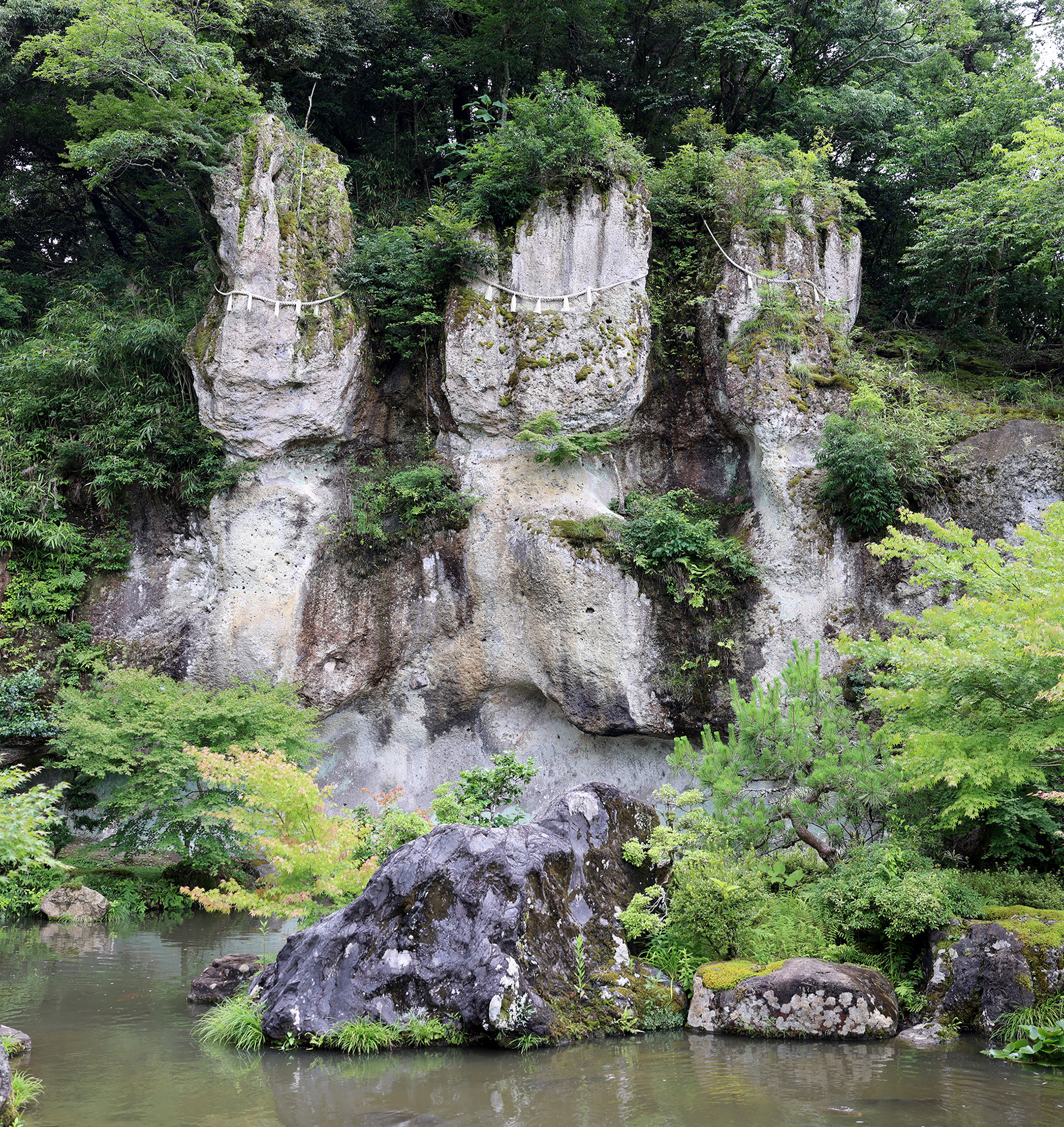
Little knownNatadera Temple (那谷寺) is an ancient mountain temple founded in 717 AD, renowned for its dramatic natural setting among m…
 Raita Futo from Tokyo, Japan / CC BY 2.0
Higashi Chaya District
Well knownHigashi Chaya (東茶屋街, 'Eastern Geisha District') is Kanazawa's most beautifully preserved geisha quarter, with two-story…