
Chusonji Temple
Researched and written by Hinato

Ask where to send a first-time visitor for a temple or shrine in Iwate, and Chusonji Temple comes up more than once.
Chusonji Temple is the crown jewel of Hiraizumi's UNESCO World Heritage sites, founded in 850 CE and expanded in the early 12th century by the Northern Fujiwara clan. The temple complex embodies Pure Land Buddhism's vision of earthly paradise. The hall houses three altars containing the mummified remains of three generations of Fujiwara lords, preserved in lacquered coffins covered in gold and jewels. The entire structure sits within a modern concrete protective building (1968), preserving it from further weathering. Beyond Konjikido, the temple grounds encompass forested hillsides with dozens of sub-temples, a treasure hall displaying Buddhist artifacts, and the Noh theater stage dating to the Edo period. The approach to Chusonji follows a tree-lined path (月見坂, Tsukimizaka) that climbs gently through cedars, creating a contemplative atmosphere. Chusonji represents the zenith of Northern Fujiwara power — a provincial dynasty that ruled northern Honshu independently and created a cultural flowering that rivaled Kyoto.
Visiting essentials
Best time to visit
Late October to early November for autumn foliage along the cedar approach; early morning in any season for mist and solitude
Hours
8:30 AM – 5:00 PM (November–February 8:30 AM – 4:30 PM)
Closed: Open year-round
Admission
¥800 (includes Konjikido and grounds); combined ticket with Motsuji ¥1,100
Time to allow
1.5–2 hours for the full grounds including treasure hall and Konjikido
Finding your way there
Getting there in detail
Detailed access & timing
Nearest Station
Hiraizumi Station (JR Tohoku Main Line)
Travel Time
Tohoku Shinkansen from Tokyo to Ichinoseki (approximately 2 hours 15 minutes), then local train to Hiraizumi (10 minutes); 15-minute walk from Hiraizumi Station
How to Get There
JR Tohoku Shinkansen to Ichinoseki, then JR Tohoku Main Line to Hiraizumi; local bus (¥160) or bicycle rental at station
Best Time to Visit
Opening time (8:30) for mist on the cedar approach and quieter grounds; avoid Golden Week and autumn foliage peak weekends
Crowd Avoidance Tips
Tour groups arrive mid-morning; aim to be at Konjikido before 10:00 for the most peaceful experience
Parking Information
Paid parking near Hiraizumi Station area (¥300–500); bicycle rental at station (¥500/day) recommended for visiting multiple UNESCO sites
Visiting etiquette & tips
Book Your Stay Nearby
Find accommodation close to Chusonji Temple on these trusted booking platforms:
Nearby Spots
The closest hidden gems to Chusonji Temple, by straight-line distance.
 Renate Hano / CC BY-SA 4.0
Motsuji Temple Garden
Well knownMotsuji Temple was once larger than Chusonji, containing 40 temple buildings and 500 monks' quarters during the Northern…
 663highland / CC BY-SA 4.0
Takkoku no Iwaya Bishamon-do
Well knownTakkoku no Iwaya Bishamon-do is a Buddhist temple built into a cliff cave, dramatically perched on a rock face 15 meters…
 ブルーノ・プラス / CC BY 4.0
Geibikei Gorge
Well knownGeibikei Gorge is a narrow limestone gorge carved by the Satetsu River, famous for traditional flat-bottomed boat rides…
 663highland / CC BY-SA 4.0
Genbikei Gorge
Little knownGenbikei Gorge is a 2km rocky gorge carved by the Iwai River, featuring dramatic boulder formations, rapids, and the fam…
 Illustration — not a photograph
Ichinoseki Mochi Culture
Little knownIchinoseki has Japan's richest mochi (rice cake) culinary tradition, with over 300 documented mochi dishes developed ove…
Michinoku Ajisai-en
Little knownA forestry family in the hills outside Ichinoseki planted hydrangeas among their cedar plantation, and kept planting. Th…
More in Iwate
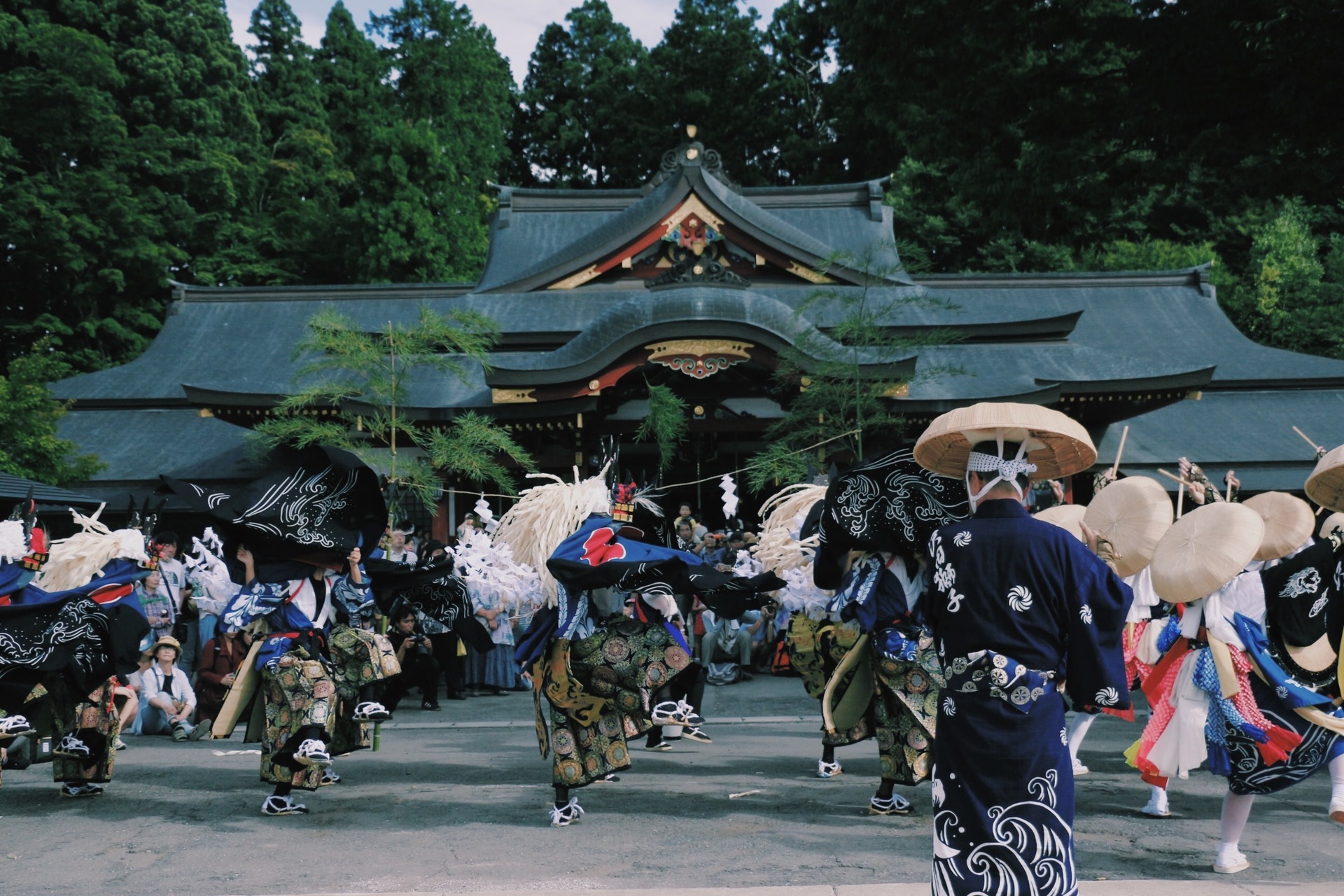 Cygnus_morioka / CC BY 4.0
Morioka Sansa Odori
Little knownMorioka Sansa Odori is one of Tohoku's greatest summer festivals, held August 1–4 annually. The festival features mass t…
Sanriku Coast
Little knownThe Sanriku Coast is a 250km stretch of dramatic Pacific coastline running through Iwate Prefecture, characterized by st…
 Illustration — not a photograph
Ryusendo Cave
Locally knownRyusendo Cave is one of Japan's three largest limestone caves, famous for its underground lakes of exceptional clarity a…