
Utsunomiya Gyoza
Researched and written by Hinato

Utsunomiya Gyoza sits in a part of Tochigi's food scene that doesn't need a translation to be understood.
Utsunomiya is Japan's self-proclaimed gyoza capital, with over 200 gyoza specialty restaurants and the highest per-capita gyoza consumption in the nation. The local obsession began after World War II when soldiers returning from Manchuria (where they had eaten Chinese dumplings) opened restaurants replicating the dish with Japanese ingredients. Utsunomiya gyoza evolved into a distinct style — thinner wrappers than Chinese jiaozi, higher cabbage-to-meat ratio, pan-fried until crispy on the bottom (yaki-gyoza), served with a simple soy-vinegar-chili dipping sauce.
The city's gyoza street (near JR Utsunomiya Station) concentrates 20+ restaurants within 500 meters, each with subtle variations in filling, wrapper thickness, and frying technique. Locals have fierce loyalties to specific shops. Ordering is straightforward: gyoza comes in plates of 6–8 pieces (¥300–400 per plate); most people order 2–3 plates plus rice and beer. The gyoza are small, delicate, and meant to be eaten quickly while hot. The competition between restaurants keeps quality high and prices low.
Plan your visit
Hours
Most restaurants: 11:00 AM – 9:00 PM (some close 2:30–5:00 PM between lunch and dinner)
Closed: Varies by restaurant; most close 1–2 days/week — check individual restaurant
Time to allow
Gyoza meal: 30–45 minutes | Multiple shops (gyoza-hopping): 1.5–2 hours | Combined with Oya History Museum: half day
What it costs
Per plate (6–8 gyoza): ¥300–400 | Full meal: ¥1,000–1,500/person | Gyoza Festival (early November): free entry
Best season
Year-round; Gyoza Festival early November; winter evenings for warm pan-fried gyoza
How to reach it
Access notes
What locals order
Nearby Spots
The closest hidden gems to Utsunomiya Gyoza, by straight-line distance.
 Hiroshi Nakai / CC BY 2.0
Oya History Museum
Little knownThe Oya History Museum is built into a former underground stone quarry where Oya Stone — a light, porous volcanic tuff u…
 tak1701d / CC BY-SA 3.0
Oya-ji Temple
Little knownOya stone is the soft volcanic tuff that Utsunomiya is built out of, and Oya-ji is where it was first carved. The temple…
Wakayama Farm Bamboo Grove
Little knownEverybody photographs the bamboo at Arashiyama in Kyoto, shoulder to shoulder on a path a few metres wide. The largest b…
SL Moka
Little knownThe Moka Railway is a 42-kilometre single-track line running east from Shimodate through rice country to Motegi, and at…
 FukuroWaraw / CC BY-SA 4.0
Mashiko Pottery Town
Little knownMashiko is a pottery town 100 kilometers north of Tokyo that became the spiritual center of Japan's mingei (folk craft)…
Tochigi Kurazukuri
Little knownTochigi City was a prosperous merchant town during the Edo and Meiji periods, serving as a distribution hub for goods tr…
More in Tochigi
 Miyuki Meinaka / CC BY-SA 4.0
Iwashita New Ginger Museum
Little knownIwashita Shokuhin makes shin-shoga, a pale pink pickled young ginger sold in a distinctive jar across Japan, and in 2015…
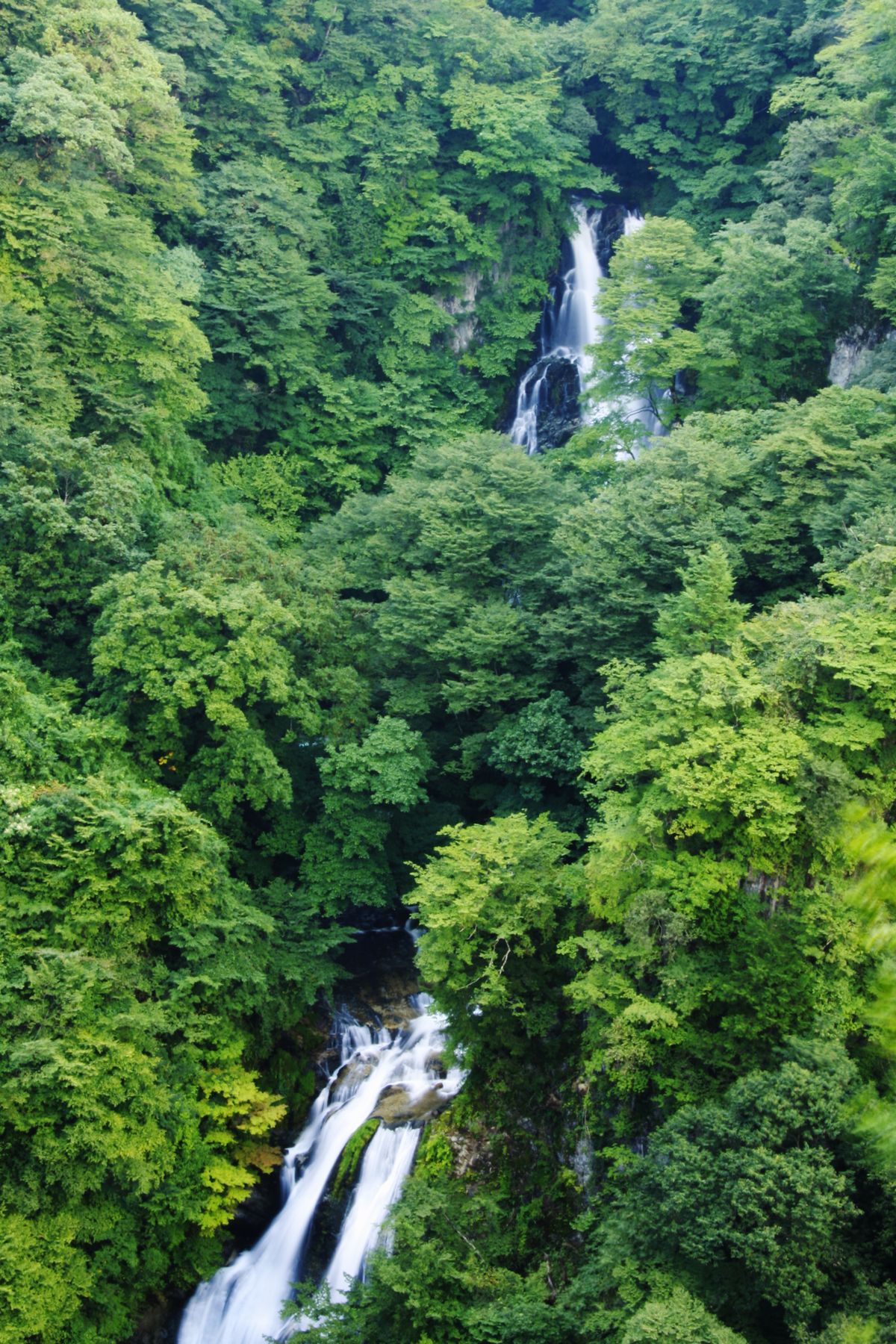 taro gen / CC BY 3.0
Kirifuri Falls
Locally knownKirifuri means falling mist, and the name is descriptive: the water drops in two stages, 25 metres and then 26, breaking…
Nasu Kokuzohi
Locally knownIn the year 700, the sons of Nasu no Atai Idé raised an inscribed stone to their late father, who had governed the provi…