
Tekiseisha
Researched and written by Hinato
Iwate · Ninohe
40.1762°N, 141.1094°E
Tekiseisha survives on maintenance and memory as much as on its original construction — that tension is part of the visit.
About seventy per cent of Japan's domestically produced lacquer comes from Joboji in Ninohe, tapped by hand from trees in northern Iwate, southern Aomori and north-eastern Akita. When Kinkakuji or the Golden Hall at Chusonji need restoring, the lacquer comes from here — the national cultural agency now requires domestic urushi for designated buildings, and this is where it exists in quantity.
Joboji lacquerware descends from the everyday bowls used by the monks of Tendaiji from the Heian period: undecorated, thickly coated, made to be used daily rather than displayed. It opens at half past eight, closes on Tuesdays, and viewing is free.
Before you go
Opening hours
8:30 AM – 5:00 PM
Closed: Closed Tuesdays and over the New Year
Admission
Free to visit | Lacquerware sold in the showroom
Best time to visit
Year-round
Time to allow
45–60 minutes
Access route
Getting there in detail
What locals know
Nearby Spots
The closest hidden gems to Tekiseisha, by straight-line distance.
Goshono Jomon Site
Well knownGoshono was a large village of the middle Jomon period, occupied from roughly 5,000 to 4,200 years ago, and in July 2021…
 Douglas Paul Perkins / CC BY 4.0
Hachimantai Aspite Line
Little knownThe Aspite Line runs twenty-seven kilometres across the Hachimantai massif from Gozaisho in Iwate to Toroko Onsen in Aki…
 z tanuki / CC BY 3.0
Oyu Stone Circles
Well knownTwo stone circles, Manza and Nonakado, stand on a river terrace in Kazuno, each a double ring of river cobbles carried u…
 Raita Futo from Tokyo, Japan / CC BY 2.0
Toshichi Onsen
Little knownToshichi sits at 1,400 metres on the flank of Hachimantai, the highest hot spring in the Tohoku region, and the water co…
 掬茶 / CC BY-SA 3.0
Goshogake Onsen
Little knownGoshogake sits at about a thousand metres on the western flank of Hachimantai in an area of active geothermal ground, an…
 Koda6029 / CC BY-SA 4.0
Hachimantai Plateau
Little knownHachimantai Plateau (八幡平) is a volcanic highland straddling the Akita-Iwate border, part of Towada-Hachimantai National…
More in Iwate
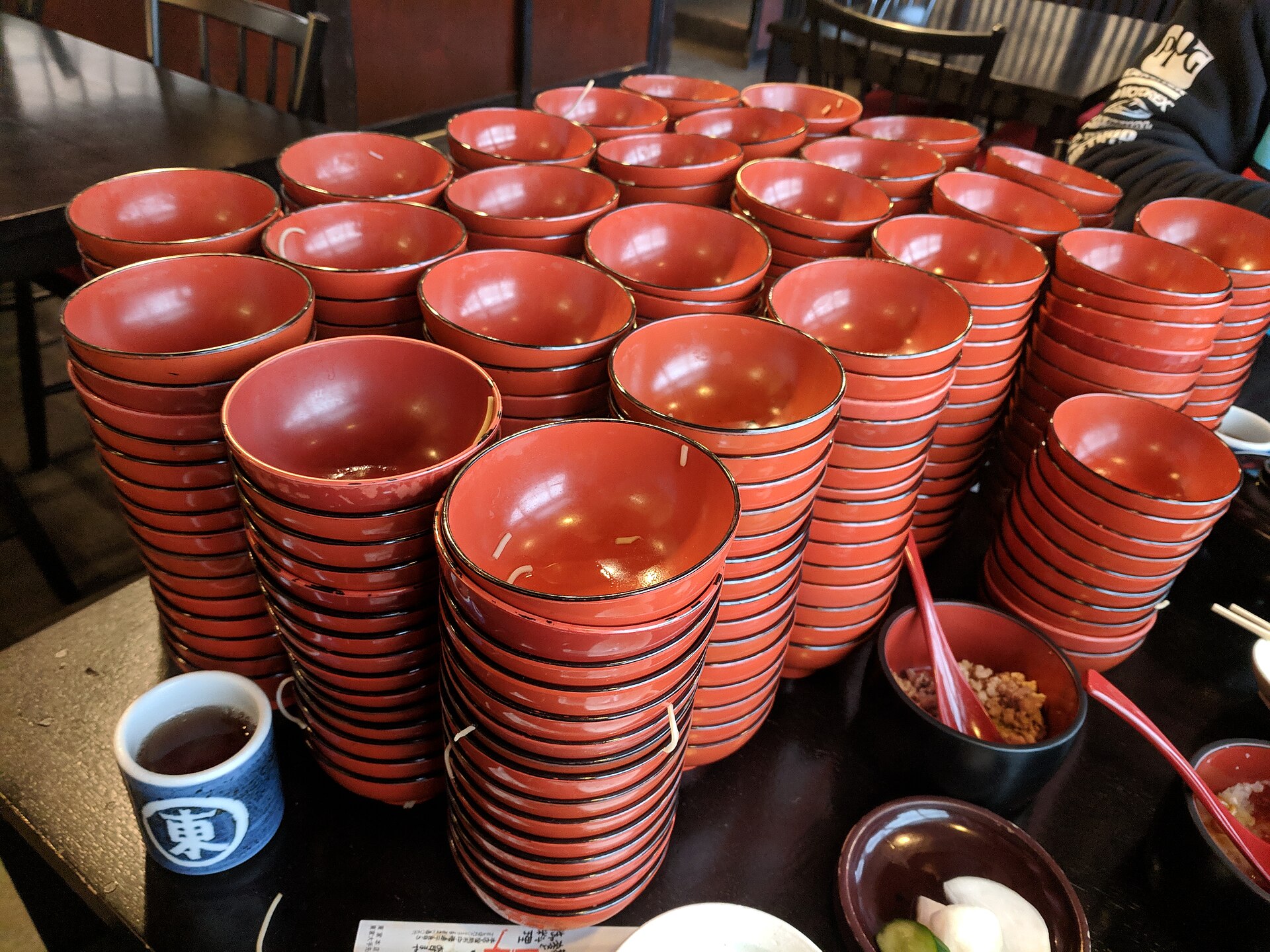 Koltonsmith / CC BY-SA 4.0
Wanko Soba
Little knownWanko Soba is Morioka's most theatrical dining experience — an all-you-can-eat soba challenge where servers rapidly refi…
 663highland / CC BY-SA 4.0
Takkoku no Iwaya Bishamon-do
Well knownTakkoku no Iwaya Bishamon-do is a Buddhist temple built into a cliff cave, dramatically perched on a rock face 15 meters…
 Renate Hano / CC BY-SA 4.0
Motsuji Temple Garden
Well knownMotsuji Temple was once larger than Chusonji, containing 40 temple buildings and 500 monks' quarters during the Northern…