
Oma Tuna
Researched and written by Hinato
Aomori · Oma
41.5270°N, 140.9203°E
What makes Oma Tuna worth planning around is less the menu than the timing — get that right and the rest follows.
Oma is the northern tip of Honshu, a small town on the Tsugaru Strait, and its tuna sells for more than any other tuna in Japan — the record at the Tokyo New Year auction has passed three hundred million yen for a single fish. What makes them worth it is the strait: cold, violently tidal, and full of squid and mackerel, so the bluefin that pass through in autumn on the way south are enormous and fat.
The other half of the story is how they are caught. Oma fishermen use ippon-zuri, single-line pole fishing, one man in a small boat playing one fish for hours. The town is built on it. At Cape Oma, where the road ends, several restaurants run by fishing families serve the catch straight — a three-colour bowl of otoro, chutoro and akami for around ¥3,960, which sounds expensive until you consider what the same fish costs in Tokyo.
The single-line method itself is central to why Oma tuna commands such prices, and it is worth understanding as more than a marketing detail. A pole-and-line fisherman fighting one large bluefin alone in a small boat can spend hours bringing in a single catch, compared to the net methods used elsewhere that land many fish quickly but with more bruising and stress to the flesh, which affects both texture and flavor. Oma's fishing fleet is small and largely family-run, passed down through generations who have fished this same stretch of strait, and the town's identity is inseparable from the trade — flags and banners around the harbor reference tuna, and the winter auction results are followed locally the way other towns might follow a sports season. The strait's currents, driven by the meeting of warm and cold water between the Sea of Japan and the Pacific, are what concentrate the baitfish that fatten the migrating bluefin, and the same currents make the fishing itself genuinely dangerous, adding to the sense that what ends up on the plate at Cape Oma represents real, physically demanding work rather than a simple commodity catch.
What to know before you go
When to go
Autumn into early winter for fresh Oma-landed bluefin
Serving hours
Restaurants at the cape typically 8:00 AM – 6:00 PM April–November and 9:00 AM – 4:00 PM December–March
Closed: Varies by restaurant — confirm before travelling
Time to allow
1–1.5 hours for a meal | Half a day including the drive
Cost
Three-colour tuna bowl around ¥3,960 | Tuna bowl around ¥3,630 | Sea urchin bowl around ¥4,150
Finding the spot
Getting there in detail
Beyond the guidebook
Book Your Stay Nearby
Find accommodation close to Oma Tuna on these trusted booking platforms:
Nearby Spots
The closest hidden gems to Oma Tuna, by straight-line distance.
Hotokegaura
Locally knownTwo kilometres of white volcanic tuff on the western shore of the Shimokita peninsula, eroded by wind and sea into tower…
 あおもりくま / CC BY-SA 3.0
Mount Osore
Little knownMount Osore (恐山, Osorezan — 'Dread Mountain') sits on Shimokita Peninsula as one of Japan's three holiest Buddhist sites…
 洞内定晴 / CC BY 4.0
Mt. Hakodate Night View
Locally knownMt. Hakodate (函館山, 334m) offers what Japanese tourism authorities rank among the world's top three night views (alongsid…
 bryan... / CC BY-SA 2.0
Hakodate Morning Market
Well knownHakodate Morning Market (函館朝市, Hakodate Asaichi) is a labyrinth of 250+ vendors selling Hokkaido's ocean harvest — live…
 Illustration — not a photograph
Lucky Pierrot
Locally knownLucky Pierrot (ラッキーピエロ) is a Hakodate-only burger chain with 17 locations, each themed differently (pirate ship, carouse…
Shimokita Peninsula
Little knownThe Shimokita Peninsula (下北半島) is Honshu's northernmost landmass, jutting into the Tsugaru Strait toward Hokkaido. This…
More in Aomori
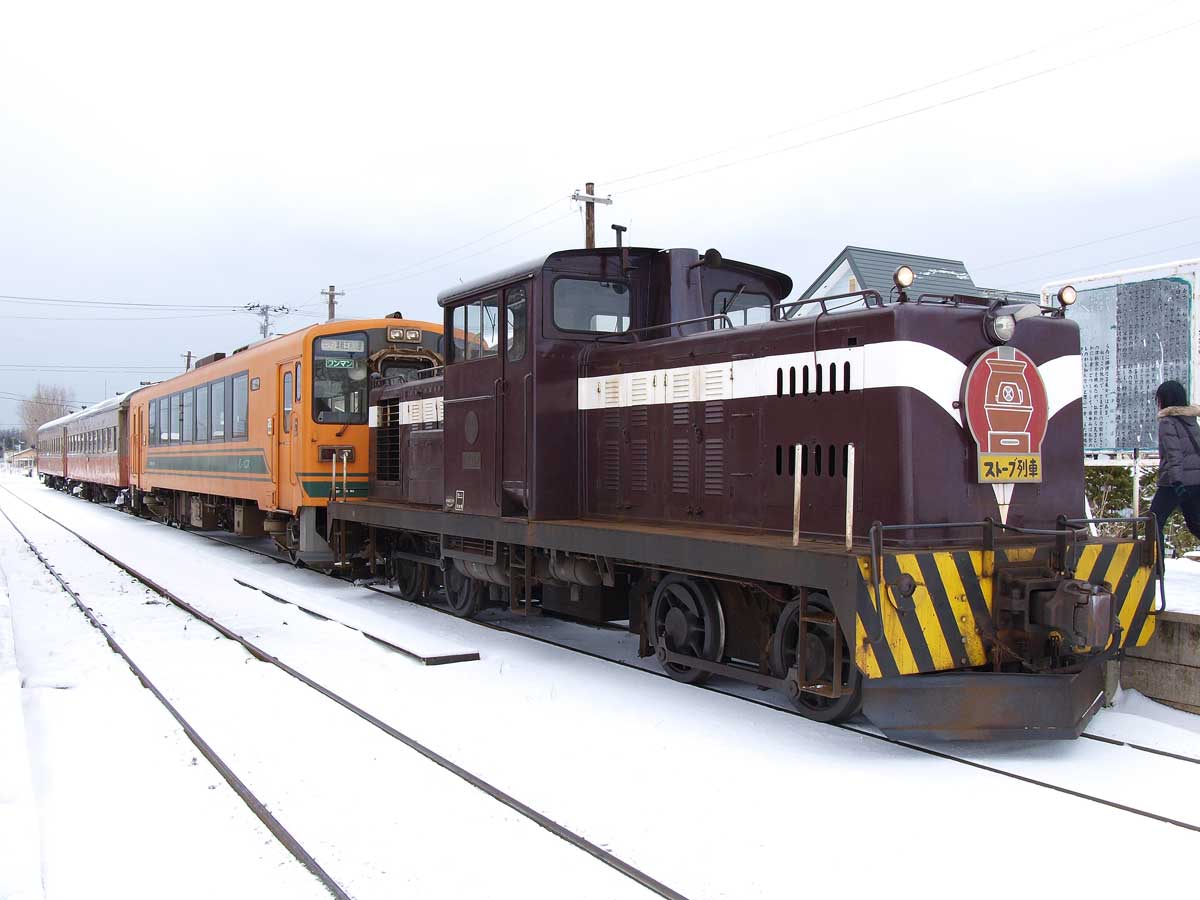 Amiden / CC BY-SA 3.0
Tsugaru Railway Stove Train
Little knownThe Tsugaru Railway runs twenty kilometres north from Goshogawara across the flat snow country of the Tsugaru plain, and…
 Glenn Waters / CC BY 2.0
Inakadate Rice Paddy Art
Little knownIn 1993 the village of Inakadate, looking for something to do about a declining population, planted a small design in a…
Shayokan
Locally knownDazai Osamu wrote No Longer Human and The Setting Sun, drowned himself in 1948 at thirty-eight, and is read by essential…