
Kurokabe Square
Researched and written by Hinato

Photo: 663highland / Wikimedia Commons (CC BY-SA 4.0) · original
Every prefecture has a site locals point to first; in Shiga, Kurokabe Square is usually it.
Kurokabe Square (黒壁スクエア) is Nagahama's historic merchant district centered around the 1900 Kurokabe Bank (Black Wall Bank) — a Meiji-era building with distinctive black plaster walls. The district has 30+ galleries, glass studios, restaurants, and craft shops occupying restored machiya (merchant houses). Nagahama developed as a glassware center after the bank building was converted into a glass museum in 1989, sparking the district's revitalization.
The area combines historical preservation with active craft economy — visitors can watch glass-blowing demonstrations, create their own glass ornaments in workshops, and purchase contemporary glass art alongside traditional Lake Biwa crafts. The successful transformation from declining merchant district to thriving cultural tourism destination makes Kurokabe a model for rural Japanese town revitalization.
Plan your visit
Hours
Shops/galleries 10:00 AM – 5:00 PM. Glass workshops by reservation.
Closed: Some shops closed Wednesday; check individual shops
Time to allow
90–120 minutes for district walk, museum, and glass workshop experience
Admission
Free to walk. Kurokabe Glass Museum ¥300. Glass workshops ¥1,500–3,000.
Best time to visit
Year-round; reserve glass workshop in advance for weekend visits
How to reach it
Getting there in detail
What locals know
Nearby Spots
The closest hidden gems to Kurokabe Square, by straight-line distance.
 Asturio Cantabrio / CC BY-SA 4.0
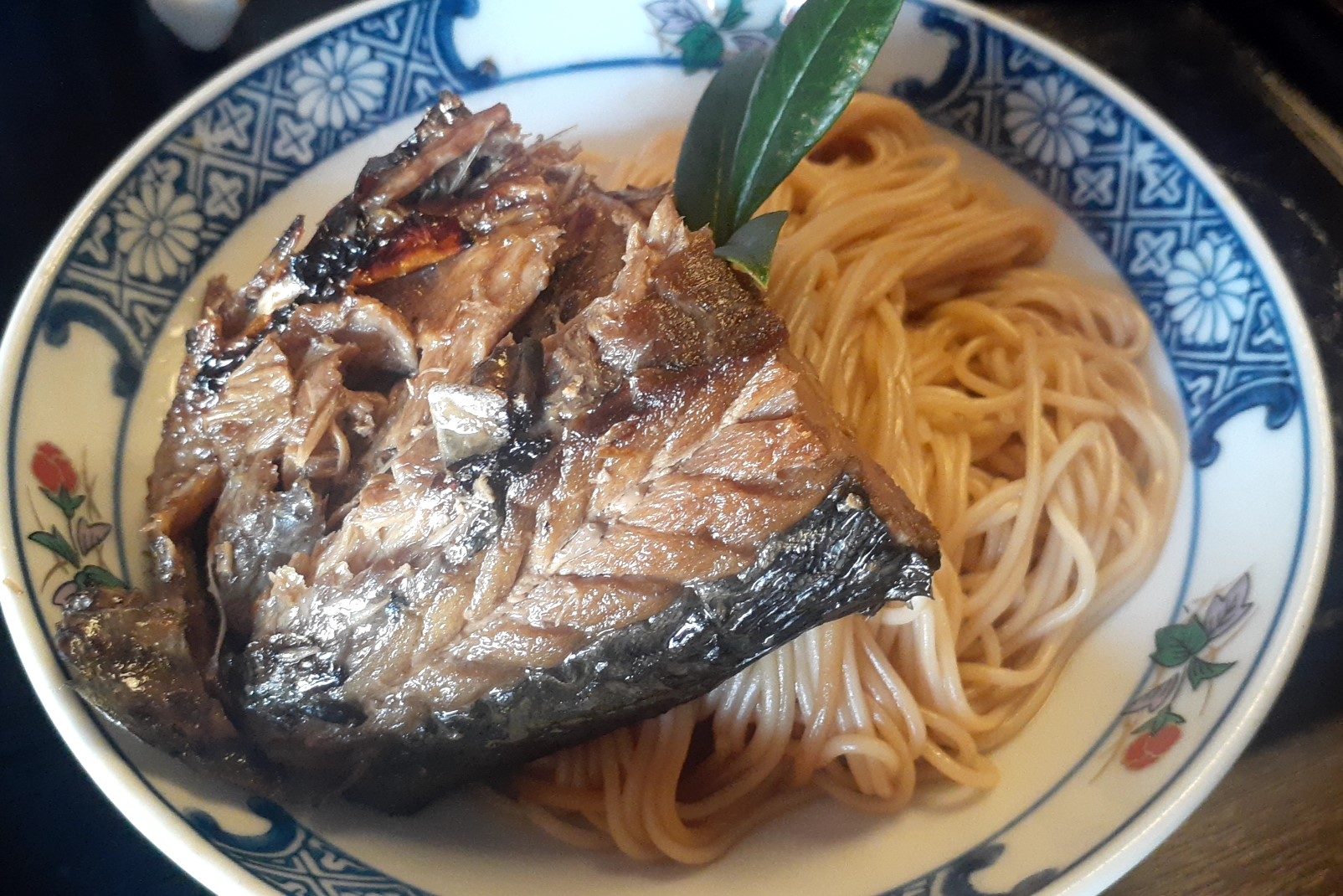
Yakisaba Somen
Little knownYakisaba somen was a gift, not a restaurant dish. In the farming villages around Nagahama a family whose daughter had ma…
 z tanuki / CC BY 3.0
Nagahama Castle & Lake Biwa Lakeside Park
Little knownNagahama Castle (長浜城) was built by Toyotomi Hideyoshi in 1576 when he was still a rising warlord under Oda Nobunaga. The…
 Nankou Oronain (as36… / CC BY-SA 3.0
Samegai Baikamo
Little knownSamegai was the sixty-first station on the Nakasendo, and the Jizo river runs straight down the middle of it, fed by a s…
 Yoshio Kohara / CC BY 3.0
Genkyuen Garden
Little knownGenkyuen Garden (玄宮園) is a traditional Japanese daimyo garden built in 1677 adjacent to Hikone Castle. The garden demons…
 Illustration — not a photograph
Hikone Castle
Little knownHikone Castle (彦根城) is one of Japan's 12 original castles (surviving since Edo period), built 1603–1622. The castle pres…
Hikone Merchants' Traditional Crafts
Little knownHikone and the surrounding Omi region developed distinctive traditional crafts during the Edo period, supported by wealt…
More in Shiga
Harie Shozu no Sato
Little knownIn Harie, spring water comes up inside the houses. Groundwater filtered through the Hira mountains is tapped in a struct…
 Norihiro Kataoka / CC BY-SA 2.0
Makino Metasequoia Avenue
Little knownAbout 500 metasequoias line 2.4 kilometres of the approach road to the Makino highland, planted in 1981 as part of a fru…
 Raita Futo / CC BY 2.0
Mount Ibuki
Little knownIbuki stands 1,377 metres on the Shiga and Gifu border, alone rather than in a range, which is why it takes the full for…