
Koyasan Temple Town
Researched and written by Hinato

Photo: 663highland / Wikimedia Commons (CC BY 2.5) · original
Step through the gate at Koyasan Temple Town and the first thing you notice isn't the architecture — it's the quiet.
Koyasan sits at 900 meters, a temple town of 117 buildings founded in 816 by Kukai (Kobo Daishi) as Shingon Buddhism's headquarters. Morning mist pools in the streets until 8am; incense smoke drifts from every temple; and monks in robes still chant sutras at 6am like they have for 1,200 years. You can stay overnight in the temples themselves (shukubo, temple lodging)—sleep on tatami, eat shojin ryori (vegetarian monk food), and sit through morning prayers if you wake up for them. The town has two centers: Danjo Garan, the sacred temple complex with its red pagoda, and Okunoin Cemetery, a 2-kilometer path through 200,000 graves under 500-year-old cedars. The cemetery is where Kukai's body supposedly rests in eternal meditation, not dead but waiting. Monks bring him rice twice a day. At night, 10,000 lanterns light the path, and the whole forest smells like sandalwood. Koyasan isn't a museum—these are working temples where monks train, study, and maintain rituals that haven't changed in centuries. You're staying in a monastery, not a hotel, and it shows in the silence and the discipline.
Our angle on Koyasan Temple Town
Nobody else is going here
Everyone within a mile of Koyasan Temple Town is going to Koyasan Temple Town. Here are 4 places within walking or one bus ride of it that almost nobody writes about — straight-line distances from our own catalogue, not travel times.
- Shojin RyoriLocally known~0.0 km away · Wakayama
Shojin ryori is what Buddhist monks eat: no meat, no fish, no eggs, no onions or garlic (they're thought to stir up desi…
- Day Trip to Mount KoyaLocally known~0.0 km away · Osaka
The cable car climbing Mount Koya tilts at 26 degrees — steep enough that my feet pressed hard against the floor as we a…
- Kongobu-ji TempleLocally known~0.0 km away · Wakayama
Kongobu-ji (金剛峯寺) is the head temple of Shingon Buddhism and the administrative center of Koyasan's 117 temples, founded…
- SanadaanLittle known~8.8 km away · Wakayama
After Sekigahara in 1600, Sanada Masayuki and his son Nobushige — the man popular history calls Yukimura — were exiled t…
Plan your visit
Time to allow
1 night minimum for temple stay | Day trip: 4–5 hours (Okunoin + Danjo Garan) | 2 nights for full meditation retreat experience
Hours
Temple town generally 24/7 | Okunoin Cemetery: open 24 hours | Kongobu-ji (head temple): 8:30 AM – 5:00 PM (Apr–Oct), 8:30 AM – 4:30 PM (Nov–Mar)
Closed: Okunoin open every day | Kongobu-ji open every day | Temple stays: check-in 3:00 PM–5:00 PM, checkout by 10:00 AM | New Year days may vary
Admission
Danjo Garan: ¥500 | Kongobu-ji: ¥1,000 | Okunoin Cemetery: free | Temple lodging: ¥10,000–15,000/person (dinner + breakfast included)
Best season
Spring (April–May) for cherry blossoms + minimal humidity | Autumn (October–November) for maple foliage | Winter (January–February) for snow-covered temple roofs and smaller crowds
Getting there
Getting there in detail
Access in depth
Nearest Station
Koyasan Station (Nankai Koya Line) — cable car 5 min to top, then bus 10 min to town center
Travel Time
From Osaka Namba: 90 min by Nankai Koya Line limited express + cable car | From Kyoto: 2 hrs via Osaka | From Tokyo: 3.5 hrs Shinkansen to Shin-Osaka + Nankai Koya Line
How to Get There
Train: Nankai Koya Line from Osaka Namba to Gokurakubashi (80–90 min, ¥1,430 limited express), then Nankai Cable Car to Koyasan Station (5 min, ¥410). Bus: From Koyasan Station, Nankai Rinkan Bus circles the mountain town (¥310/ride, day pass ¥840). Most temples are on the bus route. Car: Recommended for flexibility — drive to Gokurakubashi parking (free, then cable car). Route 370 from Osaka (2 hrs via Koya town).
Best Time to Visit
Okunoin Cemetery at night (7:00–9:00 PM) when 10,000 lanterns are lit — most atmospheric time. Morning prayer at 6:00 AM is the most authentic temple experience. Arrive day before to check in before 5:00 PM.
Crowd Avoidance Tips
Spring (Golden Week) and autumn foliage season are busiest. Weekday stays are significantly quieter. Reserve temple lodging 1–2 months ahead for weekends, 2–3 months for autumn. Over 50 temples offer shukubo — compare atmosphere and price via Koyasan Tourism Association's English booking site.
Parking Information
Gokurakubashi Station: free large parking lot (use cable car from here). Town center parking: limited and not recommended — use the mountain bus instead. Ryokan guests can arrange onsite parking (ask when booking).
What locals know
Book Your Stay Nearby
Find accommodation close to Koyasan Temple Town on these trusted booking platforms:
Nearby Spots
The closest hidden gems to Koyasan Temple Town, by straight-line distance.
 Jpatokal / CC BY-SA 4.0
Shojin Ryori
Locally knownShojin ryori is what Buddhist monks eat: no meat, no fish, no eggs, no onions or garlic (they're thought to stir up desi…
 663highland / CC BY 2.5
Day Trip to Mount Koya
Locally knownThe cable car climbing Mount Koya tilts at 26 degrees — steep enough that my feet pressed hard against the floor as we a…
 Nankou Oronain (as36… / CC BY-SA 3.0
Kongobu-ji Temple
Locally knownKongobu-ji (金剛峯寺) is the head temple of Shingon Buddhism and the administrative center of Koyasan's 117 temples, founded…
Okunoin Cemetery Night Walk
FamousOkunoin (奥之院) is a 2-kilometer path through 200,000 moss-covered tombstones and memorial monuments beneath towering 500-…
 米田賢一 / CC BY 3.0
Sanadaan
Little knownAfter Sekigahara in 1600, Sanada Masayuki and his son Nobushige — the man popular history calls Yukimura — were exiled t…
Aragijima
Little knownThe Arida river makes a tight loop around a spur of land at Shimizu, and the terraces cut into that spur have the shape…
More in Wakayama
 KishujiRapid / CC BY-SA 4.0
Taiji Whale Museum
Little knownTaiji is a small town on the Kumano coast where organised whaling in Japan began — a system of nets and coordinated boat…
 Dokudami / CC BY-SA 4.0
Ryujin Onsen
Little knownRyujin is counted with Kawanaka in Gunma and Yunokawa in Shimane as one of the three waters of beauty in Japan. The spri…
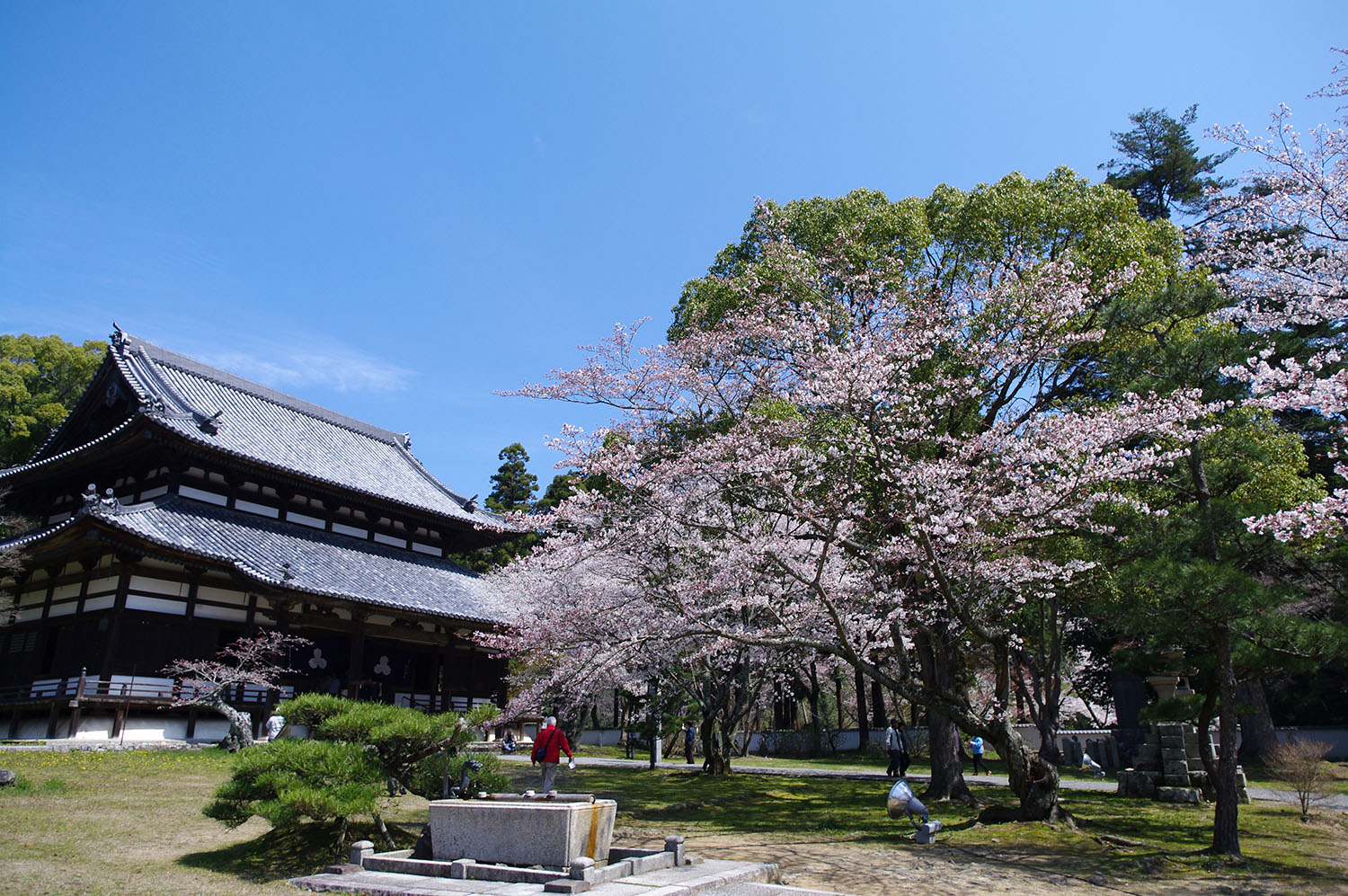 Kumamushi / CC BY-SA 3.0
Negoroji (Iwade)
Locally knownNegoroji was, at its height in the sixteenth century, a monastic complex of some two thousand buildings with an armed fo…