
Yakushima Ancient Cedar Forest
Researched and written by Hinato
Kagoshima · Yakushima
30.3350°N, 130.5289°E
What sets Yakushima Ancient Cedar Forest apart from other natural sites in Kagoshima is how much depends on conditions outside anyone's control.
Yakushima is a subtropical island 60km off Kagoshima's coast, covered in primeval forest where Japanese cedars (杉, sugi) over 1,000 years old tower above moss-carpeted undergrowth. The island's most famous tree, Jomon Sugi, is estimated at 2,000–7,200 years old and requires a 10-hour round-trip hike to reach. The forest inspired Hayao Miyazaki's animated film Princess Mononoke.
The island receives over 4,000mm of annual rainfall ('it rains 35 days a month in Yakushima,' locals joke), creating perpetual mist and humidity that sustains the moss ecosystem and makes the forest feel otherworldly.
What this page is honestly for
Yakushima is a World Heritage island with a permit system, a bus network built for hikers, and an entire shelf of guidebooks in Japanese and English. The practical information you need to walk to Jomon Sugi is better handled by the people who manage the trail than by us, and we link out rather than paraphrase.
There are also no quiet alternatives to list here, because the island is small and everything on it is either the forest or the sea. That is a real answer rather than a gap: on this page the site's job is to get out of the way, and the places we can genuinely tell you about are on the mainland pages of Kagoshima.
Plan your visit
Time to allow
Jomon Sugi: 10–12 hours round-trip (entire day) | Shiratani Unsuikyo: 2–5 hours | 2–3 nights minimum to experience island properly
Hours
Jomon Sugi trail: depart by 5:00 AM for same-day return | No official park closing time — access at own risk
Closed: Trails open year-round | Typhoon season (July–October) may cause temporary trail closures | Check Yakushima tourism website for conditions
Best time to visit
April–June (before typhoon season, fresh greenery) | September–October (post-typhoon, quieter) | March for early spring flowers | Avoid July–August peak season crowds
Entry fee
Jomon Sugi trail: ¥1,000 conservation fee requested | Shiratani Unsuikyo Ravine: ¥500 | Island access: ferry ¥5,000–9,500 or flight ¥15,000
Getting out there
Getting there in detail
Access in depth
Nearest Station
No train on Yakushima — depart from Kagoshima Port (ferry) or Kagoshima Airport (flight)
Travel Time
From Kagoshima Port: 2 hrs high-speed ferry (¥9,500) or 4 hrs slow ferry (¥5,000) to Miyanoura | From Kagoshima Airport: 30-min flight (¥15,000)
How to Get There
Ferry: Toppy/Rocket high-speed ferry from Kagoshima Port (2 hrs, ¥9,500). Book 1 week ahead for weekends. Slow ferry (4 hrs, ¥5,000) is cheaper. Flight: JAC (Japan Air Commuter) from Kagoshima Airport (30 min, ¥15,000). Limited seats — book 2+ weeks ahead. On island: Rental car or scooter essential (¥5,000–8,000/day). Bus service exists but is infrequent and doesn't reach trailheads at 5:00 AM departure time.
Best Time to Visit
Depart trailhead at 4:30–5:00 AM for Jomon Sugi to reach summit by 10:00 AM before afternoon mist/rain. April weekdays for best visibility and smaller crowds.
Crowd Avoidance Tips
Golden Week (late April–early May) and August are peak season — trailheads crowded, guesthouses fully booked months ahead. Visit in late March or late October for solitude. Shiratani Unsuikyo can be crowded 10 AM–2 PM; start at opening (8:00 AM) for misty forest atmosphere without crowds.
Parking Information
Jomon Sugi trailhead (Arakawa): no private car access during peak season (March–November) — mandatory shuttle bus from Yakusugi Land parking area (¥920 round-trip, runs 4:00–7:30 AM). Off-season: limited trailhead parking (free). Shiratani Unsuikyo: parking lot ¥1,000/day.
Beyond the guidebook
Book Your Stay Nearby
Find accommodation close to Yakushima Ancient Cedar Forest on these trusted booking platforms:
Nearby Spots
The closest hidden gems to Yakushima Ancient Cedar Forest, by straight-line distance.
 Raita Futo from Tokyo, Japan / CC BY 2.0
Cape Sata
Little knownThe southernmost point of mainland Japan, at 31 degrees north, on a headland of subtropical forest at the end of the Osu…
 Snap55 / CC BY 3.0
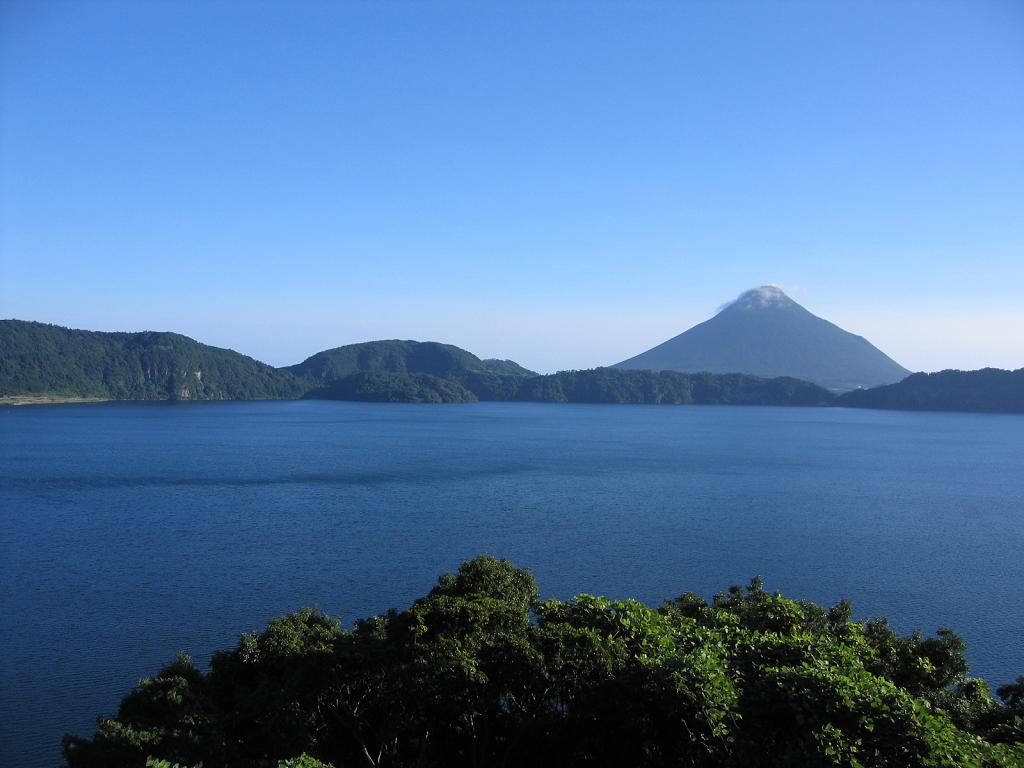
Lake Ikeda
Well knownLake Ikeda (池田湖) is a volcanic caldera lake — the largest lake in Kyushu at 15km circumference — with Mt. Kaimon (開聞岳, 9…
Karasengorge Somen Nagashi
Little knownFlowing somen usually means a split bamboo chute down which noodles are sent past you once, with one chance to catch the…
 Sanjo / CC BY-SA 4.0
Ogawa Falls
Little knownForty-six metres high and sixty wide, falling into a pool of an improbable emerald green enclosed by columnar basalt wal…
 NY066 / CC BY-SA 3.0
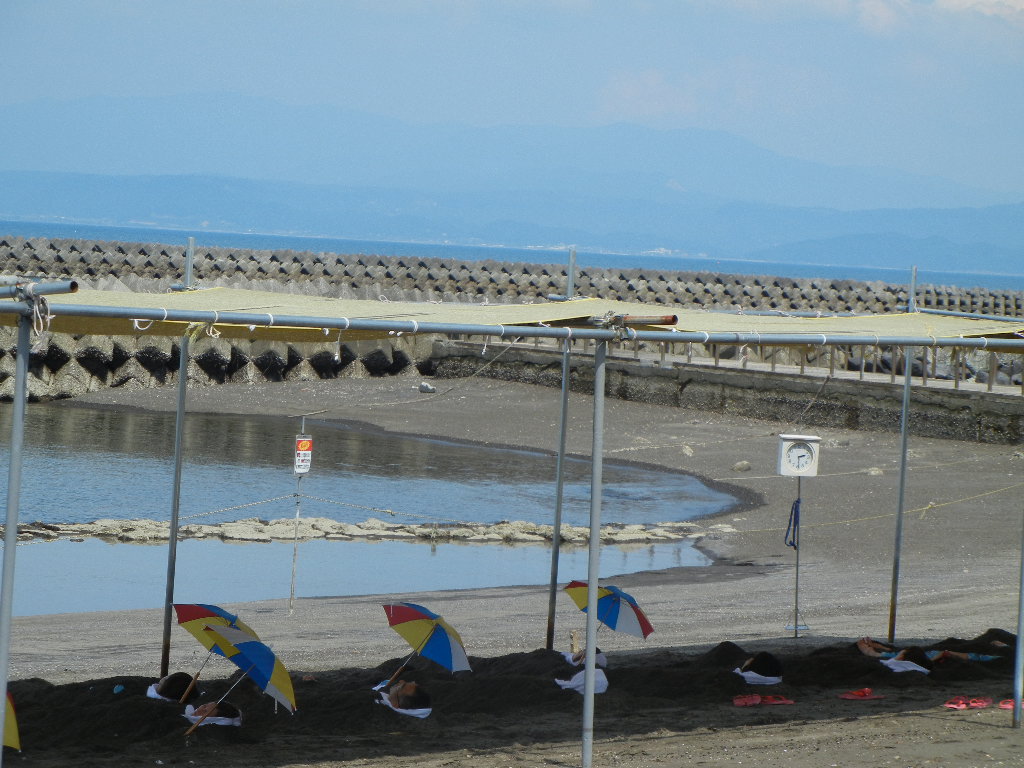
Ibusuki Sand Bath
Well knownIbusuki is famous for sunamushi onsen (砂むし温泉) — hot sand baths where attendants bury visitors up to the neck in naturall…
Chiran Peace Museum
Little knownChiran was an army airfield, and in the last months of the Pacific war it was the main departure point for special attac…
More in Kagoshima
 Illustration — not a photograph
Kanoya Rose Garden
Little knownKanoya Rose Garden (かのやばら園) is one of Japan's largest rose gardens with 50,000 bushes representing 1,500 varieties sprea…
 そらみみ / CC BY-SA 4.0
Tenmonkan Arcade
Well knownTenmonkan (天文館) is Kagoshima City's main shopping and entertainment district — a covered arcade stretching 1km through t…
Iso Beach
Locally knownIso Beach (磯海水浴場) is a small city beach in Kagoshima's northern suburbs, offering the unique combination of urban swimmi…