
Shizuoka Matcha Experience
Researched and written by Hinato

What makes Shizuoka Matcha Experience worth planning around is less the menu than the timing — get that right and the rest follows.
Shizuoka grows 40% of Japan's green tea, which means doing a matcha ceremony here is like learning to make cheese in Wisconsin—you're at the source, surrounded by people who've been doing this since childhood, which raises the stakes. The abbreviated tea ceremony workshops (chanoyu, 茶の湯) teach you to whisk matcha using a chasen (bamboo whisk with 80-120 tines) in a specific W-pattern that incorporates air without creating large bubbles. You'll do it wrong the first time. Everyone does. The matcha will be lumpy or under-frothed or both, and the instructor will smile and demonstrate again, slower, while you realize this 'simple' 30-second task has a learning curve.
Tea ceremony (sadou, 茶道) is Zen Buddhist practice disguised as hospitality—every gesture (how you turn the bowl, where you place the whisk, the angle of your bow) has prescribed form developed over 500 years. The workshops compress multi-year training into 40 minutes, which is like learning piano from a YouTube video, but you'll understand why people dedicate lifetimes to this. The matcha itself is usucha (薄茶, thin tea) ceremonial grade from Shizuoka first-flush harvest: young leaves stone-ground to 5-10 micron powder, bright chlorophyll green, grassy-sweet with umami depth and almost no bitterness. This is different-species-level different from the culinary-grade matcha (older leaves, brownish, bitter) used in lattes at Starbucks.
The ceremony pairs matcha with wagashi (traditional sweet—usually yokan bean paste or mochi filled with red bean) eaten before drinking. The sugar blunts the tea's vegetal intensity and the contrast makes both taste sharper. You'll sit seiza (kneeling, legs folded) on tatami for 40 minutes, which will hurt if you're not used to it, and that discomfort is part of the point—it keeps you present. That's the Zen part.
Eating essentials
Price range
Chojaya: ¥1,500 (matcha + wagashi + instruction) | Serizawa Museum: ¥1,000 | Sumpu Takumi-shuku: ¥800
Best season
Year-round | Spring (April–May) for first-flush ceremonial matcha season | Any season for indoor experience
Hours
Serizawa Museum tea room: weekends 10:00 AM – 4:00 PM
Closed: Chojaya: Tuesdays | Serizawa Museum: Mondays | Sumpu Takumi-shuku: Mondays and national holidays
How long to allow
40–60 minutes (ceremony session) | Allow extra time for travel between venues
Getting there
Directions
Access in depth
Nearest Station
Shizuoka Station (JR Tokaido Shinkansen) — Chojaya 10-min walk | Serizawa Museum 15-min taxi | Sumpu Takumi-shuku 15-min walk
Travel Time
From Tokyo: 1 hr Shinkansen to Shizuoka | From Nagoya: 45 min Shinkansen | From Osaka: 1 hr 20 min Shinkansen
How to Get There
Walk: Chojaya and Sumpu Takumi-shuku are walkable from Shizuoka Station (10–15 min). Bus: Shizuoka City loop bus connects major cultural sites (¥200/ride, day pass ¥500). Taxi: From Shizuoka Station to Serizawa Museum approx ¥1,200–1,500 (10 min).
Best Time to Visit
Weekday morning sessions (10:00–11:00 AM) for most attentive instruction. Reserve at least 2 days ahead; weekends book out 1–2 weeks ahead.
Crowd Avoidance Tips
Sumpu Takumi-shuku offers drop-in availability (no reservation needed) — best for spontaneous visitors. Chojaya and Serizawa Museum require advance reservation. Maximum group size 8–10 people per session.
Parking Information
Street parking near Chojaya limited. Use coin parking near Shizuoka Castle ruins (¥200/hour). Sumpu Takumi-shuku has nearby municipal parking (¥200/hour).
Insider tips
Book Your Stay Nearby
Find accommodation close to Shizuoka Matcha Experience on these trusted booking platforms:
Nearby Spots
The closest hidden gems to Shizuoka Matcha Experience, by straight-line distance.
 Zengame / CC BY 2.0
Shizuoka Oden
Little knownShizuoka oden (静岡おでん) is the prefecture's regional variation of oden (おでん, hot pot of simmered ingredients) distinguishe…
 KΛNΛTΛ / CC BY-SA 3.0
Sunpu Castle Park
Little knownSunpu Castle (駿府城) was Tokugawa Ieyasu's retirement residence after he passed the shogunate to his son in 1605. Ieyasu g…
Nihondaira Tea Plantations
Little knownNihondaira (日本平) is a hillside plateau overlooking Suruga Bay and Mt. Fuji, covered in perfectly manicured green tea pla…
 江戸村のとくぞう / CC BY-SA 4.0
Kunozan Toshogu Shrine
Locally knownKunozan Toshogu Shrine (久能山東照宮) is a lavishly decorated Shinto shrine dedicated to Tokugawa Ieyasu, the shogun who unifi…
 Miyuki Meinaka / CC BY-SA 4.0
Sakura Shrimp
Little knownSakura shrimp (桜海老, sakura-ebi) measure 4-5 centimeters and glow translucent pink like cherry blossoms, which is poetic…
Shiraito Falls (Fujinomiya)
Well knownShiraito Falls (白糸の滝, 'White Thread Falls') is a 20-meter-high, 150-meter-wide curtain waterfall where spring water emer…
More in Shizuoka
 Wei-Te Wong from Taipei City, Taiwan, Republic of China / CC BY-SA 2.0
Unagi no Kabayaki
Little knownHamamatsu is Japan's eel capital, producing 40% of the nation's farmed unagi (freshwater eel) from Lake Hamana's brackis…
 Nesnad / CC BY 4.0
Shuzenji Onsen
Little knownShuzenji Onsen (修善寺温泉) is a historic hot spring town in the heart of the Izu Peninsula, founded 1,200 years ago when Bud…
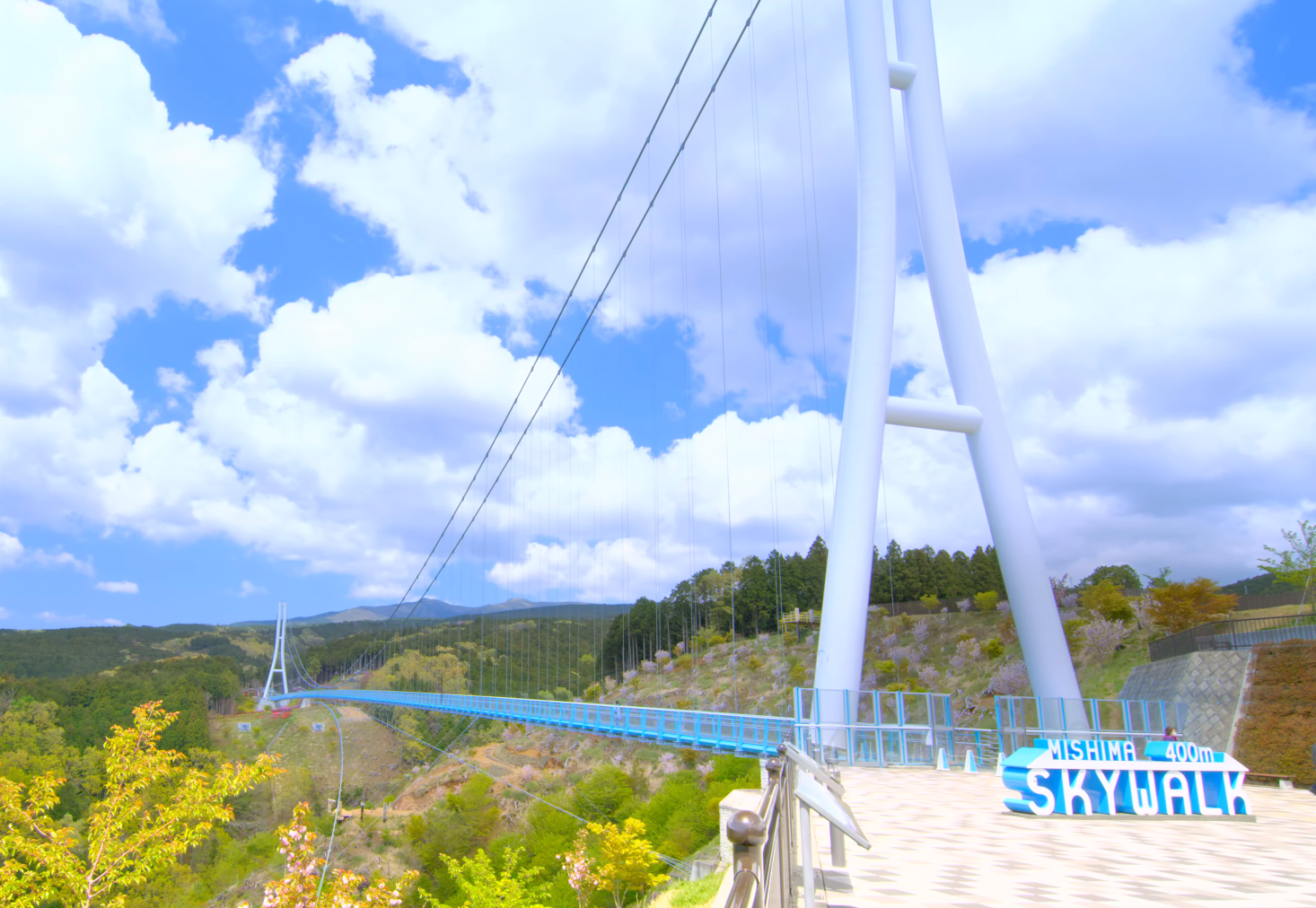 SHIZUOKACITYperson / CC BY-SA 4.0
Mishima Skywalk
Little knownMishima Skywalk (三島スカイウォーク) is Japan's longest pedestrian suspension bridge at 400 meters, suspended 70 meters above a f…