
Isedotai Site
Researched and written by Hinato

Photo: Wc018 / Wikimedia Commons (CC BY-SA 4.0) · original
A quick walk through Isedotai Site tells you less than a slow one — the details are where the history actually lives.
Isedotai has four stone circles, which is unique in Japan — every other Jomon circle site has one or two. They sit on a terrace above the Yoneshiro river with a view to the Shirakami mountains, were built about four thousand years ago, and were found in 1992 during construction of a bypass, which was subsequently rerouted around them.
What came out of the ground alongside them is unusual too: hundreds of clay figurines, many with a distinctive smiling face that has become the site's emblem, along with earrings and ritual vessels. It was inscribed with the Jomon Prehistoric Sites in Northern Japan in 2021. The circles are covered over from November to mid-April to protect the stones from frost.
What to know before you go
When to go
Late April–October, while the circles are uncovered
Opening hours
Site 9:00 AM – 4:30 PM | Museum 9:00 AM – 5:00 PM
Closed: Stone circles closed from November to mid-April | Museum open year-round
Time to allow
60–90 minutes
Fee
Free | Museum free
How to reach it
Access notes
Historical notes & tips
Nearby Spots
The closest hidden gems to Isedotai Site, by straight-line distance.
 掬茶 / CC BY-SA 4.0
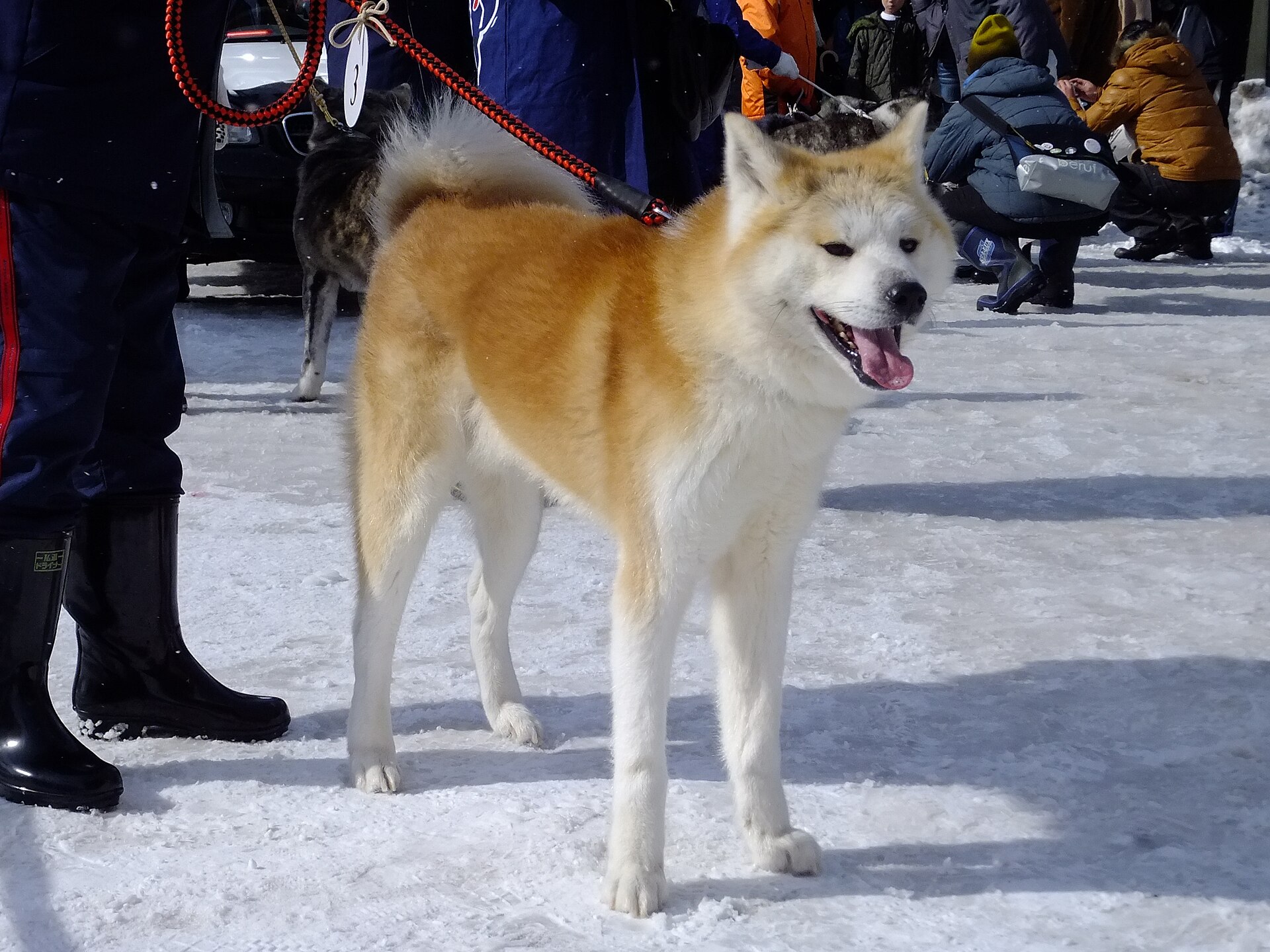
Akita Inu Dogs
Little knownAkita Inu (秋田犬) are one of Japan's six native dog breeds, designated a Natural Monument in 1931. Originating in the Odat…
 Wc018 / CC BY-SA 4.0
Akita Nairiku Line
Little knownThe Akita Nairiku Line runs ninety-four kilometres north to south through the middle of the prefecture, from Takanosu to…
 MaedaAkihiko / CC BY-SA 4.0
Gono Line and Resort Shirakami
Little knownThe Gono Line runs 147 kilometres from Higashi-Noshiro in Akita to Kawabe in Aomori, and for about eighty of them it is…
 掬茶 / CC BY-SA 4.0
Kosaka Mine Office
Locally knownKosaka was, at the start of the twentieth century, the largest producer of silver in Japan and later of copper, and in 1…
 掬茶 / CC BY-SA 4.0
Korakukan
Locally knownKorakukan was built in 1910 as a welfare facility for the Kosaka mine, which was then one of the richest in Japan, and i…
Shirakami-Sanchi
Well knownShirakami-Sanchi (白神山地) is a 1,300-square-kilometer mountain range straddling Aomori and Akita prefectures, home to the…
More in Akita
Shinzan Shrine
Little knownShinzan Shrine (真山神社) in Oga Peninsula is the spiritual home of the Namahage tradition, where ritual demon costumes are…
 Koda6029 / CC BY-SA 4.0
Hachimantai Plateau
Little knownHachimantai Plateau (八幡平) is a volcanic highland straddling the Akita-Iwate border, part of Towada-Hachimantai National…
 掬茶 / CC BY-SA 4.0
Akita Museum of Art
Little knownThe Akita Museum of Art (秋田県立美術館) is a striking triangular glass building designed by architect Tadao Ando, housing the…