
Metropolitan Area Outer Underground Discharge Channel
Researched and written by Hinato

Photo: Kunitaka NIIDATE / Wikimedia Commons (CC BY-SA 2.0) · original
A quick walk through Metropolitan Area Outer Underground Discharge Channel tells you less than a slow one — the details are where the history actually lives.
Fifty metres under a football pitch in Kasukabe is a concrete hall 177 metres long and 78 wide, held up by 59 pillars each weighing 500 tonnes. It is a pressure-regulating tank: when the rivers north of Tokyo flood, water is dropped down five shafts, buffered here, and pumped into the Edo river by turbines rated at 200 cubic metres a second. It is the largest facility of its kind in the world and it exists because this basin used to flood every few years.
Everyone calls it the underground temple, and the resemblance is not accidental — the pillars are on a grid and the lighting is uplit from the floor. It has been used as a film set often enough that people recognise it before they know what it is. Tours run daily and must be booked; the surface visitor centre with the working control room is free and needs no reservation.
The system exists because of a specific geography rather than generic bad luck with weather: the rivers running off the mountains north and west of Tokyo converge on this low, flat basin before any of them reach the larger Edo river, and for decades that convergence point flooded reliably whenever a typhoon or a heavy rainy-season system pushed more water down from higher ground than the smaller rivers could carry on their own. Rather than widen or reroute the rivers themselves, engineers chose to build a buffer underground — five vertical shafts positioned along the flood-prone stretch, each able to intercept overflow before it spreads across the surface, feeding it into the long horizontal tank where it can wait to be pumped out at a controlled rate once the Edo river itself has room to take it. The project took roughly a decade and a half to build, largely out of sight, which is part of why so few people outside the immediate area know it exists despite its scale — infrastructure built to be invisible when it succeeds rarely gets the recognition of something built to be seen.
What to know before you go
When to go
Year-round | Winter and dry spells, when operational closures are least likely
Opening hours
Tours run daily by advance booking | Ryu-Q-kan exhibition room open without reservation — confirm current hours
Closed: Tours are suspended during heavy rain when the facility is operating — confirm on the day
Time to allow
1.5–2 hours including the tour and the exhibition room
Fee
¥1,200 for the Underground Temple tour (about 55 minutes) | ¥1,500 with lighting effects | ¥5,500 for the 110-minute pump and drainage route | Free entry to the Ryu-Q-kan exhibition room
Getting there
Access notes
What locals know
Book Your Stay Nearby
Find accommodation close to Metropolitan Area Outer Underground Discharge Channel on these trusted booking platforms:
Nearby Spots
The closest hidden gems to Metropolitan Area Outer Underground Discharge Channel, by straight-line distance.
Iwatsuki Doll Museum
Little knownIwatsuki has made dolls since the Edo period, on the back of paulownia timber from the surrounding country and a plaster…
Gongendo Embankment
Little knownGongendo is a flood embankment along the old course of the Naka river, about a kilometre of it planted with around a tho…
Soka Senbei and Matsubara
Little knownSoka was the second post station out of Edo on the Nikko highway, and the rice crackers sold to travellers there became…
 TypeZero / CC BY-SA 4.0
Omiya Bonsai Village
Little knownOmiya Bonsai Village (大宮盆栽村) is a unique neighborhood dedicated entirely to bonsai cultivation — six historic nurseries…
Railway Museum
Little knownThe Railway Museum (鉄道博物館, Tetsudo Hakubutsukan) is one of the world's finest train museums — 28,000 square meters housi…
 Illustration — not a photograph
Musashi Ichinomiya Hikawa Shrine
Little knownMusashi Ichinomiya Hikawa Shrine (武蔵一宮氷川神社) is the grand headquarters of over 280 Hikawa shrines scattered across the Ka…
More in Saitama
 京浜にけ / CC BY-SA 3.0
Ogose Bairin
Little knownOgose Bairin is counted among the three great plum groves of the Kanto region and holds about a thousand trees, includin…
Higashimatsuyama Yakitori
Little knownYakitori in Higashimatsuyama is not chicken. It is pork cheek and jaw, skewered and grilled, and eaten with a chilli-spi…
 KQuhen / CC BY-SA 4.0
Konosu Bikkuri Hina Matsuri
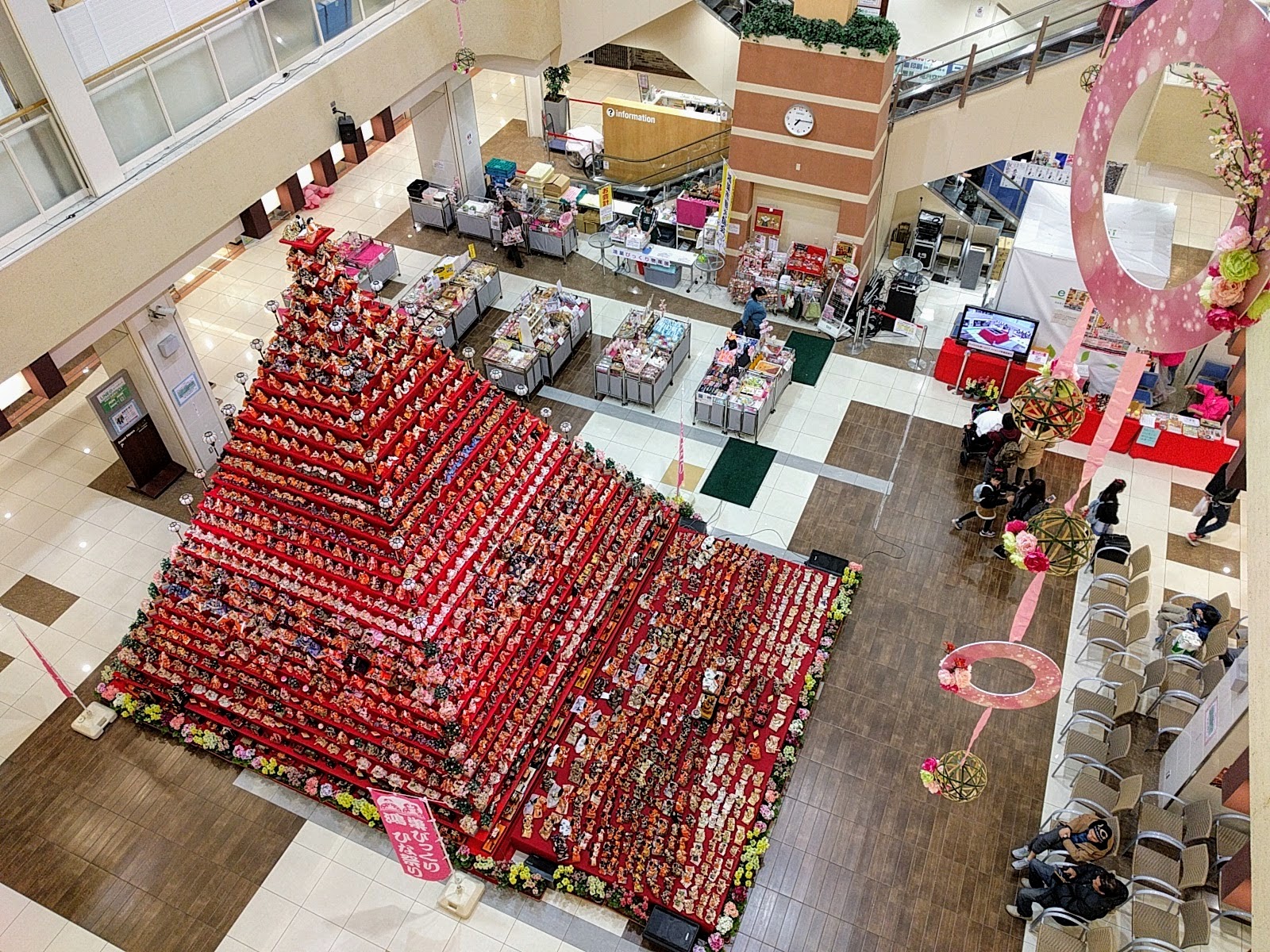
Little knownKonosu has made hina dolls for around 380 years and calls itself doll town, so when the local trade wanted to do somethi…