
Kagura Monzen Toji Mura
Researched and written by Hinato
Hiroshima · Akitakata
34.7152°N, 132.6125°E
Showing up to Kagura Monzen Toji Mura without a plan for where to stand is the most common way to see less of it than you wanted.
Kagura in northern Hiroshima is not a museum piece. Twenty-two amateur troupes in Akitakata alone perform it — masked dance-drama with drums and flute, telling the myths of the eight-headed serpent and the gods, in costumes weighing twenty kilograms — and they perform for their neighbours.
This village on a hill in Mitori was built to give them somewhere to do it every week. There is a 2,000-seat kagura dome and a smaller theatre, and between them they hold more than 150 performances a year, mostly at weekends. Around them is a lattice-fronted lane of inns, teahouses, food and souvenir shops, and a radon hot spring with an outdoor bath. Dome tickets are ¥1,200 for adults and ¥500 for children, and you can stay the night.
Before you go
Event hours
Performances on more than 150 days a year, mostly weekends | Hot spring and shops keep their own hours
Closed: No performances on many weekdays — confirm the schedule before travelling
Cost to attend
¥1,200 adults and ¥500 children for the Kagura Dome | 12-ticket book ¥11,000 | Hot spring charged separately
When it happens
Autumn and winter for the fullest kagura calendar | Weekends year-round
Time to allow
Half a day | An overnight stay with a performance
Access route
Getting there in detail
Beyond the guidebook
Nearby Spots
The closest hidden gems to Kagura Monzen Toji Mura, by straight-line distance.
 murakami_tak / CC BY-SA 3.0
Josei Falls
Little knownJosei drops 126 metres in three stages down a rock face on a tributary of the Sakugi river, and it is the only waterfall…
 Illustration — not a photograph
Miyoshi Mononoke Museum
Little knownIn 1749 a sixteen-year-old boy in Miyoshi named Inou Heitaro was, according to the account written down afterwards, visi…
 世羅人 / CC BY-SA 4.0
Sera Kogen Flower Farms
Little knownThe Sera plateau sits at around four hundred metres in the middle of Hiroshima, on soil that suits flowers better than m…
 Lumi iori / CC BY-SA 3.0
Saijo Sakagura Street
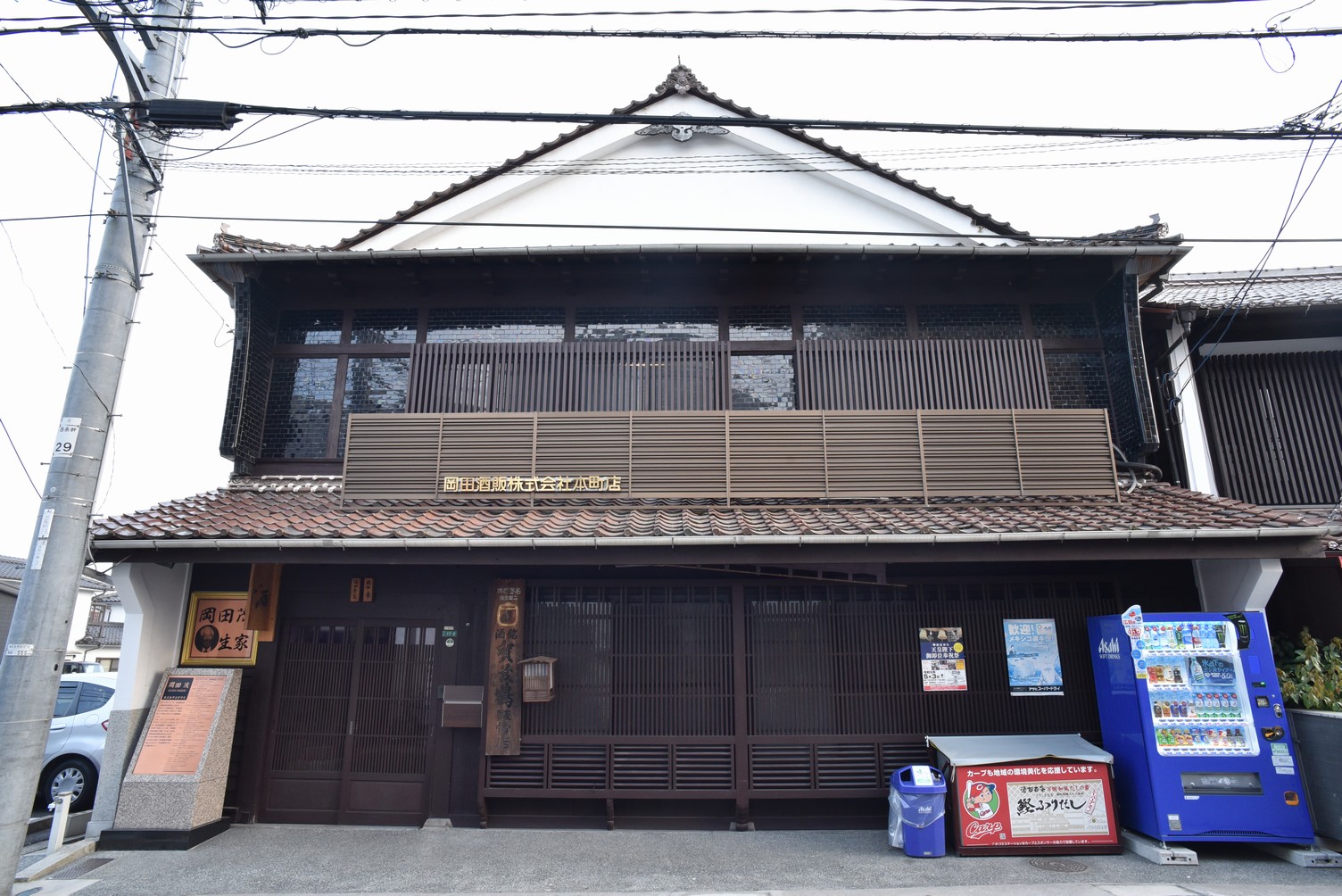
Little knownSaijo is named alongside Fushimi in Kyoto and Nada in Hyogo as one of the three great sake districts of Japan, and unlik…
 Yoshio Kohara / CC BY 3.0
Shukkei-en Garden
Locally knownShukkei-en Garden (縮景園, 'shrunken-scenery garden') is a traditional Japanese stroll garden in central Hiroshima, designe…
 そらみみ / CC BY-SA 4.0
Hiroshima Castle
Locally knownHiroshima Castle (広島城), nicknamed 'Carp Castle' (鯉城, Rijō) for the carp that once swam in its moats, is a reconstructed…
More in Hiroshima
 Taisyo / CC BY 3.0
Mazda Museum
Locally knownThe Mazda Museum (マツダミュージアム) in Hiroshima's Fuchu district offers an in-depth look at Mazda Motor Corporation's history,…
 Illustration — not a photograph
Momiji Manju
Locally knownMomiji manju (もみじ饅頭, 'maple leaf manju') is Hiroshima and Miyajima's iconic confection — small, maple leaf-shaped cakes…
 clear_and_sunny / CC BY 3.0
Mt. Misen
Locally knownMt. Misen (弥山, 535 meters) has been Miyajima's spiritual anchor since 806, when Kobo Daishi spent 100 days meditating in…