Hitachi Seaside Park
Researched and written by Hinato

Photo: くろふね / Wikimedia Commons (CC BY 3.0) · original
Hitachi Seaside Park looks different depending on the season, the weather, and the time of day — none of which a single photo can tell you.
Hitachi Seaside Park transforms twice a year into one of Japan's most photographed landscapes. In late April through mid-May, 5.3 million baby blue eyes flowers (nemophila) blanket the rolling Miharashi Hill in a cyan sea that merges seamlessly with the sky. In October, the same hill ignites in crimson when 32,000 kochia shrubs turn from green to deep red, creating a landscape that resembles Mars.
The 350-hectare park was built on the site of a former Imperial Japanese Army ammunition depot and US military base. The nemophila bloom period draws 80,000 visitors per day on peak weekends — a pilgrimage for both domestic and international photographers. The kochia autumn season is equally dramatic but less crowded. Beyond the seasonal spectacles, the park features permanent flower gardens, cycling paths through pine groves, an amusement park, and coastal sand dunes preserved as a natural habitat. The contrast between the meticulously cultivated flower fields and the wild Pacific coastline defines the park's character.
Before you go
Access hours
9:30 AM – 5:00 PM (varies by season; extended to 7:30 AM during nemophila bloom)
Entry fee
¥450 adults | Bicycle rental: ¥400/3 hrs
Best time to visit
Late April–early May (nemophila blue hills) | Mid-October (kochia crimson hills)
Time to allow
2–3 hours (main flower hills) | 4–5 hours (full park with cycling)
How to reach it
Getting there in detail
Beyond the guidebook
Nearby Spots
The closest hidden gems to Hitachi Seaside Park, by straight-line distance.
 Σ64 / CC BY 3.0
Ajigaura Beach
Little knownAjigaura Beach is a 4-kilometer stretch of sandy coastline facing the open Pacific, known as one of Kanto's best surf br…
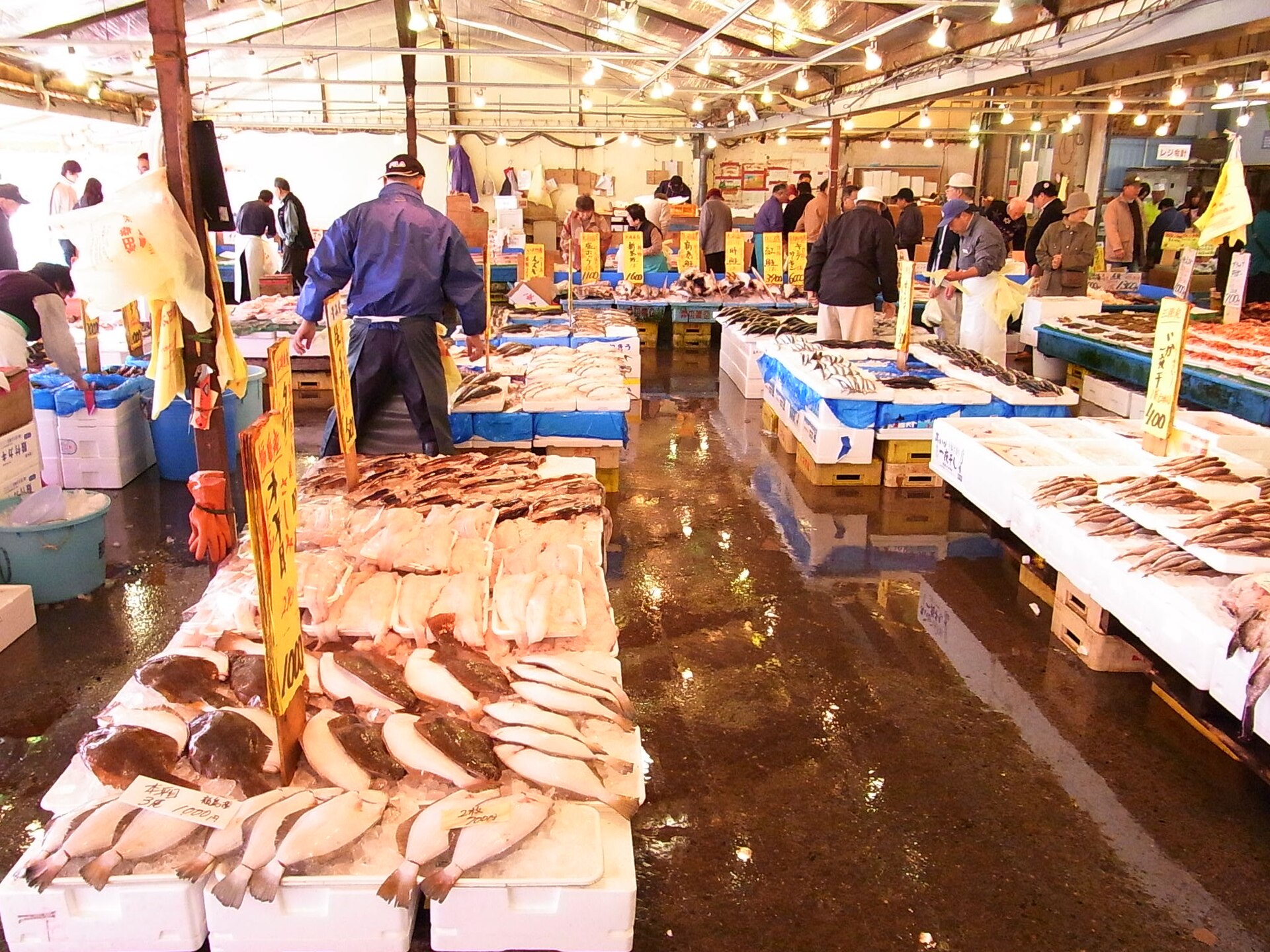 江戸村のとくぞう (Edomura no Tokuzo) / CC BY-SA 4.0
Nakaminato Fish Market
Little knownNakaminato is a working fishing port on the Ibaraki coast and the market beside it is where the boats' catch is sold dir…
 出羽雀台 / CC BY-SA 4.0
Oarai Aquarium
Little knownAqua World Oarai is one of Japan's largest aquariums, specializing in sharks (54 species, the most of any aquarium in Ja…
 Illustration — not a photograph
Kamiiso no Torii
Little knownA single vermilion torii gate stands on a jagged rock platform where waves explode into white spray at high tide. Kamiis…
Oarai Fish Market
Little knownOarai Port lands some of the finest Pacific seafood in the Kanto region — flatfish (hirame), Pacific saury (sanma), monk…
 Σ64 / CC BY 3.0
Oarai Beach
Little knownOarai Sun Beach is a 1.5-kilometer crescent of pale sand facing the Pacific, backed by pine groves and bordered by rocky…
More in Ibaraki
Kodokan
Little knownKodokan was established in 1841 by Tokugawa Nariaki as the educational heart of Mito Domain, embodying the Mito School o…
 On-chan / CC BY-SA 3.0
Kasama Pottery
Little knownKasama-yaki pottery has been produced in this hillside town for over 250 years. Unlike the aristocratic refinement of Ar…
 Asturio Cantabrio / CC BY-SA 4.0
Mito Natto
Little knownNatto — fermented soybeans bound by sticky, stringy threads — is Japan's most divisive food, beloved by locals and bewil…